
How to Identify the Panticapaeum Gold Stater (Pan/Griffin)
A gold stater from the Bosporan city of Panticapaeum showing a bearded satyr head, often identified with Pan, on the obverse and a griffin standing over a grain ear on the reverse.
Read the full Panticapaeum Gold Stater (Pan/Griffin) encyclopedia entry →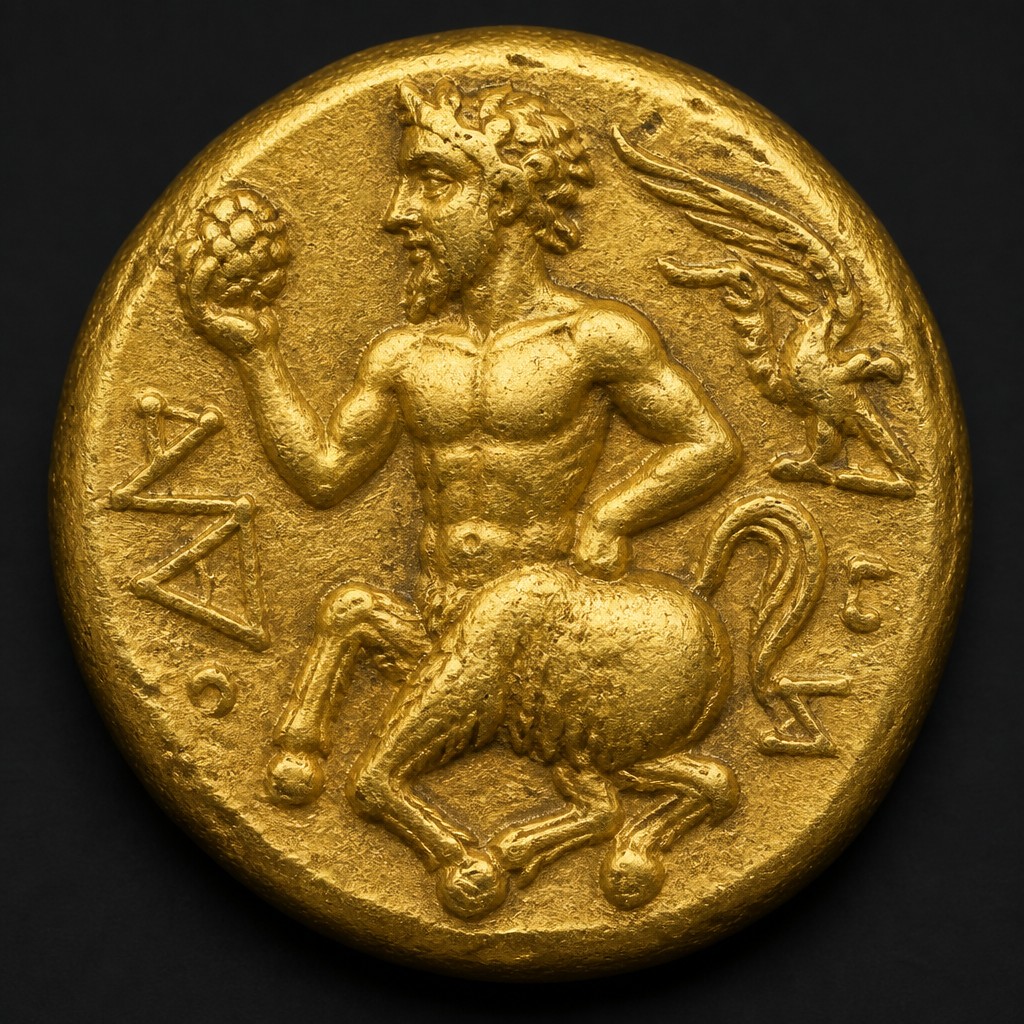
What This Coin Is
This is a gold stater struck by Panticapaeum, the chief city of the Bosporan Kingdom on the Crimean peninsula, primarily during the fourth century BC. The city grew wealthy from the Black Sea grain trade, and its coinage reflects both this agricultural prosperity and strong artistic ties to contemporary Greek engraving traditions.
Obverse Design
The obverse shows a bearded, animalistic male head facing left, generally identified as a satyr or the god Pan, with pointed ears, a snub nose, and shaggy hair or a fillet, rendered in a vivid, almost portrait-like style that is considered one of the finer achievements of Greek provincial die engraving. Some scholars debate the precise identity of the figure, but the vigorous, characterful modeling is a hallmark of this issue.
Reverse Design
The reverse depicts a griffin, a mythical creature with a lion's body and an eagle's head and wings, standing left with one forepaw raised, typically shown above or beside a grain ear (an ear of wheat), directly referencing the city's grain export trade. Below or beside the griffin, the abbreviated ethnic ΠΑΝ (an abbreviation tied to Panticapaeum) may appear, along with a small additional letter or symbol used as a control mark.
Size, Weight, and Metal
This coin is struck in gold rather than silver, generally weighing close to 9 grams on the local stater standard, with a diameter of roughly 20 to 22 millimeters. The edge is plain and hand-struck, with no milling.
Mint Marks and Where to Find Them
Look beneath or beside the griffin for the grain ear device and any accompanying small letters, which served as control marks for specific issues. The abbreviated city ethnic, when present, appears in the same reverse field and is the clearest confirmation of a Panticapaeum attribution.
Telling It Apart From Similar Coins
The distinctive bearded satyr or Pan-style head is unusual among Greek gold coinage of the period and, combined with the grain-ear griffin reverse, makes this issue relatively easy to distinguish from other contemporary Greek gold staters, which more commonly show conventional deity or ruler portraits. Other Black Sea cities also used griffin imagery, so the grain ear and any accompanying ethnic letters are the most reliable details for confirming Panticapaeum specifically rather than a neighboring Bosporan or Pontic mint.
Judging Condition at a Glance
On the obverse, check the satyr's hair, beard, and facial features for sharpness, since the vigorous modeling of this portrait is a major part of its appeal and the first area to soften with wear. On the reverse, the griffin's wing, raised paw, and the grain ear are the key focal points; a coin retaining crisp definition in these areas is in notably better condition than a heavily worn or weakly struck example.
Authenticity Red Flags
Because ancient gold coins carry intrinsic bullion value in addition to collector interest, this type has attracted both cast counterfeits and modern struck forgeries. Warning signs include a slightly soft or mushy rendering of the satyr's facial detail, an incorrect or unusually pale gold color suggesting a wrong alloy, a visible casting seam, and a weight noticeably different from the expected stater standard. Because genuine ancient gold has a specific density and color, any example that feels unusually light for its size or shows surface texture inconsistent with struck gold deserves careful further comparison.
Frequently asked questions
Who is depicted on the obverse of this coin?
The obverse shows a bearded, animalistic male head generally identified as a satyr or the god Pan, though the exact identification has been debated by specialists; the vivid, characterful style is a well-known feature of this issue.
Why does the reverse show a grain ear next to the griffin?
The grain ear references Panticapaeum's wealth from the Black Sea grain trade, directly tying the coin design to the city's real economic foundation.
Is this coin silver or gold?
It is struck in gold, unlike most of the Greek tetradrachms and nomoi from this period, which were typically silver, making its weight standard and appearance noticeably different.
What weight should a genuine example have?
Genuine staters generally weigh close to 9 grams, consistent with the local gold stater standard used at Panticapaeum.