
How to Identify the Panormus Siculo-Punic Tetradrachm
A Sicilian silver tetradrachm struck under Carthaginian influence at Panormus, blending Greek artistic style with Punic legends and symbols such as the horse and palm tree.
Read the full Panormus Siculo-Punic Tetradrachm encyclopedia entry →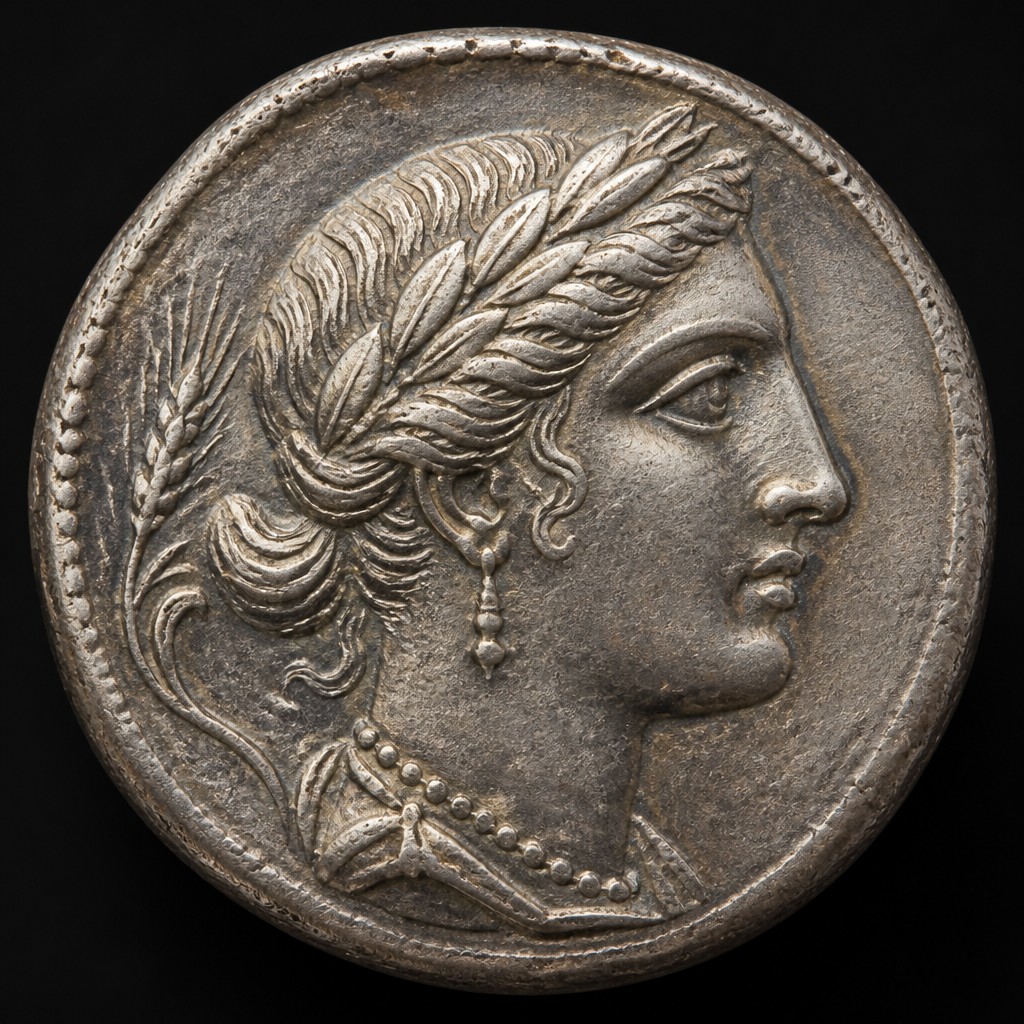
What the Coin Is
Panormus, the site of modern Palermo, was an important Sicilian city that came under strong Carthaginian (Punic) influence during the fifth and fourth centuries BC, when much of western Sicily was contested between Greek cities and Carthage. The coinage struck there during this period, known collectively as Siculo-Punic, blends Greek artistic conventions with Punic legends and symbolism, making it a fascinating hybrid within ancient numismatics.
Obverse Design
Obverse designs on Siculo-Punic tetradrachms attributed to Panormus often adapt Greek Sicilian prototypes, most commonly a female head resembling the Arethusa or Persephone types used at Syracuse, sometimes surrounded by dolphins, reflecting the strong artistic influence Greek Sicily had on its Punic-controlled neighbors. Some issues instead lead with the horse-and-palm-tree composition on this side, since the exact arrangement of motifs varies across the series.
Reverse Design
The reverse commonly features a horse, shown standing, prancing, or as a horse's head alone, with a palm tree in the background, a combination widely used across Siculo-Punic coinage generally as a symbol connected to Carthage. A Punic legend, typically identifying the mint or authority responsible for the issue, is inscribed nearby in Phoenician script, which looks distinctly different from the Greek lettering used on neighboring civic coinages.
Size, Weight, and Metal
This is a silver tetradrachm, generally weighing in the range of about 16.5 to 17.2 grams, broadly comparable to Greek Sicilian tetradrachms of the same era, since the mint drew on the same regional weight conventions even while using Punic administrative language.
Mint Marks and Where to Find Them
The key identifying feature is the Punic legend itself, rendered in Phoenician letters rather than Greek, usually placed near the horse or beneath the ground line on the reverse. Because several Sicilian mints under Punic control issued similar horse-and-palm-tree types, the specific Punic letters present, along with any small accompanying symbols, are what allow specialists to attribute a coin to Panormus rather than another Siculo-Punic mint.
Telling It Apart from Similar Coins
The general horse-and-palm-tree reverse type was shared across multiple Siculo-Punic mints, so distinguishing Panormus from other issuing cities depends closely on reading the Punic legend and comparing known die links rather than relying on the design alone. The Greek-style female head obverse, when present, can also resemble genuine Syracusan coinage, so checking for the Punic legend on the reverse is essential to confirm a Siculo-Punic rather than purely Greek attribution.
Judging Condition at a Glance
On the obverse, fine hair detail and any surrounding dolphins wear down quickly and are a good gauge of circulation wear. On the reverse, the horse's legs and the fronds of the palm tree are similarly delicate, and the small Punic letters can become illegible with even moderate wear, so a coin with a fully readable legend is considered notably well preserved.
Authenticity Red Flags
Because Siculo-Punic coinage combines a recognizable Greek artistic style with a script many collectors are less familiar with, forgers sometimes render the Punic letters as vague or nonsensical shapes rather than accurate Phoenician characters. Compare the letterforms carefully against known genuine examples, and be cautious of coins with a female head that looks like a slightly altered or lower-quality copy of a famous Syracusan die, which can indicate a deceptive modern strike or cast rather than an authentic ancient issue.
Frequently asked questions
Why does this coin combine Greek and Punic elements?
Panormus was under Carthaginian political control during this period but sat within a broader Sicilian artistic environment, so its coinage adapted Greek Sicilian design conventions while using Punic legends and administrative language.
What does the horse and palm tree symbolize?
This combination was a widely used symbol connected to Carthage and appears across several Siculo-Punic mints in Sicily, not just Panormus specifically.
How do I tell this apart from a genuine Syracusan coin?
Check the reverse for a Punic legend written in Phoenician script; its presence indicates a Siculo-Punic issue rather than a purely Greek Syracusan coin, even if the obverse head looks similar.
What weight should a genuine tetradrachm have?
Genuine examples generally weigh around 16.5 to 17.2 grams in silver, comparable to other Sicilian tetradrachms of the period.