
How to Identify the Panama Balboa Silver
A guide to identifying Panama's silver Balboa coin, struck to U.S. silver dollar specifications with a portrait of explorer Vasco Nunez de Balboa and the national arms reverse.
Read the full Panama Balboa Silver encyclopedia entry →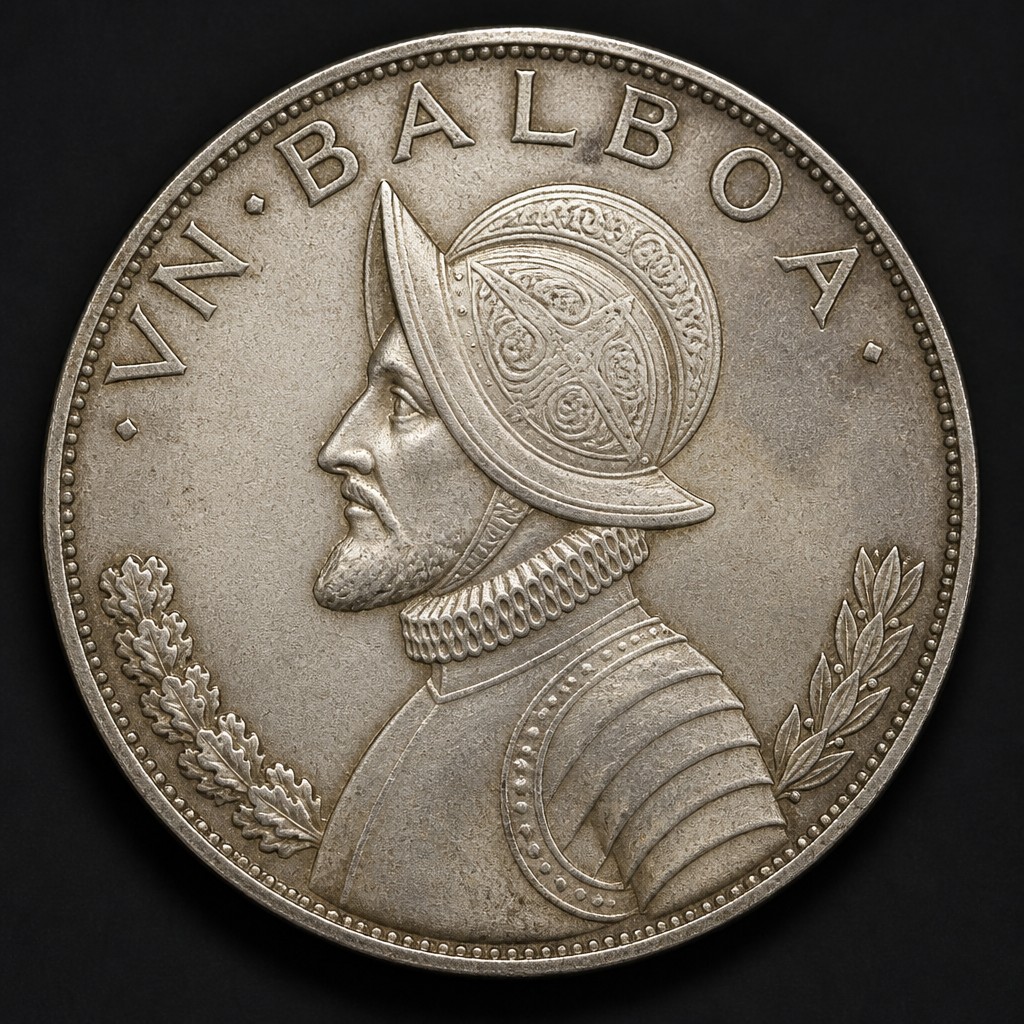
What It Is
The Balboa is Panama's monetary unit, named after the Spanish explorer Vasco Núñez de Balboa, who is credited with being the first European to sight the Pacific Ocean from the Americas. The large silver Un Balboa coin, struck in the early 1930s, was produced at the Philadelphia Mint to match U.S. silver dollar specifications exactly, reflecting the close monetary ties between Panama and the United States.
Obverse Design
The obverse features a bust portrait of Balboa in profile, with the legend "REPUBLICA DE PANAMA" and the date around the rim.
Reverse Design
The reverse displays Panama's national coat of arms, including a shield with symbols representing the isthmus's role as a crossroads (such as a cornucopia, tools, and a rising sun), topped by an eagle, along with the denomination "UN BALBOA."
Size, Weight, Metal, and Edge
The Un Balboa was struck to identical specifications as the U.S. silver dollar of the same period: about 38.1 mm in diameter and 26.73 grams, in 90% silver. The edge is reeded.
Mint Marks
Because these coins were struck at the Philadelphia Mint, look for the small mint identification consistent with U.S. mint practice of the era; the absence of a mint letter is typical for Philadelphia-struck pieces from this period.
Telling It Apart From Similar Coins
Given its identical size and weight to the U.S. Peace dollar, this coin can be mistaken for American coinage at a casual glance. Balboa's portrait and the Panamanian coat of arms are the clear identifiers that distinguish it from any U.S. silver dollar design.
Judging Condition
Check Balboa's cheek and hair for wear, along with the raised elements of the coat of arms and eagle on the reverse. A coin with crisp, well-defined portrait lines and legible legend text indicates lighter circulation.
Authenticity Red Flags
Watch for incorrect weight or diameter relative to the U.S. silver dollar standard this coin follows, a soft or indistinct strike suggesting a cast copy, and a magnetic response, which genuine silver coins do not exhibit. A dull or muted ring when the coin is gently spun on a hard surface, compared to a known-genuine silver dollar, is also a useful quick check.
Frequently asked questions
Who is depicted on the Balboa coin?
Vasco Núñez de Balboa, the Spanish explorer after whom Panama's currency unit is named.
Why does this coin match U.S. silver dollar specifications so closely?
It was struck at the Philadelphia Mint to the same size and weight as the U.S. silver dollar, reflecting close monetary ties between Panama and the United States at the time.
How much silver does the Balboa contain?
It is 90% silver, weighing 26.73 grams, the same composition as the U.S. Peace dollar of the same era.
How do I tell a Balboa apart from a U.S. silver dollar?
Check the obverse for Balboa's portrait and "REPUBLICA DE PANAMA" legend, and the reverse for Panama's coat of arms rather than an American eagle design.