
How to Identify the Pahlavi Reign Gold Medal
A collector's guide to a Pahlavi-era Iranian gold medal: the royal portrait, the crowned Lion and Sun, the 1971 date, and authentication cautions.
Read the full Pahlavi Reign Gold Medal encyclopedia entry →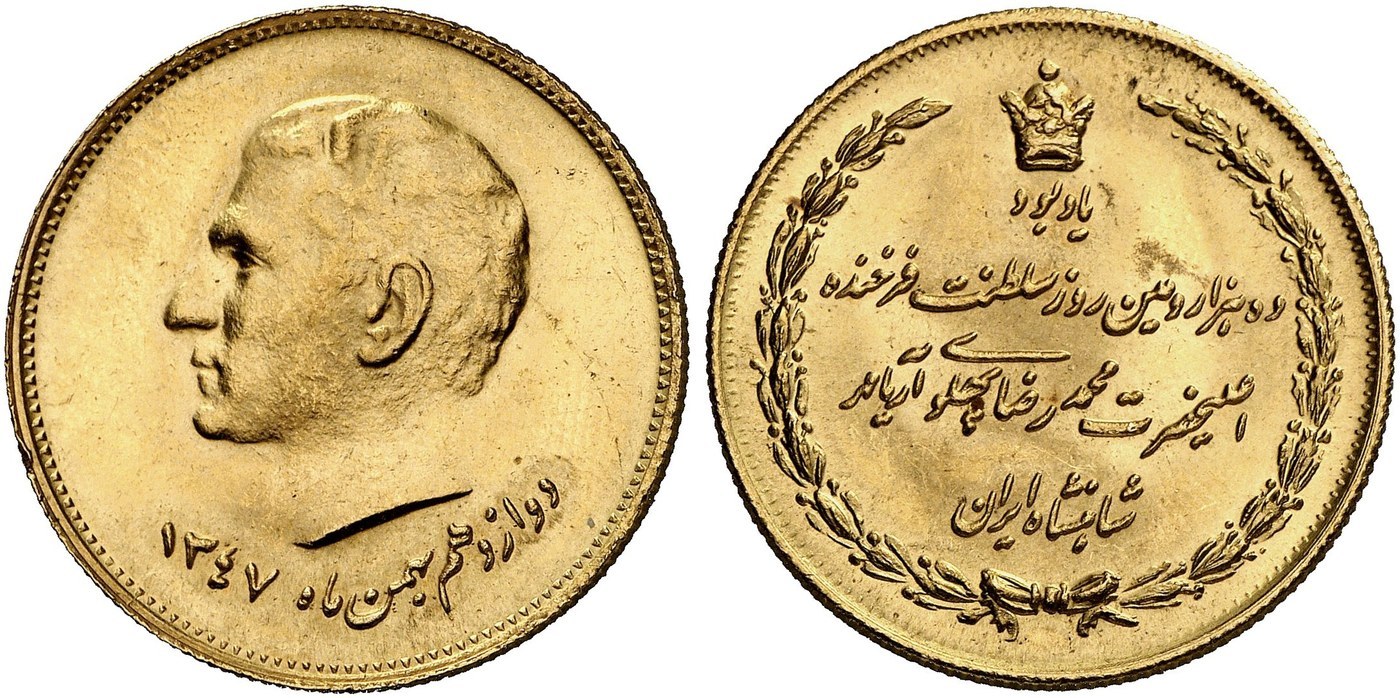
Start with the two faces together. The obverse of this type shows a left-facing profile portrait of a man in the manner of a modern Iranian sovereign, while the reverse carries the Lion and Sun (Shir-o-Khorshid) beneath a crown, framed by laurel wreaths and Persian text. Confirming both a royal portrait and a crowned Lion and Sun is the quickest way to place a piece in the Pahlavi imperial group rather than among Iran's inscription-only or post-1979 republican coinage.
Read the legends and the date before attributing anything. Look for Persian script naming the ruler or occasion and note the year — here 1971, which coincides with Iran's 2,500th-anniversary celebration of the Persian Empire. Be aware that Iranian pieces may carry dates in the Islamic (AH), Solar Hijri (SH) or imperial calendars as well as Gregorian, so transcribe exactly what is shown rather than assuming a system. The wording and date, not the imagery, are what fix the issue.
Measure the physical piece. Record diameter, thickness and — most importantly — weight, and inspect the edge for milling or lettering. Genuine gold is dense, so weight relative to size is an early screen: a piece too light for its diameter, or showing any magnetism, is a warning sign. Do not treat the yellow color as proof of gold, since gilt and plated base-metal medals are common in this area.
Compare against look-alikes and expect unofficial strikes. The 1971 anniversary produced many official coins and medals, and it also inspired a long tail of later commemoratives, restrikes, gilt tokens and souvenir pieces that reuse the portrait and Lion-and-Sun motif. Some are honest medals; others are decorative reproductions or deliberate fakes. Distinguish an official or documented commemorative from a modern copy by weight, fabric, strike sharpness and provenance.
Apply firm authentication caution before paying a premium. Genuine struck pieces show crisp, even lettering and sharp relief in the lion's mane, the sun's rays and the wreaths; cast copies reveal soft detail, seams or surface bubbles. For anything sold as solid-gold imperial Iran, insist on independent metal testing such as specific gravity or a non-destructive assay, weigh and measure it, and have it reviewed by a specialist in Persian or world gold. When the legends cannot be read or the provenance is unknown, keep the attribution provisional.
Frequently asked questions
How do I tell an official issue from a commemorative or souvenir medal?
Read the Persian legends and check the fabric. Official pieces name the ruler or occasion and are struck to consistent standards; later commemoratives, tokens and souvenirs may copy the portrait and Lion and Sun without the correct wording, weight or strike quality. Compare to documented examples and seek a specialist opinion when unsure.
What details should I record before asking for an attribution?
Note the exact weight and diameter, describe the portrait direction, transcribe or photograph every legend and the date on both sides, and document the crowned Lion and Sun and any edge lettering. Clear images of both faces and the edge are essential.
The medal looks gold — is that enough to confirm the metal?
No. Color alone does not prove gold. Gilt and plated base-metal medals exist, so confirm with weight-to-size checks and professional metal testing such as specific gravity before assuming precious-metal content.
How can I spot a fake or reproduction?
Watch for casting seams, bubbles or mushy detail, incorrect weight for the size, any magnetism, and legends that are misspelled or garbled. Genuine struck pieces have sharp, consistent lettering and relief; verify against a reliable reference and an expert when in doubt.