
How to Identify the Ottoman Silver Coin
A collector's guide to reading the tughra, script, and ornament on an Ottoman silver coin and narrowing down its sultan, mint, and date.
Read the full Ottoman Silver Coin encyclopedia entry →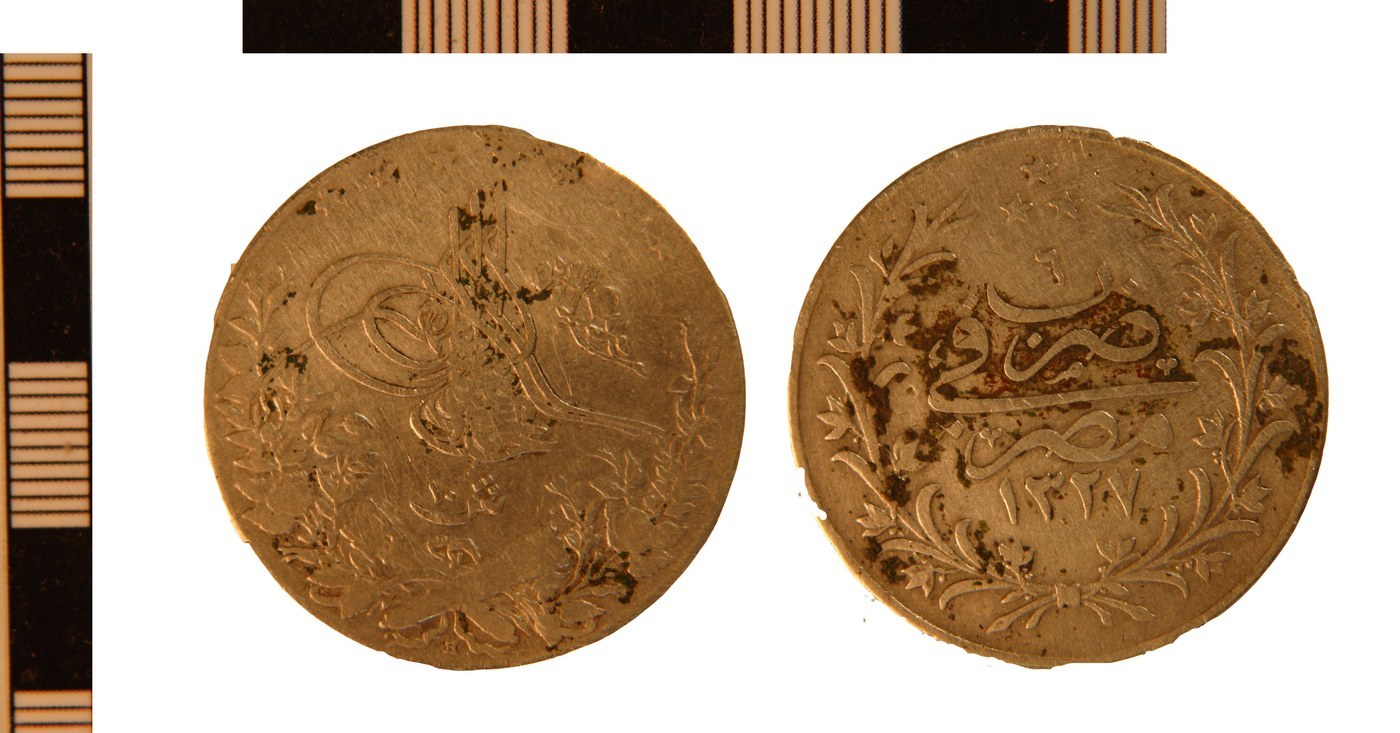
Begin with the tughra. The looping, feathered calligraphic monogram on the obverse is the signature of the reigning sultan and the surest sign a coin is Ottoman. On this example it is surrounded by floral decorative elements, a common framing. Learning to recognize the tughra's basic anatomy, its vertical strokes and swept-back loops, is the first step in separating Ottoman coins from other Islamic silver.
Confirm the metal and look at both faces. This is a silver coin, so expect gray toning and, on genuine strikes, crisp raised detail rather than the soft, bubbly surface of a cast copy. The obverse holds the tughra and ornament; the reverse carries Arabic-script inscriptions with botanical design. Ottoman denominations vary hugely in size and weight, so measure the diameter and weigh the coin, since those figures help point toward whether it is a small fraction or a larger unit.
Hunt for the mint and date in the reverse legend. Many Ottoman coins name the mint city and give an accession year in the Hijri calendar using Arabic numerals; a small additional number is often the regnal year counted from that accession. Reading these two numbers, together with matching the tughra to a known sultan, is how a generic Ottoman silver coin becomes a specific attributed issue. If the legend is worn or off-flan, exact attribution may not be possible.
Beware of look-alikes and fakes. Other Islamic states used ornate Arabic calligraphy too, but the tughra monogram is distinctly Ottoman. Watch for tourist reproductions and cast forgeries, which may feel too light or too heavy, show seams or casting pits, or carry a blurry, lifeless tughra. Gilded or artificially toned pieces and modern novelty strikes also circulate and should be judged on weight, edge, and strike quality.
When precise identification matters, compare the tughra and legends against a standard reference on Ottoman or Islamic coinage, or consult a specialist. Because the empire struck silver across many mints, rulers, and denominations, careful reading of the script does far more to place a coin than its overall appearance alone.
Frequently asked questions
How do I know a coin is Ottoman and not from another Islamic state?
Look for the tughra, the distinctive looped calligraphic monogram of the sultan. This monogram is unique to Ottoman coinage; other Islamic silver uses Arabic legends but not the tughra.
Where is the date on an Ottoman coin?
It is usually in the reverse legend, given as a Hijri accession year in Arabic numerals, sometimes with a small regnal-year number beside it. Reading both, plus the mint name, lets you place the coin precisely.
How can I spot a fake or reproduction?
Check weight, edge, and strike. Genuine silver strikes show sharp raised detail and expected weight for their size, while casts and tourist copies often feel off in weight, show seams or pits, or carry a soft, mushy tughra.
Can I identify the exact denomination from a photo?
Often not with certainty. Ottoman silver spans many denominations of differing size and weight, so measuring the coin and reading the legend are usually needed before naming the denomination confidently.