
How to Identify the Ottoman Silver Akce
A very small, thin Ottoman silver coin struck from the 14th through 18th centuries, whose size and weight shrank dramatically over time as the empire repeatedly debased its silver content.
Read the full Ottoman Silver Akce encyclopedia entry →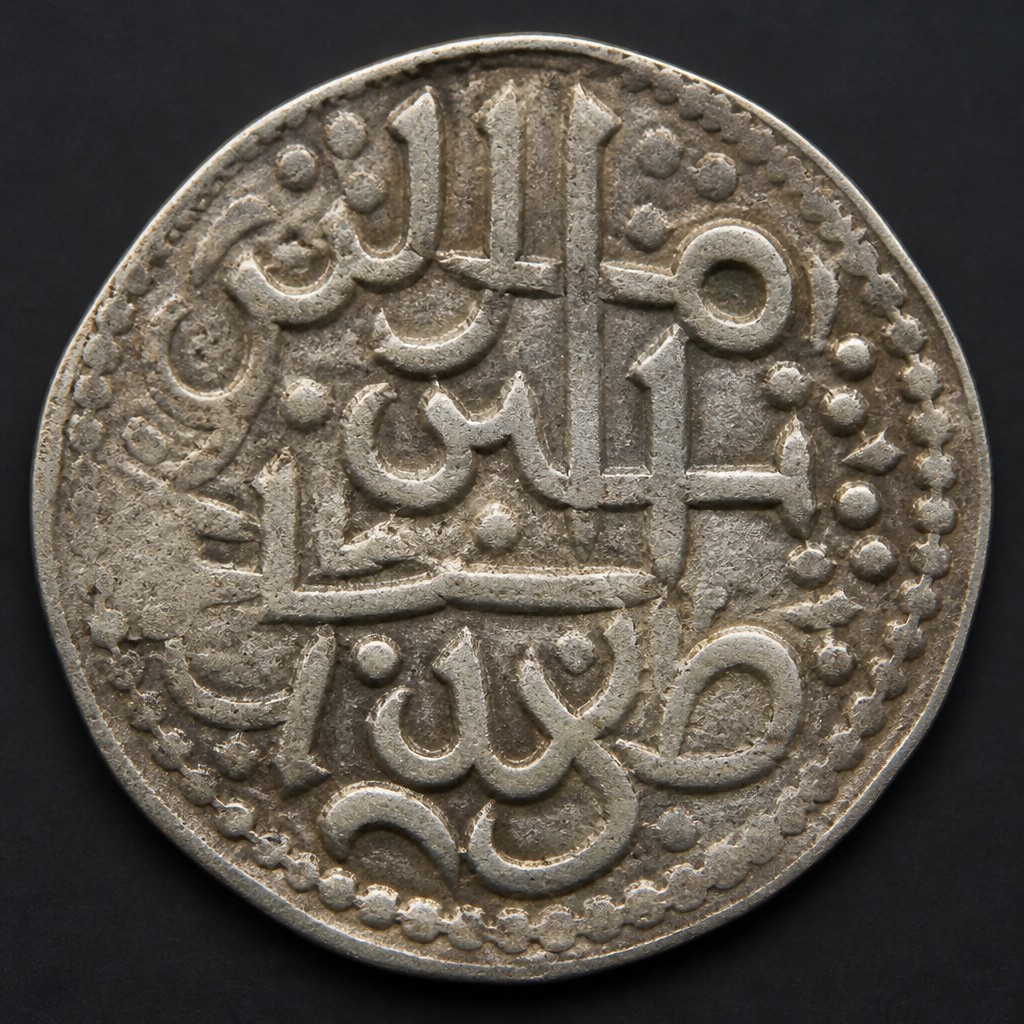
What It Is
The akçe (also called an asper) served as the Ottoman Empire's principal small-denomination silver coin from the reign of Orhan Gazi in the 14th century through a long period of debasement into the 17th and 18th centuries, when larger coins like the para and later the kuruş increasingly took over its role. For much of its early history it was the everyday coin of ordinary commerce, and soldiers' and officials' salaries were often reckoned in akçe, which is part of why the coin's steady loss of value over time had such visible economic consequences for the empire.
Obverse Design
The obverse carries a simple Arabic-script inscription naming the sultan and his title, typically in the form "Sultan [name] han bin [father's name] han," sometimes accompanied by a mint invocation. As with other Ottoman coinage, there are no images, only text.
Reverse Design
The reverse generally gives a religious phrase along with the mint name, and often the sultan's regnal accession year, though on the smallest and most worn examples this text can be extremely compact and hard to read.
Size, Weight, Metal, and Edge
The akçe is tiny, typically only about 9-13mm across, struck on a thin, irregular flan. Its weight is one of its most telling features: an early akçe from the 14th century weighed around 1.15 grams, but by the 17th century, repeated debasements had reduced many akçes to under 0.3 grams, so the size and weight of a given example can help bracket its approximate date range.
Mint Marks and Dates
The mint name, such as Qustantiniyye, Edirne, or Bursa, appears in the field in Arabic script, along with the sultan's regnal accession year.
Telling It Apart from Similar Coins
Other regional Islamic states, including the Crimean Khanate, issued their own small silver akçes copying the general Ottoman format, so reading the specific sultan's name is necessary to confirm an Ottoman origin. Because later akçes are so small and often crudely struck, they can be mistaken for illegible fragments of larger coins; checking the diameter and overall thinness helps confirm the denomination.
Judging Condition at a Glance
Given the coin's tiny size and frequently crude striking, condition assessment mostly comes down to whether the central sultan's name and the mint name remain legible, and whether the coin has been pierced or excessively clipped, since many akçes were pierced for use as decorative sequins on clothing or jewelry.
Authenticity Red Flags
Genuine akçes are typically irregular in shape, hand-struck, and often noticeably off-center, and later examples can be nearly foil-thin. A suspiciously heavy, perfectly round, or mechanically uniform "akçe" may actually be a different, larger Ottoman denomination misidentified, or a modern replica rather than a genuine circulating coin of this type. Because these coins are so small and inexpensive individually, they are less commonly targeted by forgers than gold issues, but misattribution to the wrong sultan or the wrong regional mint remains a common identification pitfall.
Frequently asked questions
Why are akçes from different centuries so different in size and weight?
The Ottoman government repeatedly reduced the silver content and weight of the akçe over the centuries due to economic pressures, so earlier akçes are noticeably larger and heavier than later ones, which shrank to well under half a gram by the 17th century.
Why does my akçe have a small hole in it?
Many akçes were pierced so they could be sewn onto clothing or worn as decorative sequins, a common practice historically, though piercing does reduce a coin's completeness for identification purposes.
How can I tell an Ottoman akçe from a similar coin issued by another Islamic state?
You need to read the sultan's name inscribed on the obverse, since other states such as the Crimean Khanate issued their own akçe-style coins following a very similar format.
My coin is tiny and hard to read at all. How do I know it's an akçe and not a fragment?
Check that the flan is a complete, thin, roughly round disc typically 9 to 13mm across rather than a broken or clipped piece of a larger coin, since genuine akçes were struck at this small size intentionally.
What weight and size should I expect for a specific sultan's reign?
Because weight standards changed frequently, the expected size and weight for a given reign varies considerably, so it helps to compare the coin against reference figures for that specific sultan's approximate era.