
How to Identify the Ottoman Manghir
A collector's guide to identifying the Ottoman copper manghir by its tughra, Arabic-script legends, tribal symbol, small copper flan, and hand-struck features.
Read the full Ottoman Manghir encyclopedia entry →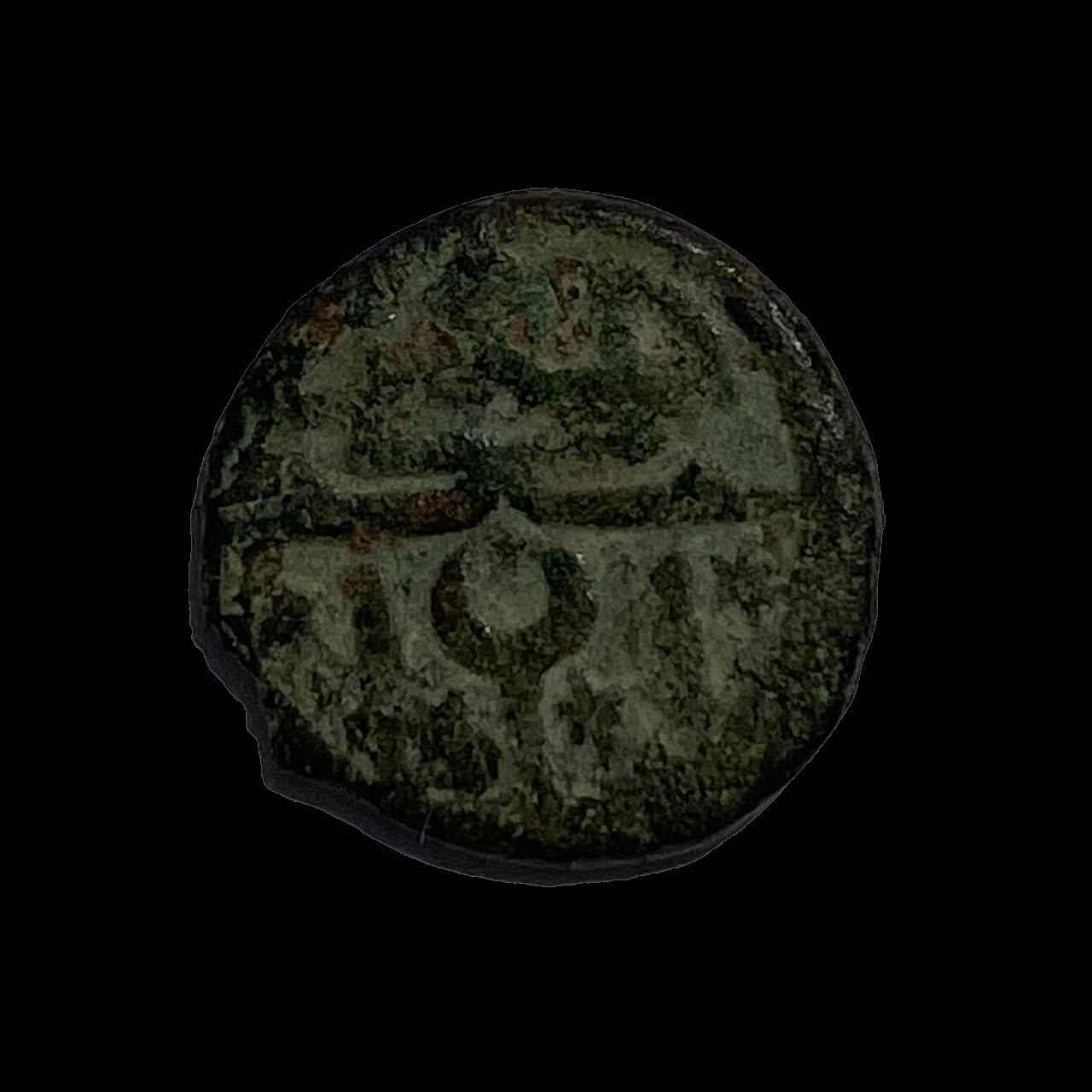
What This Coin Is
The manghir is the small copper denomination of the Ottoman Empire, the base coin used for petty everyday transactions. Identifying one starts with recognizing that you are looking at a hand-struck medieval Islamic copper piece — small, often irregular in shape, and inscribed entirely in Arabic script rather than carrying any portrait or numeral. This particular type is attributed to Sultan Murad II and dates to the first half of the 15th century.
Reading the Obverse
The key obverse diagnostic is the tughra, the sultan's stylized calligraphic monogram. It appears as a dense, looping cluster of Arabic strokes, usually with tall vertical uprights and horizontal sweeps, framed by additional inscriptions and small decorative marks. The tughra is not decoration alone — its specific form helps tie the coin to a particular ruler, so compare it against published examples rather than relying on general impression.
Reading the Reverse
The reverse carries inscriptions in Ottoman Turkish written in Arabic script, which may include the ruler's name, titles, pious formulas, or a mint name, alongside a tribal (Kayı) symbol. Legends are frequently incomplete because the coin was struck by hand on a small flan, so expect parts of the wording to run off the edge. Where a mint name survives, it is one of the most useful clues for precise attribution.
Size, Metal, and Fabric
Expect a copper-based coin (often described broadly as bronze) that is small and light, with a flan that may be uneven or slightly ragged rather than a perfect circle. Strikes are commonly off-center or unevenly impressed, and genuine old copper typically shows a stable earthen, brown, or green patina. Bright, uniform, or artificially smooth surfaces on a supposedly medieval coin warrant caution.
Look-Alikes and Authentication Cautions
Manghirs of different Ottoman sultans and mints can look broadly similar at a glance, and copper coins from neighboring Islamic states share the same all-inscription style, so do not assume a ruler from design alone — read the legends. Be wary of cast copies (which often show seams, bubbles, or a soft mushy strike), tooled or re-engraved legends, and heavily cleaned surfaces. For a firm attribution, match the tughra and surviving legends to a standard Ottoman copper-coinage reference or seek an expert opinion.
Frequently asked questions
How can I tell an Ottoman manghir from a silver akçe?
The manghir is copper-based, typically browner or greenish with patina, while the akçe is a thin bright silver coin; metal color and weight are the quickest tell.
How do I know which sultan struck my manghir?
Attribution comes from reading the Arabic-script legends and matching the tughra form to published references; the design style alone is not enough to pin down a ruler.
Why is part of the inscription missing on my coin?
Manghirs were struck by hand on small flans, so strikes are often off-center and parts of the legend run off the edge — this is normal for the type, not damage.
What are common signs of a fake manghir?
Casting seams, surface bubbles, a soft or mushy strike, unnaturally smooth or bright surfaces, and re-engraved lettering are all warning signs worth checking.