
How to Identify the Ottoman Kurus (Piastre)
A widely struck Ottoman Empire denomination featuring the sultan's ornate calligraphic tughra, identified by mint name and a distinctive accession-plus-regnal-year dating system.
Read the full Ottoman Kurus (Piastre) encyclopedia entry →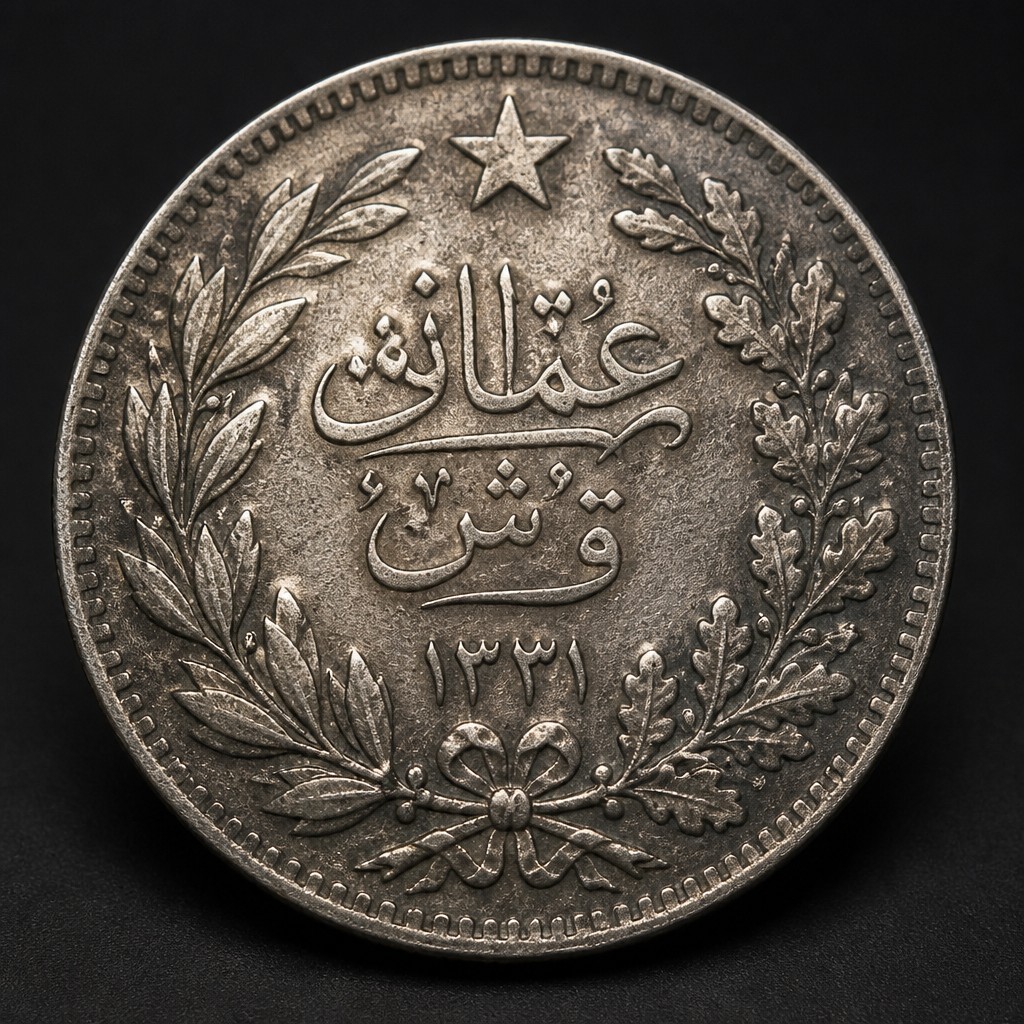
What Is the Ottoman Kurus?
The kurus, also called the piastre, was a core denomination of the Ottoman monetary system from the 19th-century coinage reforms onward, struck in silver or lower-value metals across decades and multiple sultans' reigns, making it one of the most commonly encountered Ottoman coin types. Because it was produced continuously over such a long stretch of history and issued in fractional and multiple values, kurus coins turn up frequently in collections of Ottoman and Middle Eastern coinage, spanning a wide range of sultans, mints, and metal compositions.
Obverse Design
The obverse of most Ottoman kurus coins is dominated by the sultan's tughra — an elaborate, flowing calligraphic monogram unique to each ruler — rather than a portrait, since Ottoman coinage generally avoided figural imagery in keeping with Islamic tradition.
Reverse Design
The reverse typically carries the mint name in Arabic script (commonly "Qustantiniyye" for Constantinople, though provincial mints exist too), along with the denomination and dating information formatted as an Ottoman regnal year rather than a single simple date.
Size, Weight, and Metal
Specifications for the kurus varied considerably over its long production history and across metal types, including silver and later debased or copper-alloy issues, so identifying a specific kurus type requires comparing diameter, weight, and metal color against reference examples from the same reign rather than assuming one universal standard.
Mint Marks and Ottoman Dating
Ottoman coins are dated using a distinctive two-number system: the sultan's accession year (the Hijri year he took the throne) appears as a fixed base number, and a second, smaller "regnal year" number shows how many years into that sultan's reign the coin was struck, so the two numbers must be added together to find the actual striking date. This system means two coins bearing different visible numbers can still have been struck in the same calendar year, which can be confusing at first but becomes straightforward once you know to add the two figures together.
Telling It Apart from Similar Coins
Because many sultans issued kurus coins over long reigns, the tughra's exact calligraphic style is the fastest way to identify which sultan struck a given coin; each sultan's tughra is visually distinct once you know what to look for, while the denomination and general format stay similar across reigns.
Condition and Grading at a Glance
Check the fine lines of the tughra for sharpness, since heavy wear quickly blurs its delicate loops and strokes, and examine the mint-name inscription on the reverse for legibility. A coin where the tughra's individual strokes remain crisp and separated is in noticeably better condition than one where the design has smoothed into a blob.
Authenticity Red Flags
Ottoman coins are sometimes reproduced for the tourist and souvenir market, so compare weight and diameter to known values for the specific sultan and metal type, and look closely at the tughra for correct, fluid calligraphy; reproductions often render it stiffly or with incorrect proportions compared to genuine period dies.
Frequently asked questions
Why doesn't the coin show a portrait?
Ottoman coinage generally followed Islamic artistic convention by avoiding figural portraits, using the sultan's calligraphic tughra instead.
How do I read the date on an Ottoman kurus?
Add the small regnal year number to the sultan's fixed accession year, also shown on the coin, to calculate the actual year of striking.
How do I know which sultan issued my coin?
Compare the tughra's calligraphic shape to reference examples, since each sultan used a visually distinct monogram.
What metal are kurus coins made of?
It varies by period; many are silver, though the alloy and fineness changed over the coin's long history, with later issues sometimes using debased or copper-based alloys.