
How to Identify the Ottoman Gold Sultani
A gold coin of the Ottoman Empire modeled on the Venetian ducat's weight standard, struck in the name of the reigning sultan with purely textual Arabic-script inscriptions.
Read the full Ottoman Gold Sultani encyclopedia entry →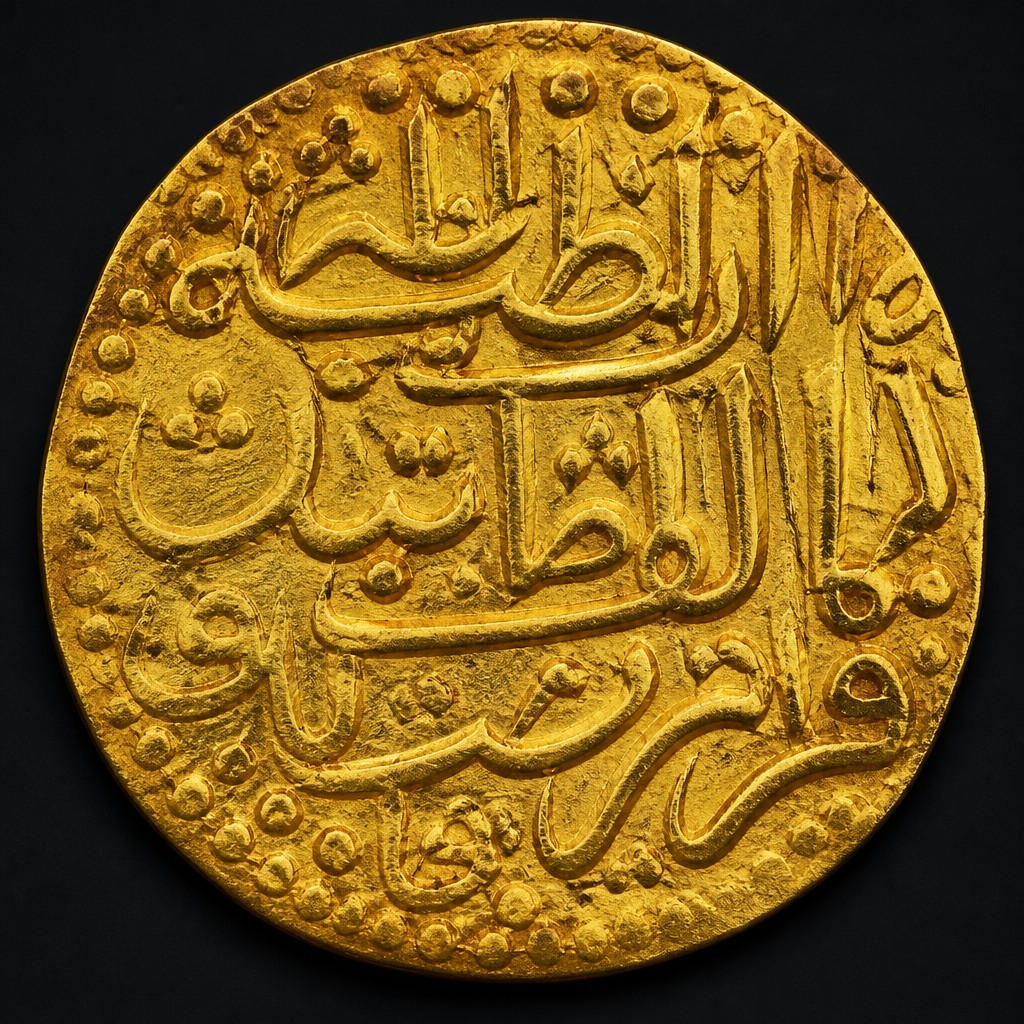
What It Is
The Ottoman sultani (also called the altun) developed after Mehmed II's conquest of Constantinople and was standardized in the 16th century under Suleiman the Magnificent to match the weight of the widely trusted Venetian gold ducat, helping it circulate confidently in Mediterranean trade. The design changed only in the sultan's name and titles across the centuries the type was struck, and because the Ottoman Empire lasted so long, sultani were minted continuously across dozens of reigns, from the 15th century through the 19th century, giving collectors a long and well-documented sequence of issues to compare against.
Obverse Design
The obverse carries an Arabic-script inscription (Ottoman Turkish written in Arabic letters) invoking the reigning sultan by name, often including the phrase "sultan, son of sultan," within a decorative cartouche. Later Ottoman gold coinage, particularly from the 18th century onward, commonly incorporates the sultan's ornate tughra (calligraphic monogram), though earlier sultani rely more on plain inscribed text.
Reverse Design
The reverse carries a religious invocation along with caliphal titulature, plus the mint name and the sultan's regnal accession year, following the standard Islamic practice of counting years from the ruler's enthronement rather than giving a full calendar date each year.
Size, Weight, Metal, and Edge
The sultani is a small, thin gold coin, roughly 19-23mm in diameter and about 3.4-3.6 grams, matching the Venetian ducat standard, and is struck in high-purity gold.
Mint Marks and Dates
The mint name, such as Qustantiniyye (Constantinople) or Misr (Cairo), appears in Arabic script, along with the sultan's accession year (in the Hijri calendar) either in the margin or field.
Telling It Apart from Similar Coins
Despite sharing the same weight standard, the Venetian ducat is easy to distinguish because it carries figural imagery, the Doge kneeling before St. Mark on one side and Christ in a mandorla on the other, while the Ottoman sultani is entirely text-based in keeping with Islamic aniconic tradition. Among Islamic gold coins of the era, the specific Ottoman Turkish phrasing and the named sultan help pin down the exact issue.
Judging Condition at a Glance
Because the inscriptions are small and dense on a compact flan, look at how legible the sultan's name and title remain, and whether the strike is reasonably centered, since small dies on a similarly small planchet often produced some off-center examples even when new.
Authenticity Red Flags
Verify the coin's weight and gold color against the expected standard for its period, since the Ottoman government periodically reduced the sultani's weight or fineness by decree over the centuries. Cast reproductions typically show porous surfaces and blurred script rather than the crisp lettering expected of a genuine struck coin, and it is worth double-checking that the sultan named on the coin actually reigned during a period when the sultani was being struck at that particular weight standard.
Frequently asked questions
Why does the Ottoman sultani weigh about the same as a Venetian ducat?
The sultani was deliberately standardized to match the Venetian ducat's weight of roughly 3.5 grams so it would be readily accepted in Mediterranean trade alongside the widely trusted Venetian coin.
How can I tell a sultani apart from a Venetian ducat?
The Venetian ducat shows figures, the kneeling Doge and Christ in a mandorla, while the Ottoman sultani is entirely inscriptional text in Arabic script with no images at all.
What does the date on the coin actually represent?
Ottoman gold coins are typically dated by the sultan's regnal accession year rather than a fresh date each year, so the year given usually marks when that sultan came to the throne.
Why do later Ottoman gold coins show an elaborate monogram but earlier ones don't?
The ornate tughra (sultan's calligraphic signature) became a common feature on Ottoman coinage mainly from the 18th century onward, while earlier sultani relied on plain inscribed text instead.
What should make me question a sultani's authenticity?
Check the weight and gold color against the expected standard for that sultan's reign, since genuine examples should be consistent with era-specific weight reductions, and watch for blurred lettering or a porous surface typical of cast fakes.