How to Identify the Ottoman 20 Kurus
A silver coin of the Ottoman Empire bearing the sultan's ornate calligraphic tughra, struck across multiple 19th and early 20th century reigns.
Read the full Ottoman 20 Kurus encyclopedia entry →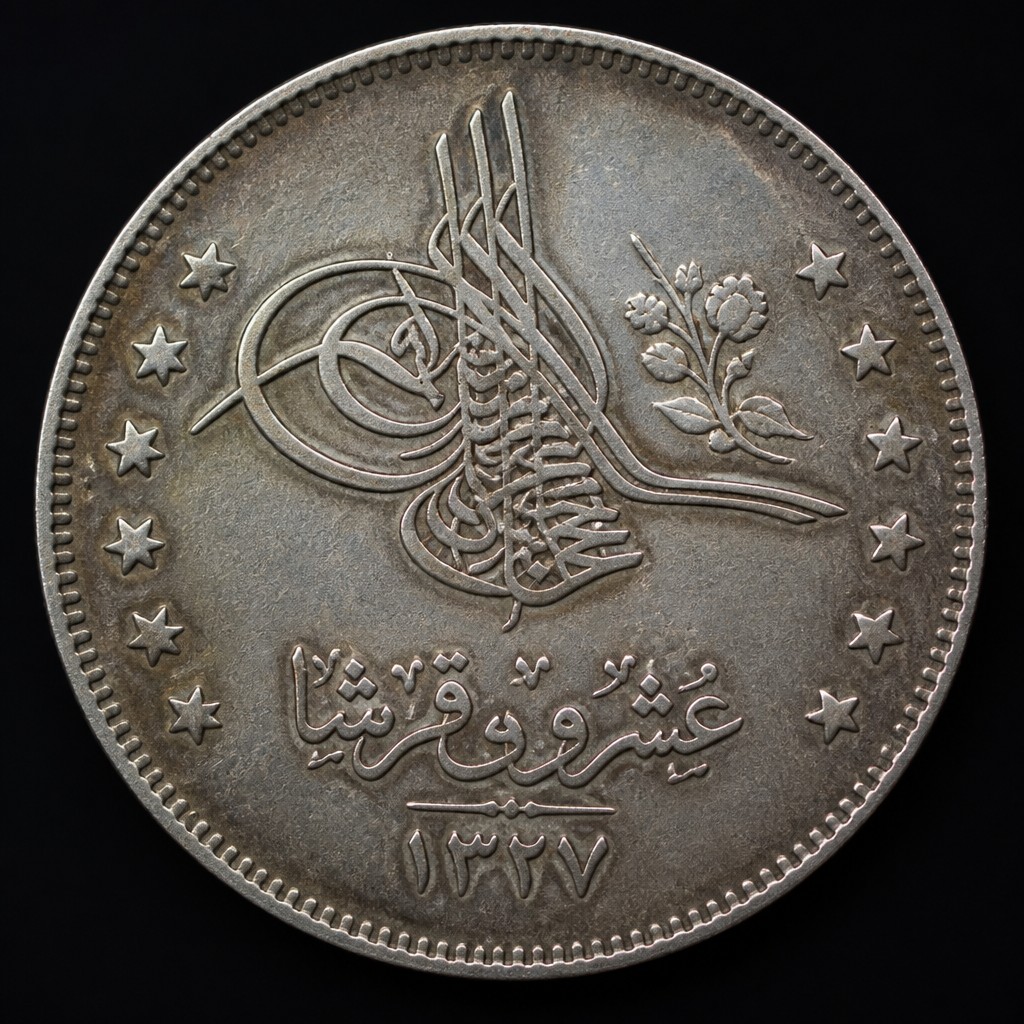
What This Coin Is
The Ottoman 20 Kurus is a silver coin issued by the Ottoman Empire, commonly seen under sultans such as Abdulmecid, Abdulaziz, Abdulhamid II, and Mehmed V during the 19th and early 20th centuries. Kurus (also spelled piastres) was a standard Ottoman currency unit, and the 20 Kurus denomination represented a substantial silver coin used in everyday and larger commerce across the empire's vast territories.
Obverse Design & Inscriptions
The obverse features the sultan's elaborate calligraphic tughra, an ornamental monogram signature unique to each ruler, rendered in flowing Arabic-script lines rather than a portrait, since Ottoman coinage traditionally avoided depicting human figures. Surrounding the tughra is Arabic-script text noting the sultan's accession year and regnal year of striking.
Reverse Design & Inscriptions
The reverse typically states the mint location in Arabic script, most often "Konstantiniye" (Constantinople) for the imperial mint, along with the denomination and additional regnal year information. Decorative floral or geometric borders often frame the central inscription.
Size, Weight, Metal, and Edge
The 20 Kurus is a substantial silver coin, generally in the range of 30-36 mm depending on the exact period, with fineness and weight varying somewhat by sultan and era as the empire adjusted its coinage standards. The edge is usually reeded, consistent with standard milled coinage of the period.
Mint Marks and Where to Find Them
Because the mint name is written out fully in Arabic script on the reverse rather than abbreviated into a small symbol, identifying the mint means reading this inscription directly rather than searching for a small letter or symbol. The regnal year, indicating how many years into the sultan's reign the coin was struck, appears alongside the mint name and accession year on the obverse.
Telling It Apart From Similar Coins
Ottoman coins of different denominations share the same general tughra-and-inscription format, so the key to identifying a 20 Kurus specifically is the denomination text on the reverse combined with the coin's larger size compared to smaller kurus fractions. Comparing the exact tughra artwork also helps distinguish which sultan issued the coin, since each ruler's monogram has a distinct calligraphic shape.
Judging Condition at a Glance
Examine the fine curling lines of the tughra and the sharpness of the Arabic script for wear, since intricate calligraphic detail is the first area to blur with circulation. A coin with crisp, legible script throughout is in notably better condition than one with worn, indistinct lettering.
Authenticity Red Flags
Be cautious of coins with blurred or poorly formed script, since genuine tughra designs have precise, flowing calligraphic lines that are difficult to reproduce accurately in a cast copy. Also check the coin's weight and diameter against known standards for the specific sultan and date, as inconsistencies can indicate an altered or counterfeit piece.
Frequently asked questions
What is a tughra?
A tughra is an ornate calligraphic monogram representing the sultan's name and title, used on Ottoman coins in place of a portrait.
What does 'Kurus' mean?
Kurus, also spelled piastre, was a standard Ottoman Empire currency denomination, with the 20 Kurus being a larger silver coin within that system.
Where do I find the mint name?
It is written in full Arabic script on the reverse, most commonly reading 'Konstantiniye' for the Constantinople mint.
How do I tell which sultan issued the coin?
Compare the specific calligraphic shape of the tughra on the obverse, since each sultan's monogram design is distinct.
Ottoman 20 Kurus identified by the community
Recent Ottoman 20 Kurus coins identified with Coin Identifier.