
How to Identify the Ostrogothic Silver Quarter Siliqua
A tiny pseudo-imperial silver coin struck in Italy by the Ostrogoths, showing a Byzantine emperor's bust on the front and an Ostrogothic king's monogram on the back.
Read the full Ostrogothic Silver Quarter Siliqua encyclopedia entry →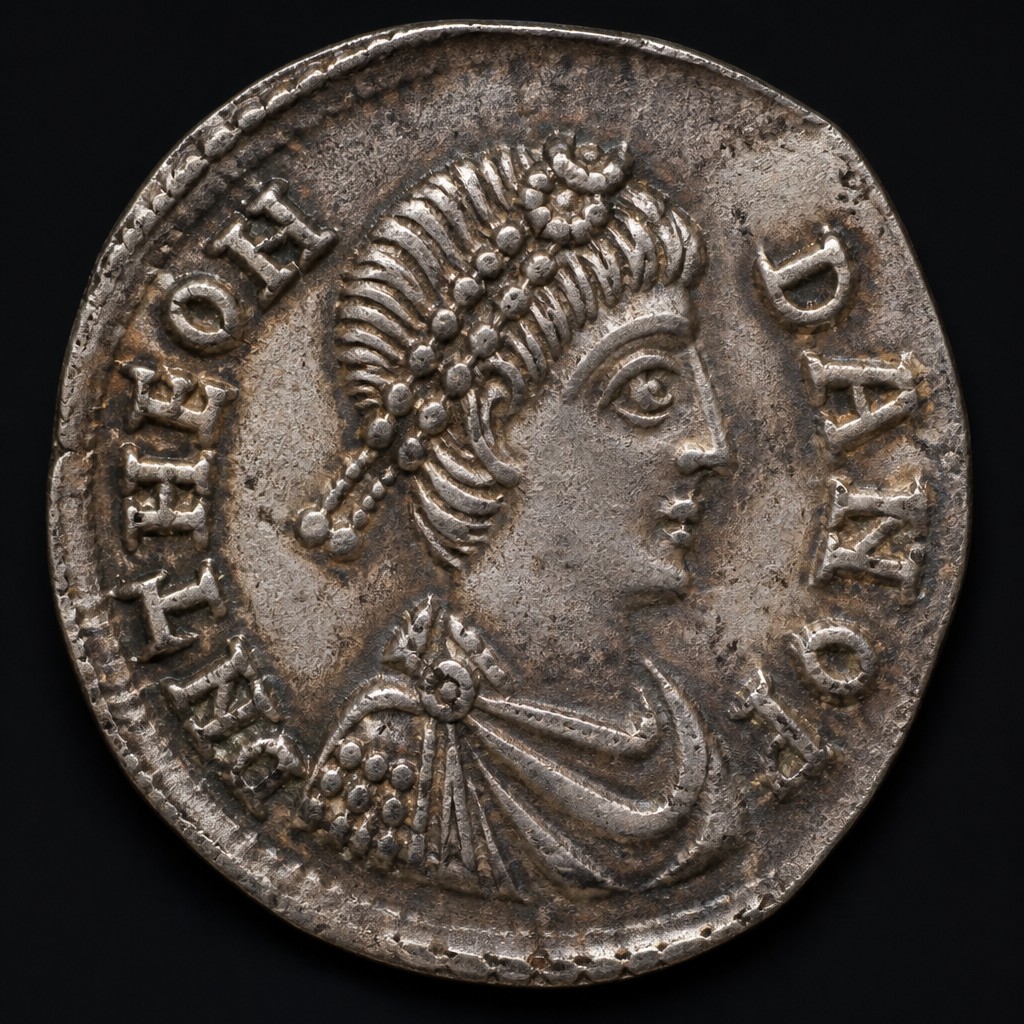
What It Is
The quarter siliqua was the smallest silver denomination struck by the Ostrogothic kingdom of Italy, founded by Theodoric the Great and continuing through his successors until the mid-6th century, when the kingdom was gradually reconquered by the Byzantine Empire in the Gothic War. Rather than placing their own portraits on coinage, Ostrogothic kings struck coins in the name of the reigning Byzantine emperor, a practice known as pseudo-imperial coinage, while marking their own authority through a distinctive reverse monogram. This arrangement reflected the Ostrogoths' formal position as rulers governing Italy under a nominal Byzantine overlordship, even though Theodoric and his successors exercised effective independent power.
Obverse Design
The obverse carries a diademed, draped bust of the Byzantine emperor of the time, most often Anastasius I, Justin I, or Justinian I, facing right. The surrounding legend reads a Latin abbreviation of the emperor's titles, typically a form of "DN [emperor] PF AVG."
Reverse Design
The reverse is the key identifying feature: instead of an imperial reverse type, it displays a monogram formed from the letters of the Ostrogothic king's name, such as Theodoric or Athalaric, usually enclosed within a wreath. Some quarter siliquae instead show a small standing Victory figure.
Size, Weight, and Metal
These are very small, thin silver coins, generally around 10-12mm in diameter and roughly half a gram in weight, making the monogram and legend correspondingly tiny and often difficult to read without magnification.
Mint Marks and Where to Find Them
Ravenna, the Ostrogothic capital, was the principal mint, with Rome also producing coinage at times. Mint attribution relies mainly on stylistic comparison rather than a clearly separated mint letter, since the coins are so small that formal mint marks are rarely legible or present.
Telling It Apart from Similar Coins
The defining difference from genuine Byzantine silver of the same emperors is the reverse monogram; a true Byzantine issue will carry an imperial reverse type rather than a barbarian king's cipher. Compare the monogram shape carefully against reference charts, since different Ostrogothic kings used distinct letter combinations.
Judging Condition at a Glance
Because the coins are so small and often weakly struck, focus on whether the emperor's profile and the monogram's strokes are still distinguishable, rather than expecting sharp full detail even on a lightly circulated piece. Even coins graded as well preserved by dealers often show only a partial legend, so completeness of the monogram matters more than overall sharpness when judging a specific example.
Authenticity Red Flags
Watch for a monogram that does not correspond to any known Ostrogothic king, an emperor's name paired with a monogram from a period when that king was not yet ruling, or a coin that is unusually thick or heavy for the denomination, which can indicate a modern cast copy.
Frequently asked questions
Why does my coin show a Roman emperor if it is Ostrogothic?
Ostrogothic kings struck coins in the reigning Byzantine emperor's name as a show of nominal loyalty, while marking their own rule with a monogram on the reverse.
How do I read the monogram on the reverse?
The monogram combines the letters of the Ostrogothic king's name into one symbol; comparing its shape to published monogram charts for kings like Theodoric or Athalaric helps identify the ruler.
Which mint produced most of these coins?
Ravenna, the Ostrogothic capital in Italy, was the main mint, though Rome also struck coinage during the period.
Why is the coin so small and hard to read?
The quarter siliqua was the smallest fraction of the silver siliqua denomination, so its flan and lettering are naturally tiny compared to larger contemporary coins.