
How to Identify the Oaxaca 5 Centavos
A collector's checklist for the copper Oaxaca 5 Centavos: the profile-bust obverse, the wreathed numeral 5, the Oaxaca legend and 1915 date, plus variety and authenticity cautions.
Read the full Oaxaca 5 Centavos encyclopedia entry →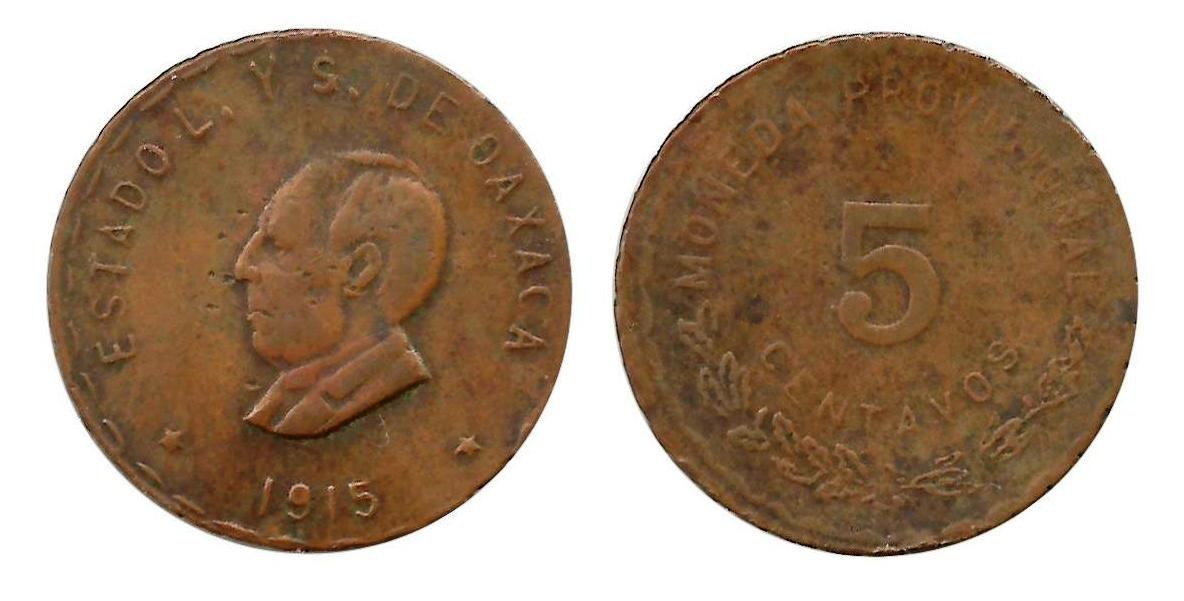
Start with the reverse, because the denomination is the quickest confirmation. Look for a single large numeral 5 enclosed in a wreath, accompanied by the CENTAVOS wording. This wreathed-numeral layout, rather than an eagle or coat of arms, is characteristic of the Oaxaca copper minors and separates the 5 centavos from other values in the set, which show 1, 2, 3, 10, or 20.
Turn to the obverse and check the portrait. You should see a profile bust facing left, set above a base or pedestal — the Juarez likeness used across Oaxaca's copper coins. The presence of a bust-over-base design, rather than the standard Mexican eagle-and-serpent, is a strong signal that you are looking at an Oaxaca state issue rather than a federal centavo.
Read the legends. Genuine pieces carry inscriptions naming the state of Oaxaca and identifying it as a free and sovereign, or provisional, issue, along with the date 1915. Confirming the Oaxaca wording is important, because revolutionary coins from other Mexican states and factions can look superficially similar at small sizes; the legend is what pins the attribution to Oaxaca specifically.
Assess the fabric and variety. This is a small copper coin, and because it was produced under emergency conditions, strike sharpness, surface texture, and even minor dimensions vary between specimens and between varieties. Rather than treating any single set of measurements as definitive, compare the coin against catalog illustrations of the known Oaxaca varieties to see which style — cruder or more finely engraved — your example matches.
Exercise the usual authentication caution. Popular revolutionary types attract both period contemporary counterfeits and modern reproductions, and cast copies may show seam lines, a grainy or pitted surface, or mushy detail in the bust and wreath. For scarcer varieties or higher-value examples, seek expert attribution and, where possible, third-party authentication before paying a premium.
Frequently asked questions
What is the fastest way to recognize an Oaxaca 5 Centavos?
Check the reverse for a large numeral 5 inside a wreath with CENTAVOS wording, then confirm the obverse profile bust over a base and an Oaxaca legend with an 1915 date. That combination identifies the type.
How do I tell it apart from a federal Mexican centavo?
Federal centavos of the era typically use the national eagle-and-serpent arms. The Oaxaca piece instead shows a profile bust on one side and a wreathed numeral on the other, with legends naming the state of Oaxaca as a free and sovereign or provisional issue.
Why do two genuine examples look so different?
The Oaxaca coinage was struck quickly under wartime conditions and exists in several styles and finishes, from crude to more refined. Match your coin to catalog images of the known varieties rather than expecting every specimen to be identical.
How can I guard against fakes?
Inspect the bust and wreath under magnification for soft, cast-looking detail, seam lines, or an unnaturally grainy surface, and be wary of coins presented as scarce varieties. For valuable pieces, rely on expert attribution or third-party authentication.