
How to Identify the Nuremberg Thaler
A large silver taler issued by the Free Imperial City of Nuremberg, typically showing a detailed cityscape or civic emblem rather than a ruler's portrait.
Read the full Nuremberg Thaler encyclopedia entry →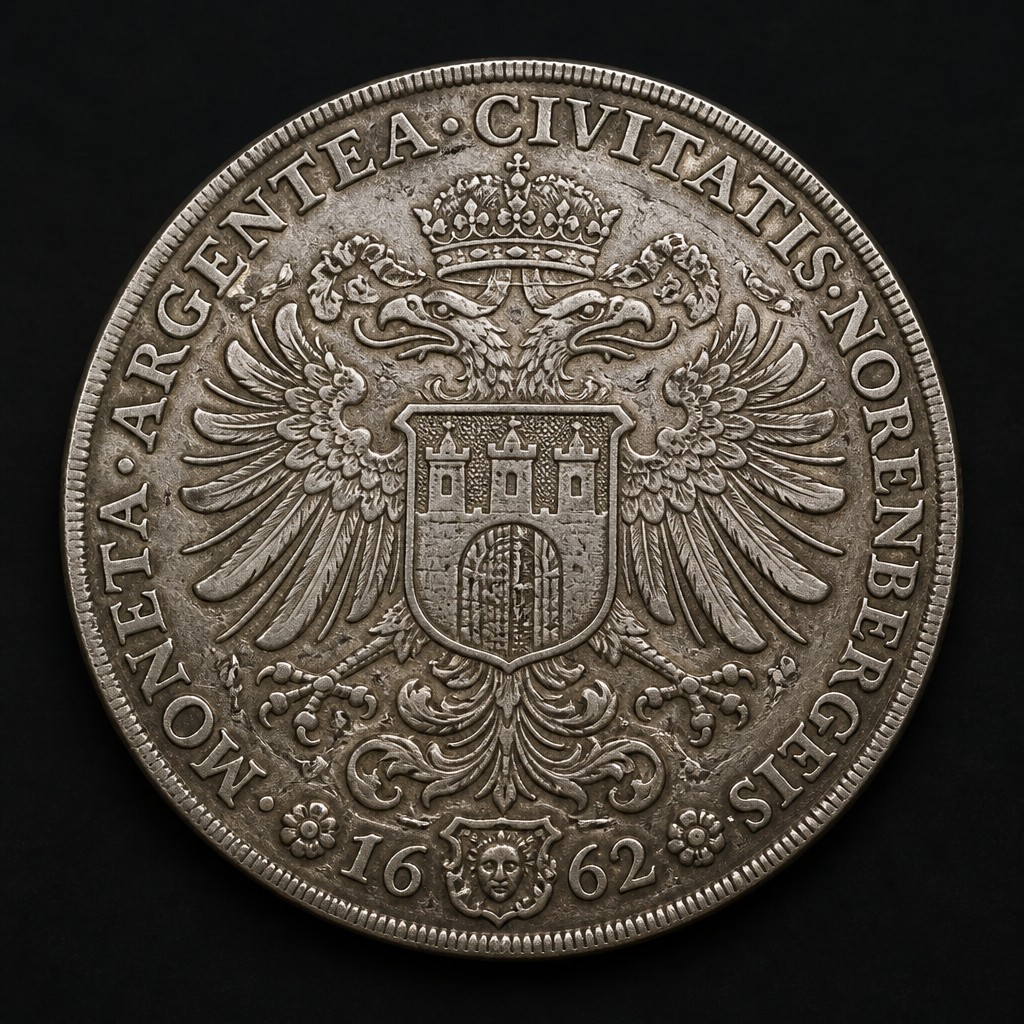
What This Coin Is
The Nuremberg Thaler is a large silver coin struck by the Free Imperial City of Nuremberg, a self-governing city-state within the Holy Roman Empire, across several centuries into the early 19th century. Because Nuremberg was a free city rather than a monarchy, its coinage typically emphasizes civic imagery, such as the city's skyline or emblem, rather than a ruler's portrait.
Obverse Design & Inscriptions
Many Nuremberg thalers show a detailed engraved view of the city itself, depicting its walls, towers, and rooftops, or alternatively the city's coat of arms featuring an eagle and other heraldic elements. A Latin legend naming the free city, such as "MONETA NOVA REIPUBLICAE NORIBERGENSIS," typically encircles the design along with the date.
Reverse Design & Inscriptions
The reverse commonly displays the imperial eagle, reflecting Nuremberg's status within the Holy Roman Empire, sometimes combined with the reigning emperor's name since the city struck coins under imperial authority even while governing itself locally. Additional Latin text referencing the empire or the specific emperor of the time often frames the eagle.
Size, Weight, Metal, and Edge
As a standard taler, the coin measures roughly 40-42 mm in diameter and weighs about 28-29 grams, in silver typically around .833 to .900 fine depending on the specific period's monetary standard. The edge is often ornamented with a lettered or patterned inscription, typical of large German taler coinage of the era.
Mint Marks and Where to Find Them
Small mint master initials, rather than a distinct mint name (since the city name itself is spelled out in the main legend), typically appear near the base of the design or close to the date. These initials help pinpoint the specific mint official and narrow the coin to a more precise range of years.
Telling It Apart From Similar Coins
Other German free city thalers, such as those from Augsburg, Hamburg, or Frankfurt, use their own distinct civic emblems and city views, so the specific architectural details in the cityscape and the exact wording "Noribergensis" (referring to Nuremberg) confirm this particular city's issue. The combination of a detailed city view obverse with an imperial eagle reverse is a strong identifying pairing for genuine free city thalers of this type.
Judging Condition at a Glance
Examine the fine architectural lines of the city view or the eagle's feather detail for wear, since these intricate raised elements are the first to flatten with circulation. A coin with sharp, legible building outlines and crisp lettering around the border is in notably better condition than a smooth, worn example lacking fine detail.
Authenticity Red Flags
Be cautious of coins with blurred or indistinct architectural detail in the city view, incorrect weight or diameter for the standard taler specification, or a grainy surface suggesting a cast reproduction rather than a properly struck coin. Also verify the Latin legend wording and eagle style are consistent with the claimed date, since inconsistencies can indicate an altered or fantasy piece.
Frequently asked questions
Why does this coin show a city view instead of a portrait?
Nuremberg was a self-governing Free Imperial City rather than a monarchy, so its coinage favored civic imagery like the cityscape or coat of arms instead of a ruler's portrait.
What does the eagle on the reverse represent?
It represents the imperial eagle, reflecting Nuremberg's status as a city operating under the authority of the Holy Roman Empire.
How heavy is a Nuremberg Thaler?
Approximately 28 to 29 grams, consistent with the standard taler weight of the period.
Where should I look to confirm the coin is from Nuremberg specifically?
Check the Latin legend for the word 'Noribergensis' and compare the architectural details of the city view against known Nuremberg landmarks.