
How to Identify the Nummus of Maximianus
Read the MAXIMIANVS obverse legend, the reverse deity legend, the mint mark, and the coin's size to attribute this Tetrarchic bronze.
Read the full Nummus of Maximianus encyclopedia entry →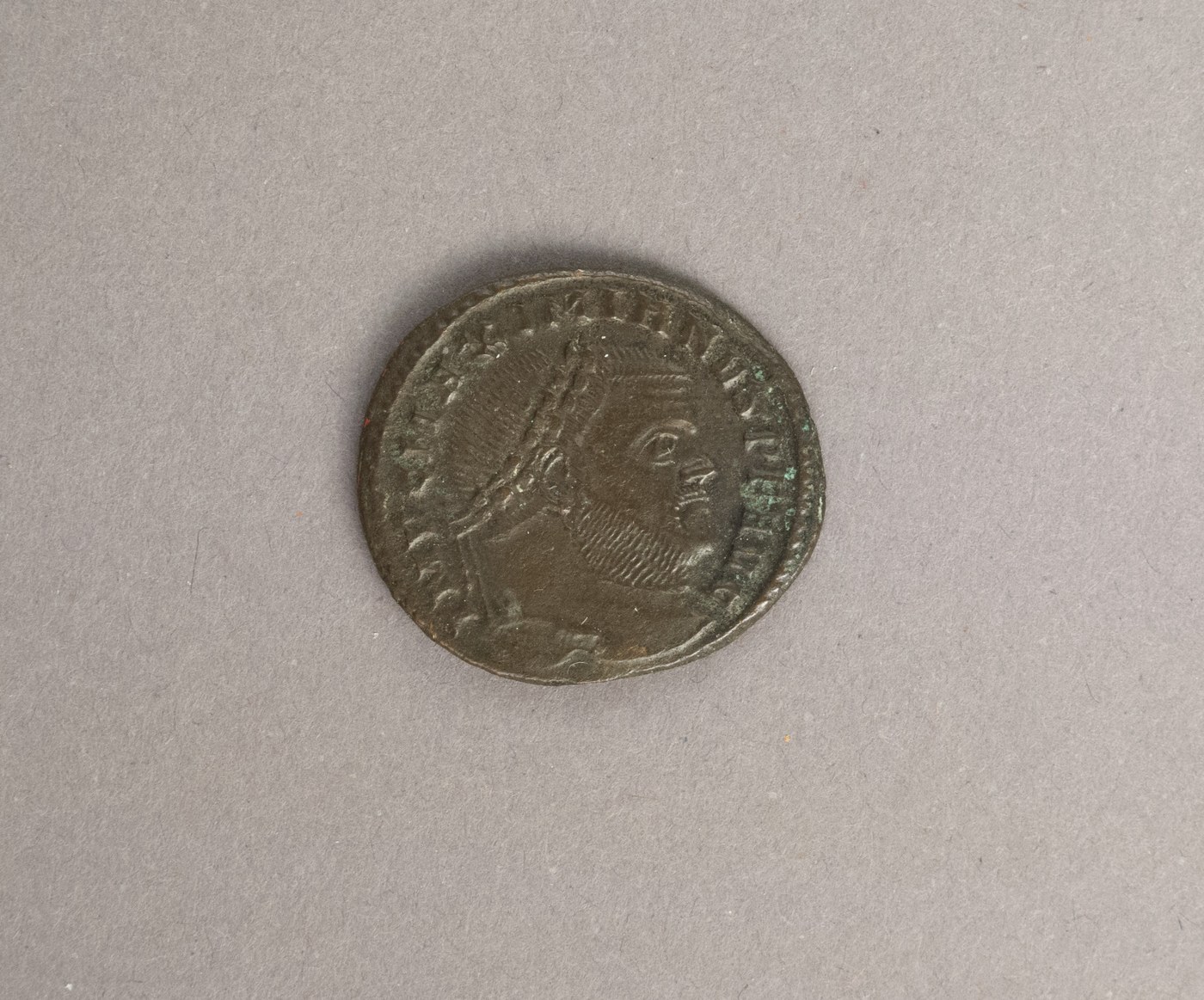
Start with the obverse legend, which names the emperor. This type circles a right-facing laureate (and often cuirassed) portrait with a Latin legend such as IMP C M A MAXIMIANVS P F AVG for the senior emperor, or MAXIMIANVS NOB CAES for his junior-rank issues. The name MAXIMIANVS is the anchor. The most common trap is Galerius, whose full name GAL VAL MAXIMIANVS ends in the same word, so read the entire legend rather than the last few letters alone.
Next read the reverse legend, which almost always names the standing figure. GENIO POPVLI ROMANI identifies the Genius of the Roman People, a bare-chested male holding a cornucopia and pouring from a patera, this is the dominant reverse. Alternatives include IOVI CONSERVATORI (Jupiter with scepter and thunderbolt), a Hercules type fitting Maximian's patron god, or Sol and various personifications. Matching the figure's attributes to the legend confirms the type.
Find the mint mark in the exergue, the strip below the reverse figure. Short letter groups such as an abbreviated city name plus a workshop numeral identify where the coin was struck, from western mints in Britain and Gaul to eastern centers. This mark is essential for precise attribution and separates otherwise identical coins.
Check size and metal to place the coin in the series. It should be bronze with a brown or green patina, sometimes with silvering surviving in the recesses. Early reform nummi are large, roughly 26 to 28 mm and 8 to 10 grams; later issues become noticeably smaller and lighter toward 310 CE. A coin that is unusually light, sharp-edged, seamed, or suspiciously glossy may be a cast or tourist replica.
Authenticate anything uncertain or valuable. Cast fakes often show a seam around the edge, mushy detail, and a bubbly surface; genuine struck coins have crisp, slightly irregular flans and honest wear. For confirmation, compare against published references (RIC volume VI) or consult a specialist in ancient coins or a reputable grading service rather than relying on a single photograph.
Frequently asked questions
How do I tell Maximianus from Galerius?
Read the whole obverse legend. Both names end in MAXIMIANVS, but Galerius is written GAL VAL MAXIMIANVS or MAXIMIANVS with the GAL/VAL prefix, while the emperor Maximianus Herculius carries IMP C M A MAXIMIANVS or MAXIMIANVS NOB CAES.
Where is the mint mark?
In the exergue, the horizontal band beneath the standing figure on the reverse. It is a short group of letters, an abbreviated mint city plus a workshop number, and it pins down where the coin was struck.
Should there be silver on a bronze coin?
Yes, originally. The nummus was struck in bronze with a thin silver wash that usually wore away. Surviving traces of silvering in the design's recesses are normal and add to a coin's appeal.
How can I spot a fake?
Watch for a raised seam around the edge, soft or bubbly detail, and an unnaturally uniform surface, all signs of casting. Genuine struck examples show crisp devices and natural wear. Have doubtful pieces checked by an ancient-coin specialist.