
How to Identify the Nova Scotia One Cent
Collector checks for the colonial Nova Scotia cent: crowned Victoria obverse, crown-and-maple reverse, bronze size, and look-alikes.
Read the full Nova Scotia One Cent encyclopedia entry →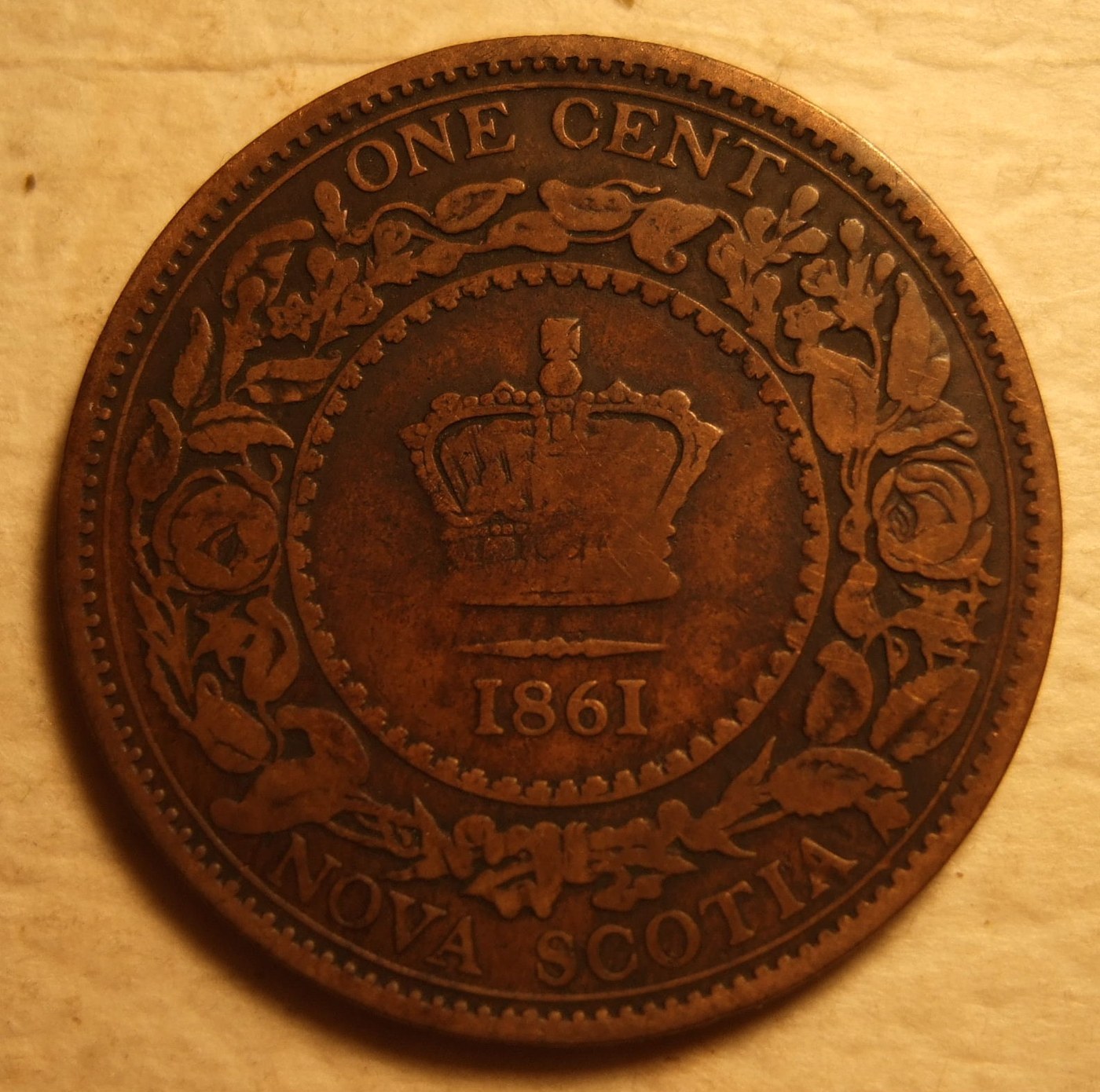
Begin with the obverse legends, which name the issuer outright. The coin should read NOVA SCOTIA and ONE CENT around a crowned bust of Queen Victoria facing right, surrounded by a floral wreath. The crown on Victoria's head is a useful detail: it marks this as the Nova Scotia colonial type rather than a bare-headed portrait used on other coinages.
Turn to the reverse for confirmation. Look for a crown at the center with maple leaves on each side, all enclosed by a beaded circle, and the date beneath. Read the date carefully. Only 1861 and 1864 were struck; any other year on a coin with this design points to a misread date or a coin that is not what it claims to be.
Cross-check the physical standard. The Nova Scotia cent is a bronze large cent, roughly 25 mm across and about 5-6 grams, with a plain, non-reeded edge. A coin that is much smaller, magnetic, or has a grooved edge is not this type. The metal should show a natural copper-brown patina rather than a bright, plated shine.
Mind the closest look-alike. The New Brunswick One Cent of the same era uses a very similar crown-and-maple reverse and crowned Victoria obverse, but its legend reads NEW BRUNSWICK. Always read the country name in full before attributing the coin, since the two are easily confused at a glance. The smaller, later Dominion of Canada cents lack the NOVA SCOTIA legend entirely.
Finally, weigh authentication against value. Common circulated examples rarely justify concern, but for high-grade or red-toned pieces, examine the surfaces for tooling, artificial re-coloring, or a suspiciously sharp date under magnification, and consider a reputable dealer or third-party grading service before paying a premium.
Frequently asked questions
How do I tell a Nova Scotia cent from a New Brunswick cent?
Read the obverse legend. Both share a crowned Victoria and a crown-and-maple reverse, but one says NOVA SCOTIA and the other NEW BRUNSWICK. The country name is the only reliable difference at a glance.
What size and weight should it be?
About 25 mm in diameter and roughly 5-6 grams in bronze, with a plain (non-reeded) edge. A much smaller, lighter, or magnetic coin is not this type.
Which dates are genuine for this type?
Only 1861 and 1864. A Nova Scotia one-cent design showing any other year should be double-checked, as the date may be misread or the coin questionable.
Does the crowned portrait matter for identification?
Yes. The Nova Scotia cent shows Queen Victoria wearing a crown facing right within a wreath, which helps separate it from bare-headed Victoria portraits on other 19th-century coins.