
How to Identify the Norwegian Krone
The Norwegian krone has been the country's currency since 1875, generally showing the reigning monarch's portrait or monogram together with Norway's crowned lion emblem.
Read the full Norwegian Krone encyclopedia entry →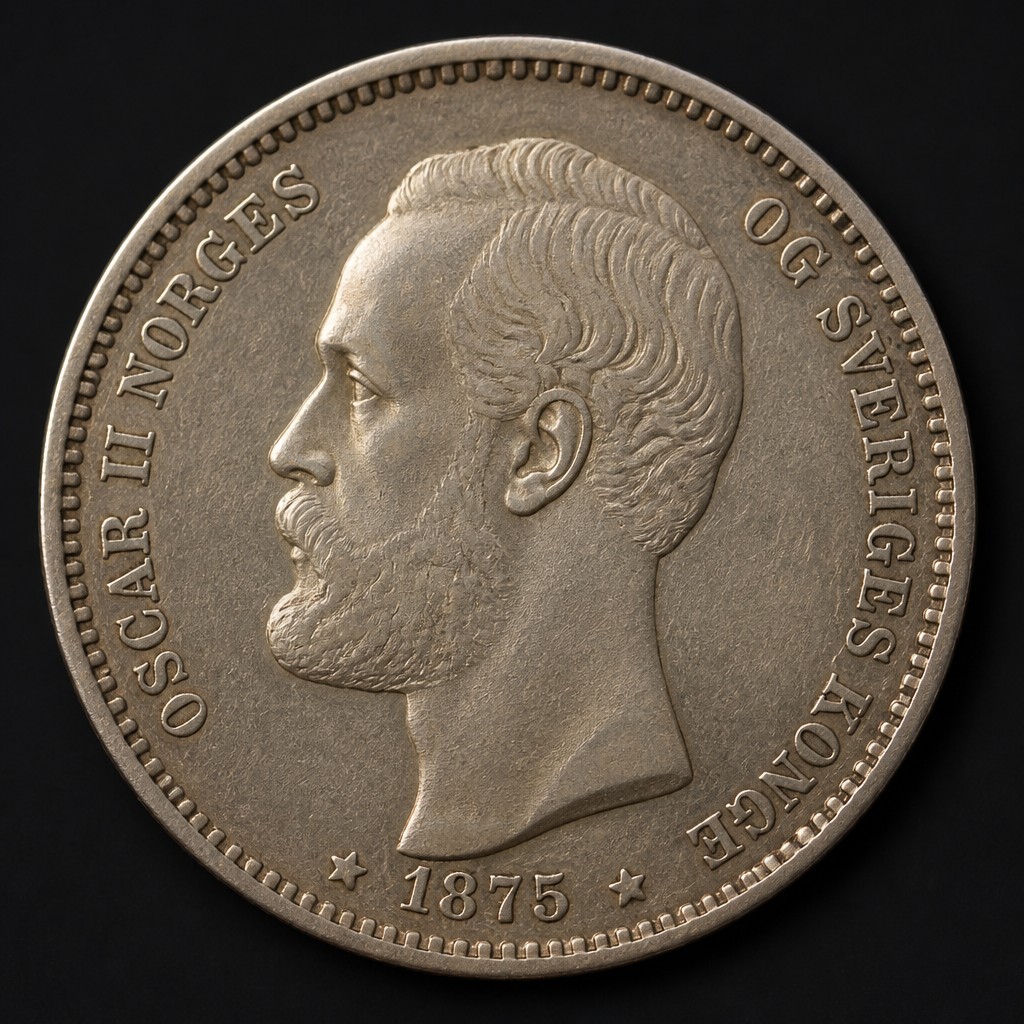
What Is the Norwegian Krone
The krone has been the official currency of Norway since 1875, issued continuously under successive Norwegian monarchs including Oscar II, Haakon VII, Olav V, and Harald V, with design changes reflecting each reign. Norway adopted the krone as part of the Scandinavian Monetary Union alongside Sweden and Denmark, a shared gold-based currency arrangement that shaped the naming and general design conventions still visible on today's coins.
Obverse Design and Inscriptions
The obverse shows a royal portrait bust in profile or a crowned royal monogram, with legend text naming the king, such as "HARALD V NORGES KONGE" (Harald V, King of Norway).
Reverse Design and Inscriptions
The reverse shows the denomination numeral with "KRONE" or "KRONER," frequently paired with Norway's crowned lion holding an axe, the national coat of arms symbol, plus the date.
Size, Weight, Metal, and Edge
Early krone coins included silver for higher denominations, while modern circulating coins use copper-nickel, bronze, and other base-metal alloys. Size and weight increase with denomination, and edges vary from plain to reeded, with some smaller Norwegian coins using a distinctive perforated (holed) design.
Mint Marks and Where to Find Them
The Royal Norwegian Mint, historically located in Kongsberg, marks its coins with small letters or symbols near the rim, often close to the date. Kongsberg has been Norway's traditional minting center for centuries, tracing back to nearby silver mining operations that supplied metal for the country's earliest coinage.
Telling It Apart From Similar Coins
The crowned lion with an axe is Norway's specific heraldic symbol, distinguishing its coins from Sweden's three-crowns motif or Denmark's cypher-focused designs. Some Norwegian coins also use a distinctive center hole, a feature not used on Sweden's or Denmark's standard krone coins. Reading the king's name in the legend provides an additional confirmation, since all three Scandinavian countries use similarly named "krone" or "krona" denominations but different ruling houses.
Judging Condition at a Glance
Examine the lion's mane and axe details or the portrait's facial features for wear, along with the sharpness of the denomination numeral. Coins with a center hole should have a clean, evenly punched hole without excessive wear rounding its edge. Also check the legend text around the rim, since a well-preserved coin keeps every letter fully legible, while a heavily circulated example may show flattened or partially worn lettering near the edge.
Authenticity Red Flags
Confirm metal weight and color match the expected denomination, and check that any center hole is properly centered and consistent with genuine mint production. A poorly punched or off-center hole, incorrect diameter, or blurred lion detail suggests a counterfeit or altered coin.
Frequently asked questions
What does the crowned lion with an axe represent?
It's Norway's national coat of arms, a heraldic lion holding an axe, used on coins and other state emblems for centuries.
Why do some Norwegian coins have a hole in the center?
Certain denominations were minted with a center hole as a distinctive design and practical identification feature.
Whose portrait appears on Norwegian krone coins?
It varies by era, including kings such as Oscar II, Haakon VII, Olav V, and Harald V.
Was the Norwegian krone ever silver?
Yes, historically larger denomination coins used silver before Norway shifted to base-metal alloys for general circulation.
How can I tell a Norwegian krone from a Swedish or Danish one?
Check the national symbol, such as the lion with axe for Norway, and the monarch's name in the legend, since each country's kings and heraldic emblems differ.