
How to Identify the Nickel Three-Cent Piece
A guide to the Nickel Three-Cent Piece (1865-1889), covering its Liberty head obverse, Roman numeral III reverse, copper-nickel composition, and how to distinguish it from the earlier silver version.
Read the full Nickel Three-Cent Piece encyclopedia entry →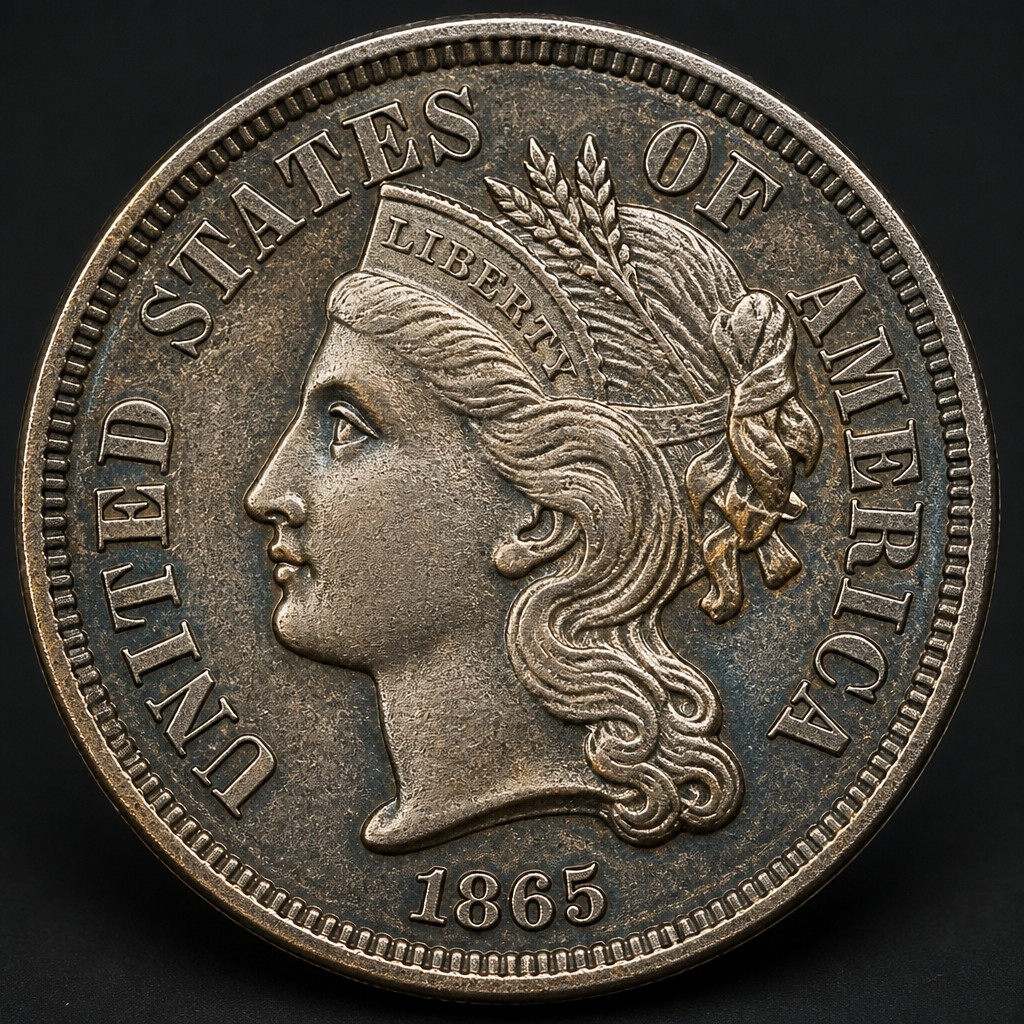
What Is the Nickel Three-Cent Piece?
The Nickel Three-Cent Piece was struck from 1865 to 1889, introduced to replace the smaller, harder-to-handle Silver Three-Cent Piece and to make use of surplus copper-nickel alloy capacity at the mint following the Civil War. It circulated alongside the Two-Cent Piece and other small-denomination coins of the period.
Obverse Design
The obverse shows a left-facing portrait of Liberty wearing a coronet, with "UNITED STATES OF AMERICA" around the border and the date below the bust, a relatively simple design compared to other coinage of the same years.
Reverse Design
The reverse displays a large Roman numeral "III" (representing three cents) at the center, encircled by a wreath and a ring of stars near the outer border.
Size, Weight, and Metal
The coin measures about 17.9 mm in diameter, notably larger than the tiny Silver Three-Cent Piece it replaced, and is struck in 75% copper and 25% nickel, the same alloy used for the five-cent nickel introduced a few years later, giving it a pale, grayish-white color rather than the yellowish tone of bronze or the deep gray of silver.
Telling It Apart from the Silver Three-Cent Piece
The most important distinction for this coin is versus its silver predecessor: the Silver Three-Cent Piece (1851-1873) is much smaller and thinner, shows a six-pointed star design on the obverse rather than a Liberty portrait, and is a dull grayish silver color, while the Nickel Three-Cent Piece is larger, thicker, and shows the coronet Liberty head described above. Comparing size and obverse design instantly separates the two types.
Telling It Apart from Other Coins
Because the Roman numeral "III" reverse is unique to this denomination, it is not easily mistaken for other coins once examined closely, though its size and pale metal color can superficially resemble a worn dime at a glance; checking for the numeral "III" instead of any Roosevelt or Liberty seated design on the reverse quickly confirms the denomination.
Judging Condition
Grade is assessed by the sharpness of Liberty's coronet and hair curls on the obverse and the clarity of the wreath leaves and stars on the reverse. Because the copper-nickel alloy is fairly hard, well-struck examples with sharp central details are generally available across the grading range, though heavily circulated pieces can show significant flattening in the portrait's highest points.
Authenticity Red Flags
This series is not commonly targeted by counterfeiters relative to gold or larger silver coinage, but general concerns still apply: a coin with a grainy, pitted surface texture, indistinct or mushy lettering, or a diameter and weight noticeably outside the standard specification should be treated with caution and compared against a known genuine example or evaluated by a specialist before drawing conclusions about a particular date's rarity.
Frequently asked questions
How do I tell the Nickel Three-Cent Piece from the Silver Three-Cent Piece?
The nickel version is larger and thicker with a coronet Liberty head obverse, while the silver version is much smaller and thinner with a six-pointed star design instead of a portrait.
What does the reverse design show?
A large Roman numeral 'III' at the center, surrounded by a wreath and a ring of stars, indicating the three-cent denomination.
What metal is this coin made of?
75% copper and 25% nickel, the same alloy later used for the standard five-cent nickel.
Could this coin be mistaken for a dime?
At a glance its pale color and size might suggest a worn dime, but checking the reverse for the Roman numeral 'III' instead of a dime's typical design immediately confirms the denomination.