
How to Identify the Nguyen Dynasty Gold Bar (Vietnam)
A rectangular or boat-shaped gold ingot from Vietnam's Nguyen dynasty, identified by stamped Chinese characters recording weight and purity rather than a struck coin design.
Read the full Nguyen Dynasty Gold Bar (Vietnam) encyclopedia entry →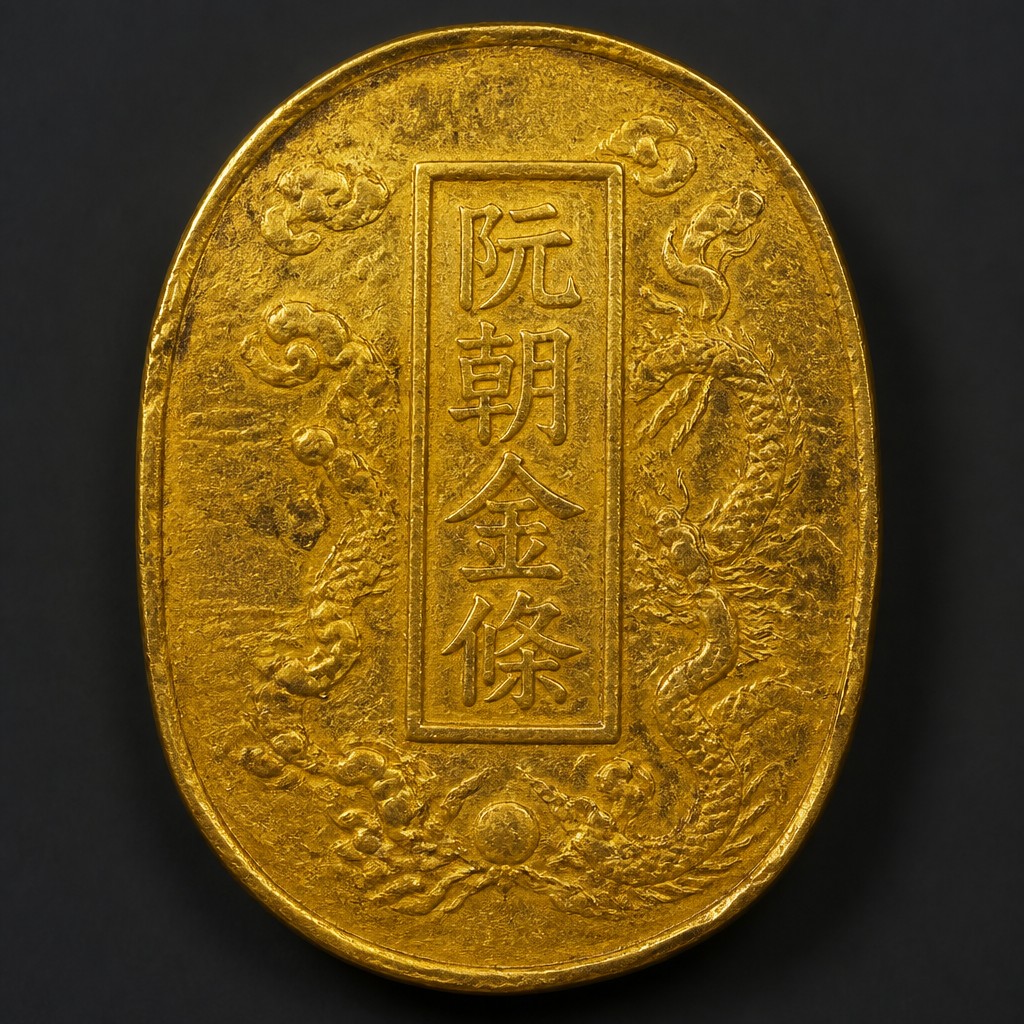
What This Coin Is
Gold bars produced under Vietnam's Nguyen dynasty (which ruled from the early nineteenth century until the mid-twentieth century) served as a high-value store of wealth and a form of tribute or treasury currency, distinct from the everyday cast cash coins used in ordinary commerce. These ingots were reserved for large transactions, royal treasury use, or ceremonial and tribute purposes.
"Obverse" Markings
The primary identifying features are stamped or inscribed Chinese characters (the classical script used in official Vietnamese documents of the period) recording the weight of the bar, often in traditional units such as lang (tael) or smaller subdivisions, along with markings that may reference the reigning emperor's era name or an issuing treasury office.
Shape and Form
These gold bars typically take a rectangular, boat-shaped, or elongated ingot form rather than a round coin shape, similar in general concept to Vietnamese silver ingots (thoi bac) but reserved for gold due to its higher value density.
Size, Weight, and Metal
Because these ingots were valued according to their gold content and weight denomination rather than a standardized coin diameter, sizes vary depending on the specific lang-based weight the piece represents; genuine examples are high-purity gold given their treasury and tribute role.
Mint Marks and Where to Find Them
As with silver ingots of the period, there is no mintmark in the Western coin sense; instead, the stamped inscriptions themselves identify the issuing authority, reign period, or treasury office responsible for the bar's weight and purity guarantee.
Telling It Apart from Similar Items
Nguyen dynasty gold bars can be confused with Vietnamese silver ingots of similar shape (distinguished immediately by metal color and much greater weight-for-size in the case of gold), as well as with Chinese gold ingots of the same general era, which carry different stamped characters and reign references specific to Chinese, rather than Vietnamese, authorities.
Grading at a Glance
Because these are valued primarily as bullion with historical and ceremonial significance, condition assessment focuses on the legibility of the stamped inscriptions and the integrity of the bar's form, rather than the kind of wear-based grading used for circulated coins.
Authenticity Red Flags
Given the high value of gold, this category is a frequent target for reproductions, so a piece with a suspiciously light weight for its size, inscriptions in a script or style inconsistent with the claimed period, or a surface finish that looks too uniform or modern should be treated with caution. Verifying gold content and weight through appropriate testing, rather than relying on appearance alone, is especially important for items in this category.
Frequently asked questions
How is this different from a Vietnamese silver ingot?
It follows a similar boat- or bar-shaped ingot format but is made of gold, identifiable by its color and much higher weight-for-size compared to silver.
What do the stamped characters on the bar mean?
They typically record the bar's weight in traditional units and may reference the issuing treasury office or reigning emperor's era.
Was this used in everyday commerce?
No, gold bars like this were reserved for large transactions, royal treasury purposes, or ceremonial tribute rather than routine daily spending.
Why should I be cautious with this item?
Because of gold's high value, this category is commonly reproduced, so verifying weight and gold content carefully is especially important.