
How to Identify the New Zealand Threepence
Collector checks for the small silver threepence: the George V portrait, the crossed-patu reverse, tiny size and weight, and Commonwealth look-alikes.
Read the full New Zealand Threepence encyclopedia entry →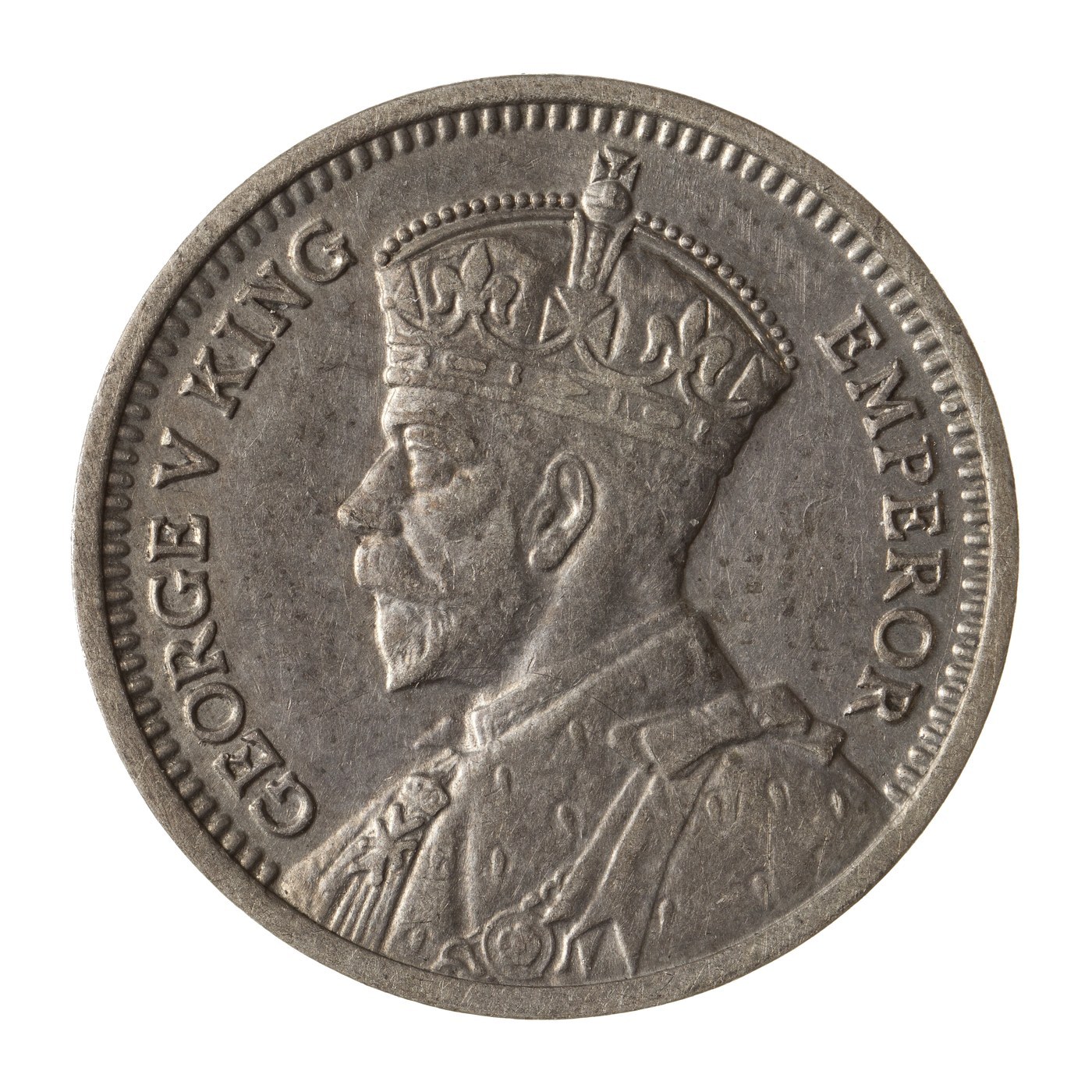
Start with the portrait, because it dates the coin. A George V threepence carries the crowned, left-facing bust with a legend beginning GEORGIVS V and his Latin royal titles, and on this example the date is 1933, the first year of New Zealand's own coinage. If the bust is instead George VI or Queen Elizabeth II, you are holding a later date in the same series rather than this earliest George V type.
Turn to the reverse to confirm the country and denomination. The New Zealand threepence shows two crossed patu (Maori clubs) with THREE PENCE and the date. That crossed-club design is the diagnostic feature: British and Australian threepences of the same period use entirely different reverses, so the patu design pins the coin to New Zealand.
Measure the coin as a cross-check. The threepence is very small, only about 16 mm across, weighs roughly 1.4 grams, and has a plain, smooth edge. Dates from 1933 to 1946 are .500 silver; from 1947 the coin is cupro-nickel. Silver is non-magnetic, so any magnetic response points to a base-metal later date or a problem coin.
Mind the size-based look-alikes. The threepence is the smallest of the pre-decimal silver coins, so do not confuse it with the larger sixpence or shilling, which carry different reverse designs and are heavier. The tiny diameter combined with the crossed patu reverse together confirm the three-penny denomination.
For authentication, weigh and measure any promising coin and inspect the date and portrait under magnification for tooling or wear that could disguise a scarcer date. Small silver coins are easily cleaned or damaged, which harms value. For an early date or a coin you believe to be high grade, have it verified by a reputable dealer or grading service before relying on it.
Frequently asked questions
How do I tell a New Zealand threepence from a British or Australian one?
Check the reverse. The New Zealand threepence shows two crossed Maori patu (clubs) with THREE PENCE and the date, a design unique to New Zealand; the British and Australian threepences use different reverses.
How do I tell the threepence from a sixpence?
By size and reverse. The threepence is the smaller coin at about 16 mm and 1.4 grams with the crossed-patu reverse, while the sixpence is larger, heavier, and carries a different design.
Is a 1933 threepence silver?
Yes. Threepences dated 1933 through 1946 are .500 (half) silver. Only from 1947 onward did the coin switch to cupro-nickel, so this 1933 example is a genuine silver piece.
Do I need professional authentication?
For common circulated dates, careful measurement and a look at the portrait and reverse are usually enough. For early or high-grade coins, have the piece verified by a reputable dealer or grading service.