
How to Identify the New Zealand Halfpenny
Collector checks for New Zealand's bronze halfpenny: the hei-tiki reverse, the royal portrait, size and metal, dating, and look-alikes.
Read the full New Zealand Halfpenny encyclopedia entry →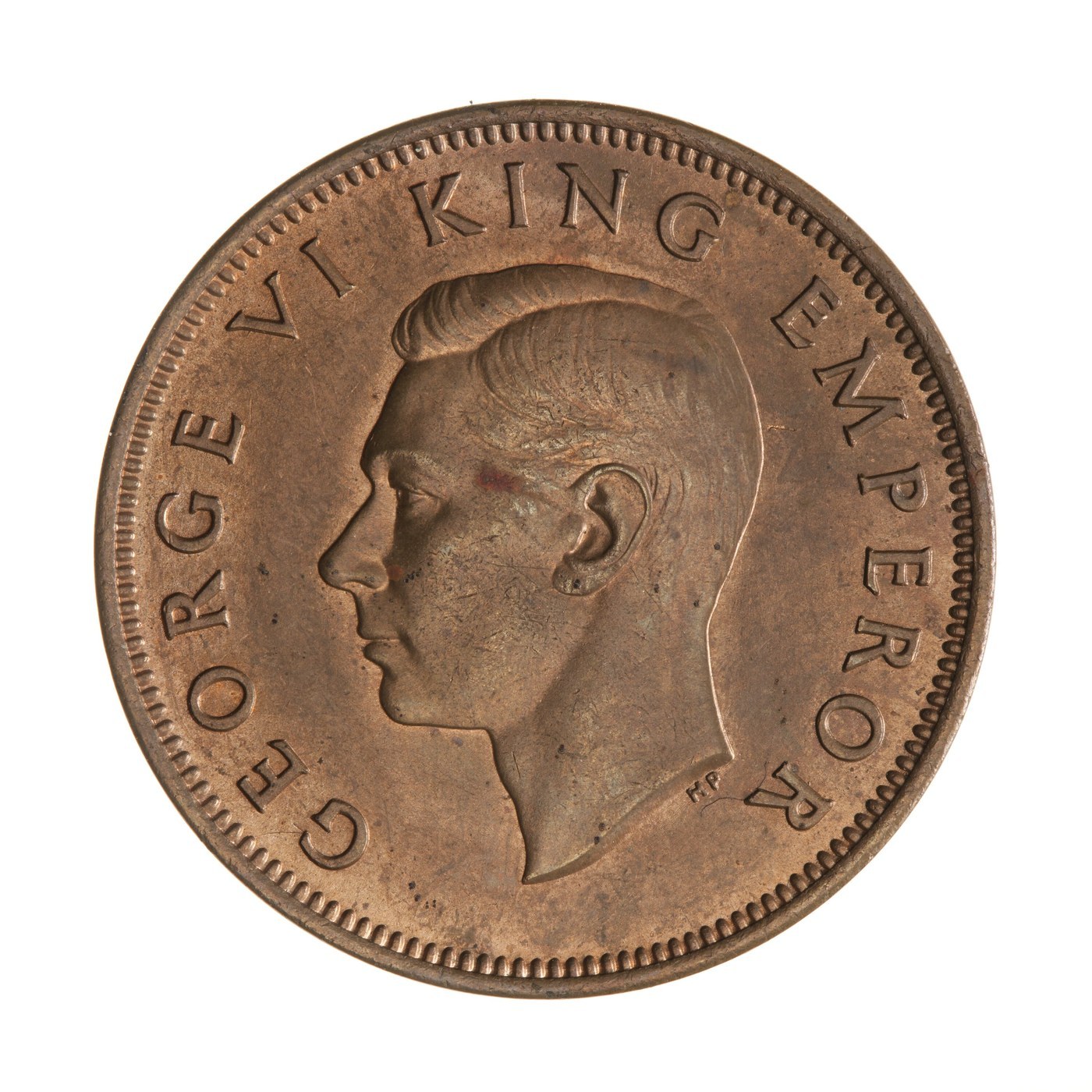
Begin with the reverse, because it settles the identification at a glance. Look for a stylised hei-tiki, a Maori figure pendant, with the word HALF above and PENNY below and the date beneath. This Maori design is unique to the New Zealand halfpenny; no British or Australian bronze coin of the same period carries it. If you see this reverse, you have the type in hand.
Next read the obverse to narrow the date. A portrait of King George VI places the coin between 1940 and 1952, while a Queen Elizabeth II portrait places it between 1953 and 1965. The coin here is a 1940 George VI issue, the first year of the denomination. The monarch shown, combined with the date below the tiki, pins down where a coin sits in the series.
Use size and metal as a cross-check against the penny. The halfpenny is bronze, brown, non-magnetic, and distinctly smaller than the New Zealand penny. The clearest separator is the wording and the reverse subject: the halfpenny reads HALF PENNY around a hei-tiki, whereas the penny reads simply PENNY and shows a tui bird perched on a branch. Confirming the coin is non-magnetic also rules out later base-metal look-alikes.
Watch the common look-alikes. Contemporary British and Australian bronze halfpennies are similar in size and colour, so always confirm the country by the tiki reverse and the legend rather than by size alone. A worn coin with an unreadable reverse can be told apart by its Maori design once cleaned of surface grime, though harsh cleaning should be avoided as it lowers value.
Authentication is rarely a concern on this low-value type, since bronze halfpennies were struck in large numbers and are not usually counterfeited. The main judgements are grade and originality: whether the coin retains original mint red colour or has toned brown, and whether details such as the tiki's face and the date are sharp. For any coin offered as a scarce date or high grade, seek a second opinion from a reputable dealer or grading service.
Frequently asked questions
How do I tell a halfpenny from a penny?
The halfpenny is smaller, reads HALF PENNY, and shows a hei-tiki on the reverse. The penny is larger, reads PENNY, and shows a tui bird on a branch.
How do I date a New Zealand halfpenny?
Read the year beneath the tiki, and check the monarch: George VI means 1940-1952 and Elizabeth II means 1953-1965. The coin shown is dated 1940.
Could this be a British or Australian coin instead?
Those look similar in size and colour, but only the New Zealand halfpenny carries the hei-tiki reverse. Confirm the country by the Maori design and the legend, not by size.
What condition points affect the halfpenny?
Original mint-red colour and sharp detail on the tiki's face and the date raise value, while heavy wear, harsh cleaning, and corrosion lower it.