
How to Identify the New Zealand Half Crown (pre-decimal)
New Zealand's largest regularly circulating pre-decimal silver coin, the half crown (two shillings sixpence) featured the national coat of arms on its reverse from 1933 to 1965.
Read the full New Zealand Half Crown (pre-decimal) encyclopedia entry →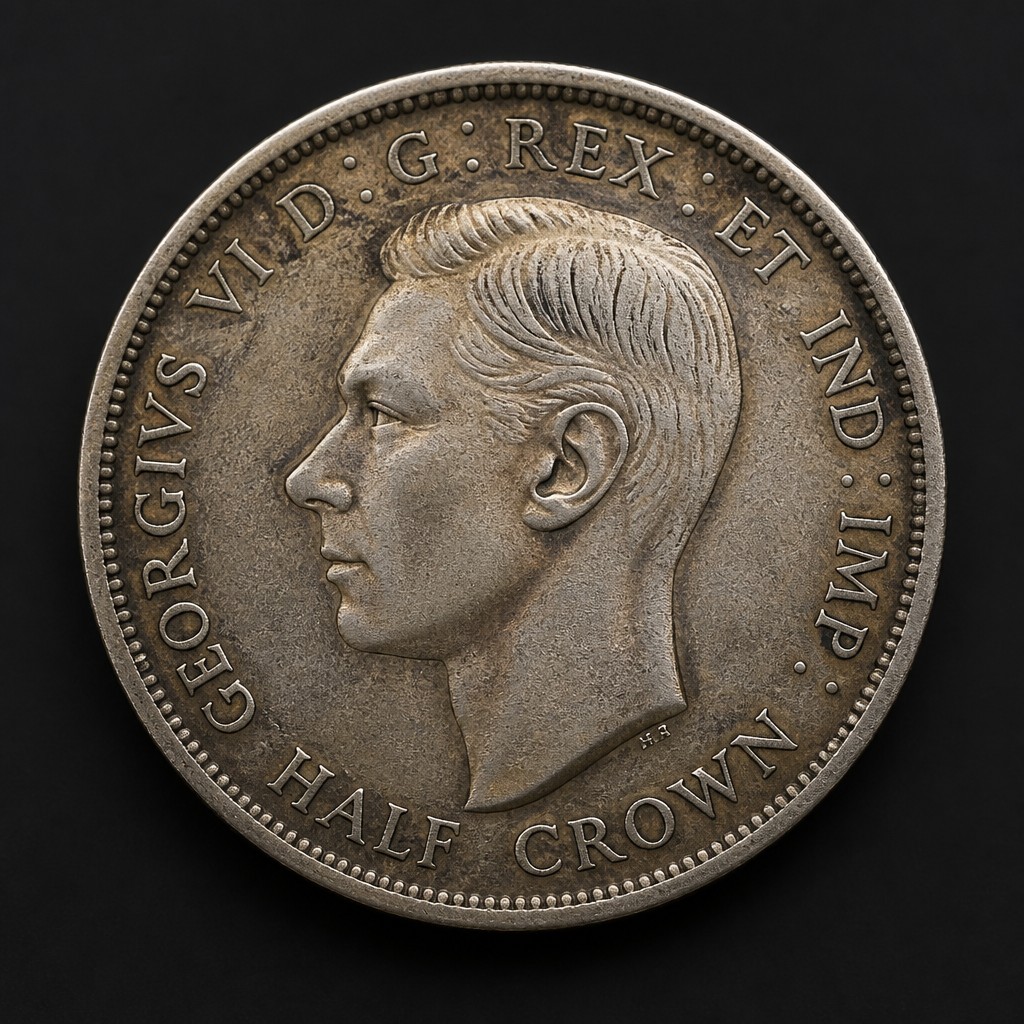
What This Coin Is
The half crown was New Zealand's highest-value regularly circulating pre-decimal silver coin, worth two shillings and sixpence, introduced alongside the rest of New Zealand's first national coinage in 1933 and struck through 1965, shortly before the country moved to decimal currency.
Obverse Design & Inscriptions
The obverse carries the portrait of the reigning monarch at time of striking — King George V, King George VI, or Queen Elizabeth II — with the ruler's name and title abbreviated in Latin and the date below.
Reverse Design & Inscriptions
The reverse displays the New Zealand coat of arms, featuring a shield with symbols representing the country's commerce, agriculture, and industry, supported by a woman and a Maori warrior figure, with "NEW ZEALAND" and "HALF CROWN" in the surrounding legend.
Size, Weight, Metal & Edge
The half crown is the largest of New Zealand's regular pre-decimal silver coins, measuring roughly 32 mm in diameter and weighing about 14.14 grams, struck in .500 fine silver, with a reeded edge.
Mint Marks & Where to Find Them
Like other New Zealand pre-decimal coinage, half crowns were produced under Royal Mint and later other Commonwealth mint arrangements without a distinguishing mint-mark letter on the coin face; the date and the specific New Zealand coat-of-arms design are the primary identifiers.
Telling It Apart From Similar Coins
The half crown is easily identified by its larger size compared to the florin and other lower New Zealand denominations, and by its detailed coat-of-arms reverse featuring two human supporter figures, distinct from the simpler kiwi (florin), warrior head (shilling), or bird designs (sixpence, threepence) used on other denominations in the series.
Judging Condition at a Glance
Examine the fine details in the two supporting figures and the shield's internal elements, along with the monarch's portrait, for signs of wear; because the half crown was the highest-denomination coin in regular circulation, it saw significant handling, and well-struck, lightly worn examples are valued higher than heavily circulated pieces with flattened detail.
Authenticity Red Flags
As with other pre-decimal New Zealand silver coins, outright counterfeiting is uncommon given typical circulated values; the main concerns are cleaned or artificially toned surfaces that obscure true wear, and coins whose weight does not match the expected .500 silver standard, which can indicate plating or alteration.
Frequently asked questions
What is the New Zealand half crown worth in old money?
It represented two shillings and sixpence, the largest denomination in New Zealand's regular pre-decimal circulating coinage.
What does the reverse show?
The New Zealand coat of arms, with a shield supported by a female figure and a Maori warrior, surrounded by 'NEW ZEALAND' and 'HALF CROWN.'
How big is the half crown compared to the florin?
The half crown is larger, at about 32 mm in diameter compared to the florin's roughly 28.5 mm.
What is the coin's silver content?
It was struck in .500 fine silver throughout its 1933–1965 production run.