
How to Identify the New Zealand Florin (pre-decimal)
New Zealand's pre-decimal two-shilling coin, struck from 1933 to 1965, is best known for its distinctive kiwi bird reverse design.
Read the full New Zealand Florin (pre-decimal) encyclopedia entry →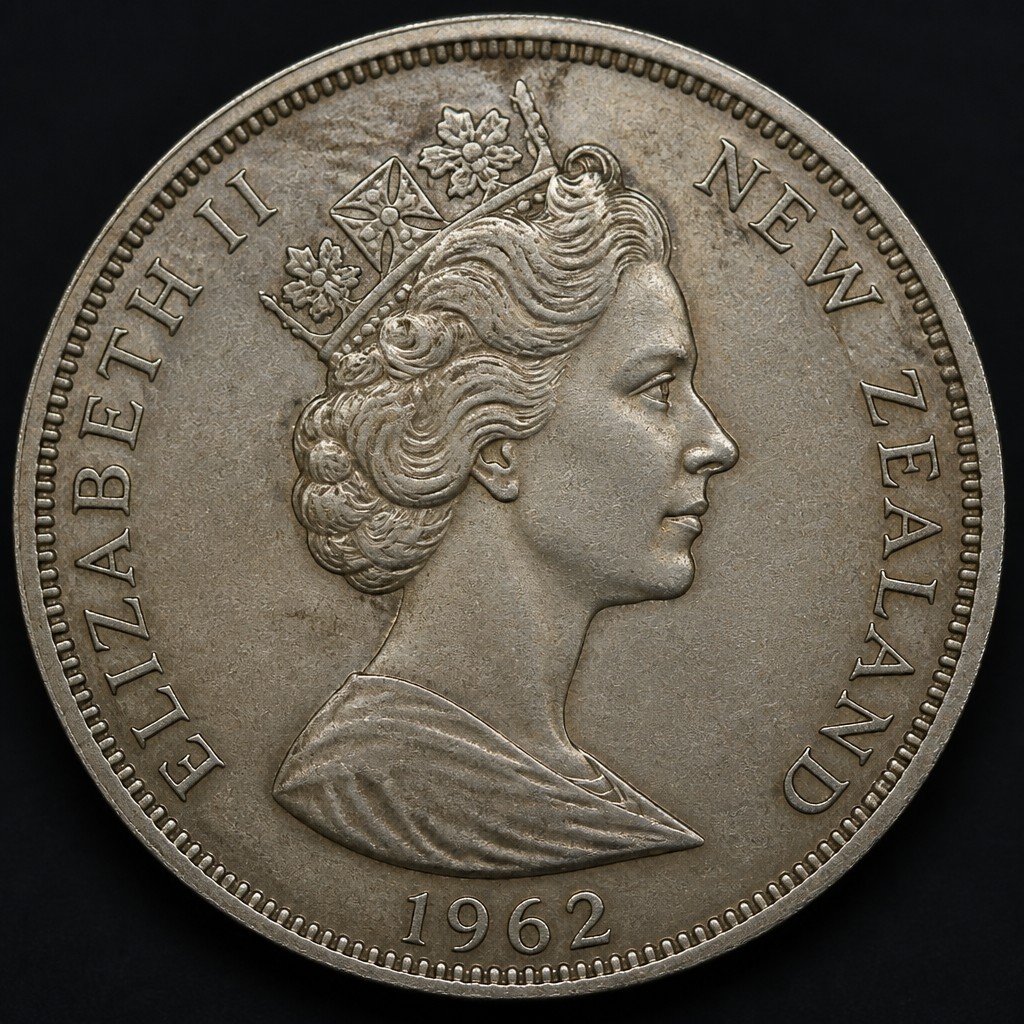
What This Coin Is
The florin was New Zealand's two-shilling silver coin, part of the country's first distinctly New Zealand coinage introduced in 1933 (before which British coins circulated locally). It remained in production through 1965, just before decimalization in 1967, and is one of the more recognizable coins of the pre-decimal series due to its national-bird reverse design.
Obverse Design & Inscriptions
The obverse carries the portrait of the reigning monarch at time of striking — King George V, King George VI, or Queen Elizabeth II — along with the ruler's name and title in Latin abbreviation and the date.
Reverse Design & Inscriptions
The reverse depicts a kiwi bird standing amid native fern fronds, one of the most distinctly "New Zealand" coin designs of the era, along with "NEW ZEALAND," "ONE FLORIN," and the value in the surrounding legend.
Size, Weight, Metal & Edge
The New Zealand florin measures approximately 28.5 mm in diameter and weighs about 11.31 grams, matching the general British Commonwealth florin standard. It was struck in .500 fine silver throughout its run, with a reeded edge.
Mint Marks & Where to Find Them
New Zealand pre-decimal coinage of this era was produced under contract at the Royal Mint in London (and later other Commonwealth mints) without a distinguishing mint-mark letter appearing on the coin; identification relies on the date and the New Zealand-specific design rather than a mint mark.
Telling It Apart From Similar Coins
The New Zealand florin's kiwi reverse makes it easy to distinguish from the similarly sized Australian florin (coat of arms reverse) or British florin (various royal or heraldic reverse designs); always check the bird-and-fern design and "NEW ZEALAND" wording to confirm origin, since coins of similar size and metal content circulated in several Commonwealth countries during this period.
Judging Condition at a Glance
Look at the kiwi's feather detail and leg definition, along with the fern fronds, as these are the first areas to show flattening with wear. Because the florin saw regular use in commerce, well-preserved lustrous examples are less common than lower-grade circulated coins, and cleaned or polished surfaces should be checked for as they reduce both authenticity confidence and collector appeal.
Authenticity Red Flags
As a widely collected but not typically high-value coin in circulated grades, the New Zealand florin is not a frequent counterfeiting target; the primary concerns are artificially cleaned or re-toned surfaces meant to disguise wear, and coins with incorrect weight for genuine .500 silver content, which can indicate a plated or altered piece.
Frequently asked questions
What bird appears on the New Zealand florin?
A kiwi standing among fern fronds, the coin's signature national design.
What years was the New Zealand florin produced?
It was struck from 1933, when New Zealand introduced its own coinage, through 1965, shortly before decimalization.
What is the silver content of the coin?
It was struck throughout its run in .500 fine silver.
How do I tell it apart from an Australian florin?
Check the reverse design: the New Zealand florin shows a kiwi and ferns, while the Australian florin shows the Australian coat of arms.