
How to Identify the New Jersey Copper
A 1786-1788 state coinage recognized by its horse head over a plow on the obverse and a shield with E PLURIBUS UNUM on the reverse.
Read the full New Jersey Copper encyclopedia entry →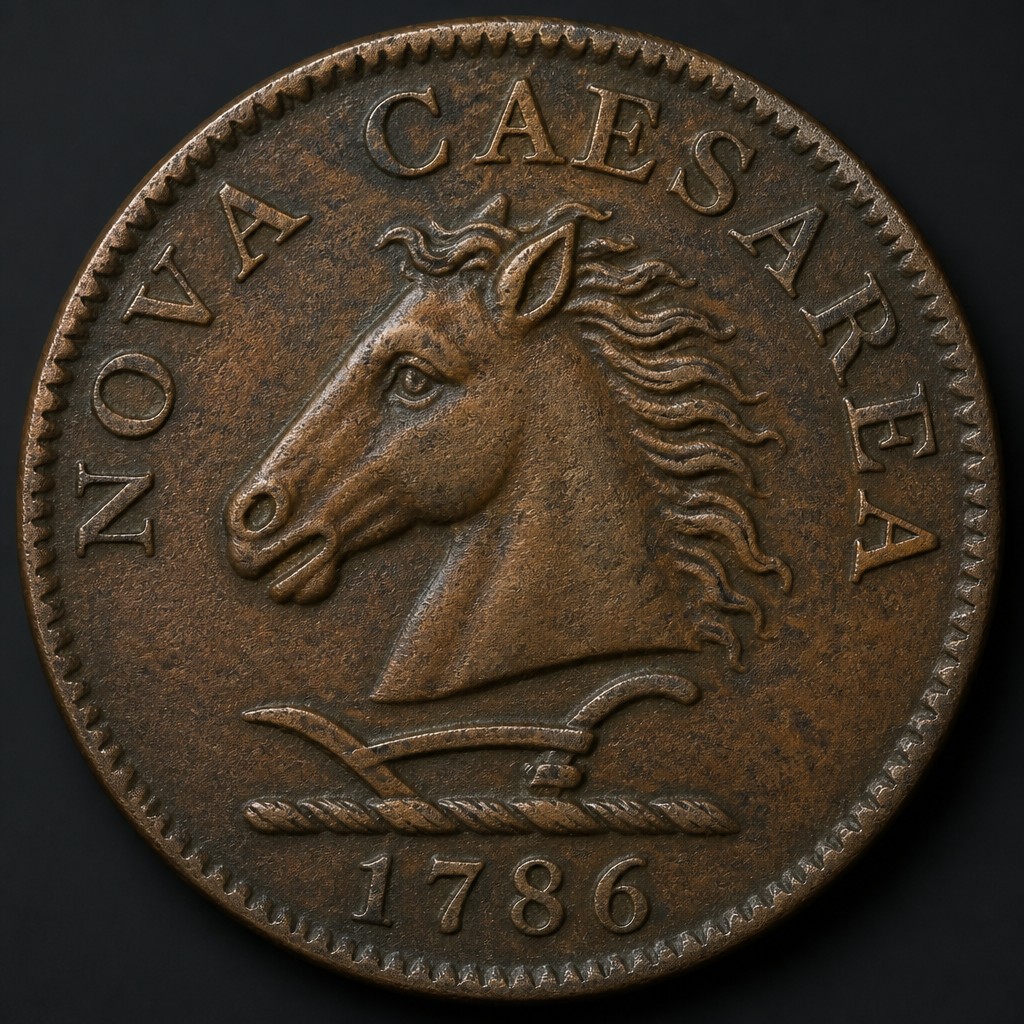
What It Is
The New Jersey Copper was authorized by the state of New Jersey and struck between 1786 and 1788 by private contractors licensed to produce coinage on the state's behalf. It is one of the more commonly encountered state coppers from the Confederation period.
Obverse Design
The obverse shows a horse's head facing right above a plow, with the legend "NOVA CAESAREA" (New Jersey's Latin name) arcing above and the date below the plow.
Reverse Design
The reverse depicts a shield at the center with the legend "E PLURIBUS UNUM" around the border — one of the earliest American uses of this now-familiar motto, predating its adoption on federal coinage.
Size, Weight, and Metal
These coppers are struck in pure copper, roughly 28mm in diameter, with weight generally falling between 5 and 6 grams, though wear and striking variety cause some spread. The edge is plain.
Mint Marks
There is no formal mint mark system; instead, numerous die varieties exist because several different contractors and mints (including facilities in Rahway and Morristown) produced the coinage under license, so subtle differences in lettering style and die pairing are used to classify examples.
Telling It Apart From Similar Coins
The horse head and plow design is unique to New Jersey and should not be confused with the Massachusetts, Connecticut, or Vermont coppers of the same era, which use different obverse motifs (an Indian figure, a bust, or a plow-and-sun design respectively). Pay attention to the shield's internal lines and the exact plow shape when comparing die varieties.
Judging Condition at a Glance
Well-struck, lightly worn coins show separate strands in the horse's mane and distinct furrows on the plow. Because the dies wore down over the production run, some coins were struck with worn dies from the start, so weak detail does not always mean heavy circulation — compare the overall wear pattern on the shield and legends too.
Authenticity Red Flags
Cast counterfeits often have a grainy surface, rounded rather than sharp letters, and incorrect weight. Genuine examples show the natural granularity of hand-struck 18th-century copper along with authentic die-cracks known to specific varieties; a coin that looks "too clean" or shows file marks on the edge should be examined closely before assuming it is period-correct.
Frequently asked questions
What is the main design on the New Jersey Copper obverse?
A horse's head facing right positioned above a plow, with the Latin name NOVA CAESAREA above.
Where did E PLURIBUS UNUM first appear on American coinage?
This coin is among the earliest to carry the motto, appearing on its shield reverse well before it became standard on federal coins.
Were all New Jersey Coppers struck at one mint?
No, production was licensed to multiple contractors and mint locations, which is why many die varieties exist.
What metal and approximate size should I expect?
Pure copper, about 28mm across, generally weighing in the 5 to 6 gram range.