
How to Identify the Netherlands Lion Daalder (Leeuwendaalder)
A silver trade coin of the Dutch provinces from the late 16th and 17th centuries, easily spotted by its standing knight obverse and rampant lion reverse.
Read the full Netherlands Lion Daalder (Leeuwendaalder) encyclopedia entry →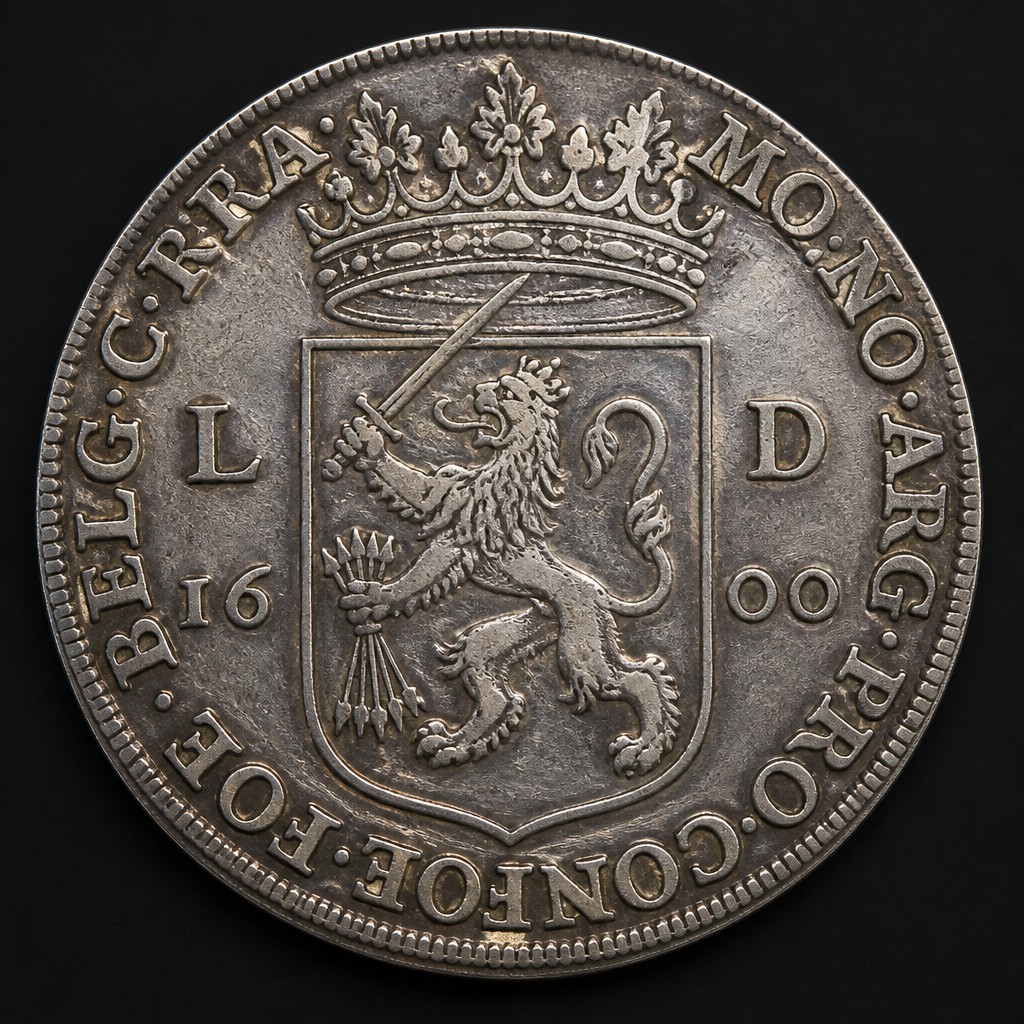
What It Is
The Leeuwendaalder, or Lion Daalder, was a silver trade coin struck by various provinces of the Dutch Republic starting in the late 1500s. It became one of the most widely circulated trade coins in Europe, the Levant, and even colonial America and Asia due to Dutch commercial reach.
Obverse Design
The obverse depicts a standing knight in armor facing right, wearing a plumed helmet and holding a shield with the provincial coat of arms in one hand. A Latin legend naming the issuing province encircles the design.
Reverse Design
The reverse features a rampant lion facing left, standing on its hind legs with claws extended, surrounded by a Latin legend that typically reads something to the effect of the province's motto or "trust in God," varying somewhat by mint and period.
Size, Weight, and Metal
Struck in silver of roughly .750 to .850 fineness depending on the mint and period, the coin is fairly large, around 40-44mm in diameter, with weight generally in the range of 27 grams. The edge is plain, consistent with hammered and early milled silver of the era.
Mint Marks
Because production was spread across multiple Dutch provinces (Holland, West Friesland, Zeeland, Gelderland, Utrecht, and others), small mint marks or the provincial coat of arms design itself help identify the specific issuing authority; look closely at the shield held by the knight for provincial symbols.
Telling It Apart From Similar Coins
The rampant lion reverse is shared with several other "lion dollar" style coins issued by different provinces and even some German and Central European imitations, so identification often comes down to reading the specific Latin legend and comparing the knight's shield design to the province in question. Genuine Dutch issues tend to have more refined engraving compared to some contemporary imitations struck for trade purposes.
Judging Condition at a Glance
Because these coins circulated extensively for commerce, most surviving examples show notable wear, especially on the knight's face and the lion's mane. High-grade pieces will show sharp claws on the lion and full detail in the knight's plume; well-worn trade specimens often have significant flatness and sometimes bear countermarks or chop marks from later use in Asian or Middle Eastern trade.
Authenticity Red Flags
Given its role as a trade coin, both period counterfeits and later replicas exist. Check the silver content and weight against known standards, and be cautious of coins with unusually crisp, uniform lettering that doesn't match the somewhat irregular hand-struck character of genuine period pieces. Legitimate trade-worn examples often carry contemporary bankers' marks or countermarks, which is a positive sign of period circulation rather than a defect.
Frequently asked questions
What animal appears on the Leeuwendaalder's reverse?
A rampant lion standing on its hind legs with claws extended, giving the coin its nickname.
What does the knight on the obverse hold?
A shield bearing the coat of arms of the specific Dutch province that issued the coin.
Why do many examples show extra stamps or marks?
These coins traded widely internationally, and merchants or banks in Asia and the Middle East often applied countermarks or chop marks to verify silver content.
How big and heavy is a typical Lion Daalder?
Roughly 40-44mm in diameter and about 27 grams, making it a substantial silver trade coin.