
How to Identify the Netherlands East Indies VOC Duit
A small copper coin issued by the Dutch East India Company (VOC) for use in its Asian territories, identified by the interlocking 'VOC' monogram and a provincial mint letter.
Read the full Netherlands East Indies VOC Duit encyclopedia entry →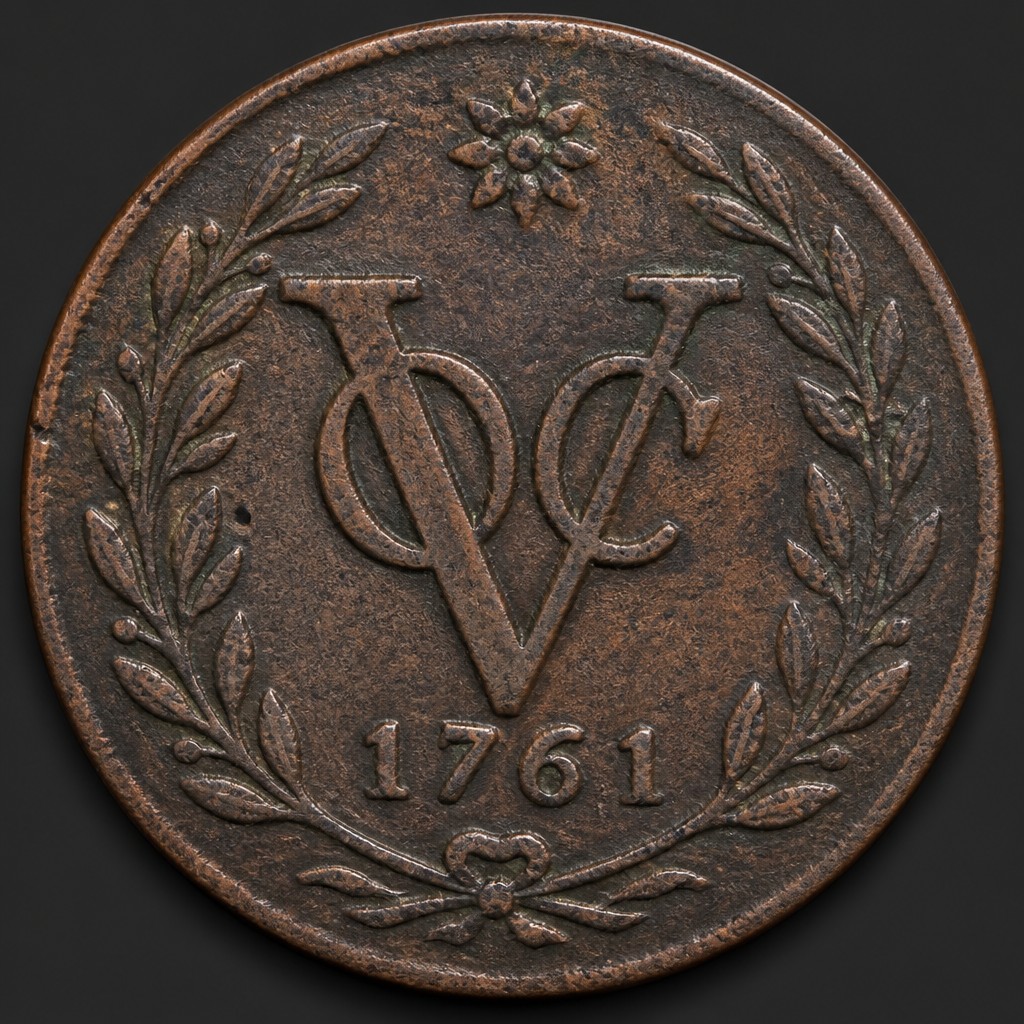
What This Coin Is
The VOC duit was a low-denomination copper coin issued by the Dutch East India Company (Vereenigde Oostindische Compagnie) for circulation in its trading posts and colonial territories across Asia, including present-day Indonesia, during the seventeenth and eighteenth centuries. As one of the most widely produced colonial trade coins of its era, it remains commonly found by collectors and metal detectorists today.
Obverse Design
The obverse displays the interlocking "VOC" monogram, the company's recognizable trademark, at the center, often accompanied by a small provincial shield or arms and a mint letter identifying which of the company's chartered Dutch provincial mints struck the piece.
Reverse Design
The reverse typically shows the date of issue along with a simple decorative border or provincial arms design, varying somewhat depending on the specific mint and year of production.
Size, Weight, Metal, and Edge
The duit is a small copper coin, modest in both diameter and weight compared to larger silver denominations of the period, with a plain edge typical of small-denomination hammered or early machine-struck copper coinage.
Mint Marks and Where to Find Them
A single letter near the VOC monogram or in the coin's field identifies the specific Dutch provincial mint responsible for striking the piece, such as those representing Holland, Utrecht, Zeeland, West-Friesland, or Gelderland, each chartered to produce coinage on the company's behalf.
Telling It Apart from Similar Coins
VOC duits are distinguished from other Dutch colonial or company coinage by the distinctive interlocking VOC monogram itself, which is unique to this company's issues. Confusion can arise between duits of different mint provinces or dates, which is resolved by carefully reading the small mint letter and date on the coin.
Grading at a Glance
Because these were low-value, heavily circulated coins meant for everyday small transactions, most surviving examples show significant wear, with the VOC monogram and date being the last details to become illegible. Higher-grade pieces retain a clear, fully readable monogram and crisp lettering.
Authenticity Red Flags
Given how commonly these coins were produced and how widely they circulated, most examples are inexpensive and genuine, but reproductions do exist; warning signs include an unusually glossy or new-looking surface inconsistent with genuine centuries-old wear, incorrect or anachronistic mint letters, and dates that do not match known issue periods for the VOC.
Frequently asked questions
What does 'VOC' stand for?
VOC stands for Vereenigde Oostindische Compagnie, the Dutch East India Company that issued this coinage for its Asian trading territories.
How do I identify which mint produced the coin?
Look for a small letter near the VOC monogram, which identifies the specific Dutch provincial mint that struck the piece.
Why are most VOC duits so worn?
They were low-value coins used heavily in everyday small transactions across the company's trading network, so most surviving examples show significant circulation wear.
Are VOC duits rare or valuable?
Most examples were produced in large numbers and are common and inexpensive, though certain mints, dates, or exceptional conditions can be more sought after.