
How to Identify the Netherlands East Indies Gulden (Wilhelmina)
A Dutch colonial silver gulden for the Netherlands East Indies, identified by Queen Wilhelmina's portrait on the obverse and the words 'NEDERLANDSCH INDIE' on the reverse.
Read the full Netherlands East Indies Gulden (Wilhelmina) encyclopedia entry →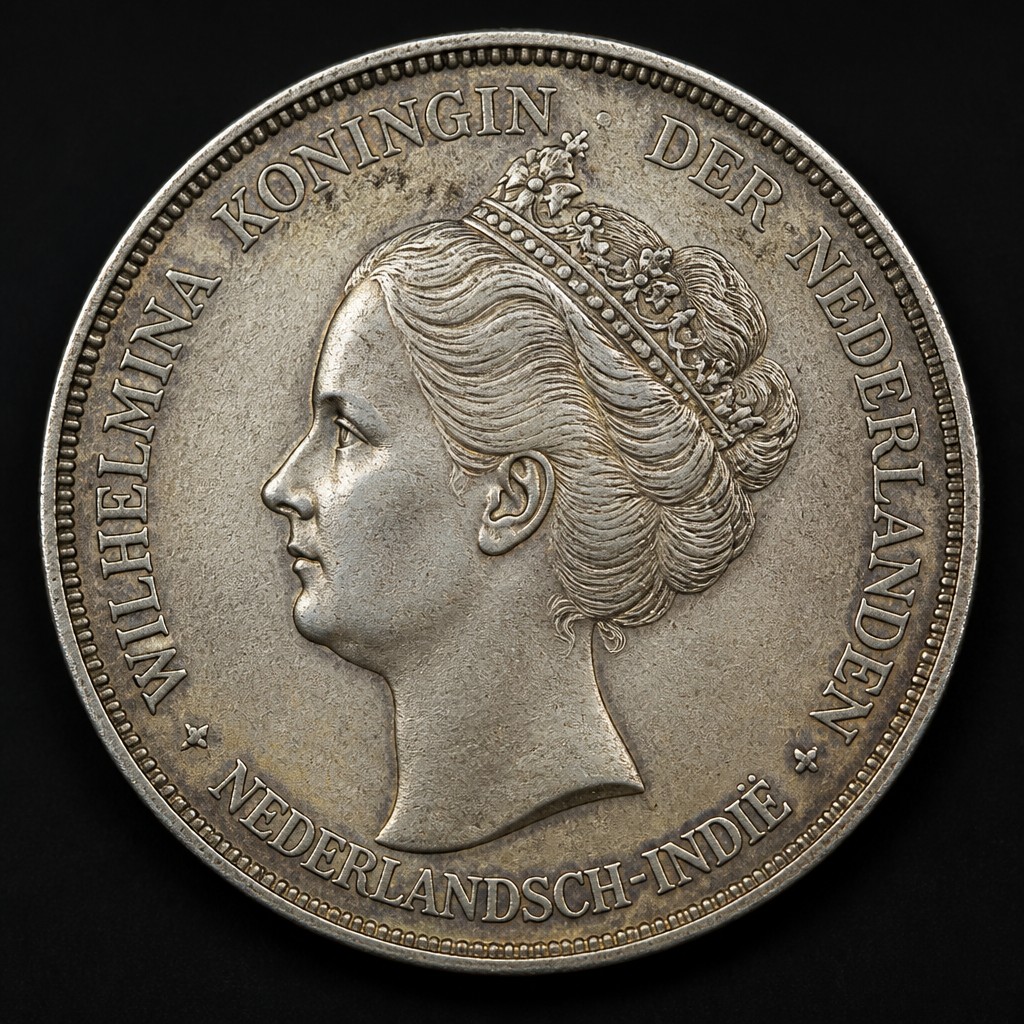
What This Coin Is
This gulden was struck specifically for circulation in the Netherlands East Indies (present-day Indonesia) during the reign of Queen Wilhelmina, distinct from the regular gulden coinage circulating in the Netherlands itself. It reflects the Dutch colonial administration's practice of issuing separate coinage for its overseas territories in the late nineteenth and early twentieth centuries.
Obverse Design
The obverse features a portrait of Queen Wilhelmina, shown at different ages across her long reign depending on the exact date of the coin, surrounded by her name and royal title in Dutch.
Reverse Design
The reverse carries the words "NEDERLANDSCH INDIE" (Netherlands Indies) along with the denomination and date, often accompanied by a wreath or simple decorative border, clearly marking the coin as intended for colonial rather than domestic Dutch circulation.
Size, Weight, Metal, and Edge
The coin is struck in silver, sized comparably to other minor silver gulden-denomination coins of the period, with a reeded edge typical of machine-struck silver coinage from Dutch mints of the era.
Mint Marks and Where to Find Them
These coins were produced at the Utrecht mint in the Netherlands for use in the colonies rather than at a separate colonial mint, so identifying marks are generally limited to the standard Dutch mint privy marks found on coinage of the period, positioned near the date or rim.
Telling It Apart from Similar Coins
The key distinguishing feature versus a regular Netherlands gulden is the "NEDERLANDSCH INDIE" reverse inscription, absent from coins meant for domestic Dutch circulation. It can also be confused with other Wilhelmina-era Dutch colonial coinage of different denominations (such as smaller silver or cupronickel pieces), so checking the exact denomination text alongside the portrait is important.
Grading at a Glance
On higher-grade coins, Wilhelmina's portrait retains fine detail in the hair and facial features, and the lettering on both sides remains crisp and fully formed. Circulated examples show wear first on the queen's cheek and the highest points of her hair, with reverse lettering and wreath detail softening with handling.
Authenticity Red Flags
Watch for coins with blurred or malformed lettering, especially in the "NEDERLANDSCH INDIE" text, as well as surfaces that look grainy or pitted in a way inconsistent with a clean machine strike. An incorrect weight or a magnetic response are also signs of a non-genuine piece, since these coins should be non-magnetic silver.
Frequently asked questions
How is this different from a regular Netherlands gulden?
It carries the inscription 'NEDERLANDSCH INDIE' on the reverse, marking it as coinage struck specifically for the Netherlands East Indies rather than domestic Dutch circulation.
Which Queen Wilhelmina portrait appears on the coin?
The portrait style varies depending on the coin's date, since her depicted image was updated at different points across her long reign.
Where were these coins actually minted?
They were generally struck at the Utrecht mint in the Netherlands, even though they were intended for use in the colonial territories.
What metal is the coin made of?
It is struck in silver, consistent with minor gulden-denomination coinage of the period.