
How to Identify the Netherlands East Indies 2 Cent
A collector's guide to the 1945 Dutch colonial 2-cent bronze: the crowned shield, ornate reverse, metal, date, and look-alikes to rule out.
Read the full Netherlands East Indies 2 Cent encyclopedia entry →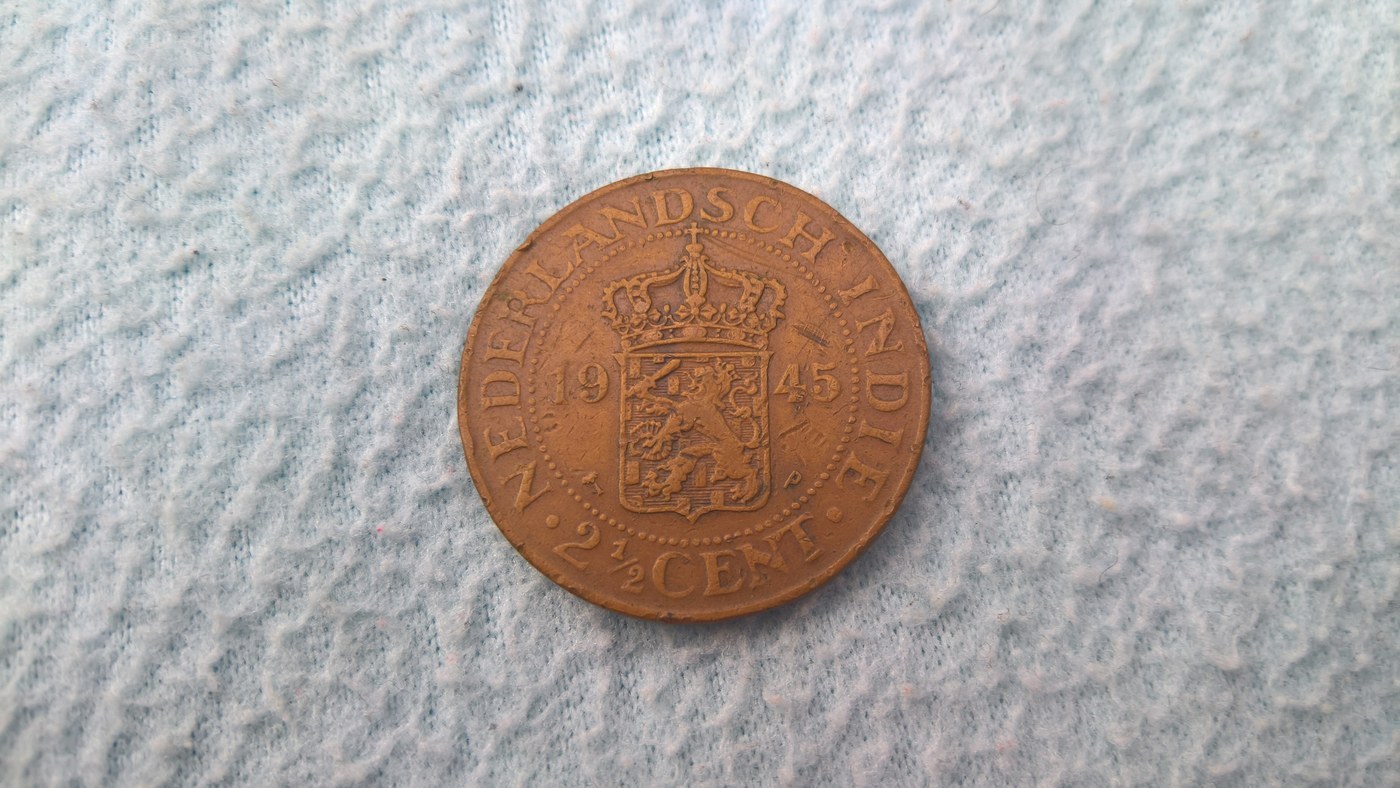
Start with the obverse. The defining feature is a crowned shield bearing a coat of arms, accompanied by the denomination and a legend naming the colony, usually spelled "Nederlandsch-Indie" in the older Dutch orthography. The Netherlands royal crown over the shield is the quickest signal that this is an official Dutch colonial coin and not a piece of the later independent Indonesian republic, whose coinage drops the crown and Dutch legends.
Read the reverse and the date. On this type the reverse is an ornate, symmetrical colonial design that frames the value within decorative patterning, often alongside script elements reflecting the archipelago's languages. Locate the year in or beside the design; the coin illustrated here is dated 1945, and any small mint mark or symbol near the date can indicate where it was struck, which matters when distinguishing dates and varieties.
Confirm the physical coin. This is a bronze minor denomination, so expect a small, reddish-brown copper-alloy piece rather than a large or silvery coin. Bronze tones from bright copper-red when new toward chocolate brown and near-black with age; original red or red-brown surfaces are a plus, while green verdigris or pitting signals corrosion. Weigh and measure the coin and compare it against a standard catalog of Netherlands East Indies coinage to confirm the exact denomination, since the colony struck several similar low-value bronze pieces.
Rule out look-alikes. The Netherlands East Indies issued a range of cent-based bronze coins across many dates, and some carry holes, different scripts, or slightly different arms; be careful not to confuse the 2 cent with neighboring denominations of similar color and size. Also separate it from coins of the Netherlands itself and from post-independence Indonesian coins, which share a regional heritage but differ in legends and emblems.
Apply the usual cautions with colonial bronze. Genuine coins are struck with crisp lettering and a sharp rim; be wary of heavily corroded or artificially cleaned pieces whose surfaces have been altered, and of any coin whose date, legend, or metal does not match a reliable reference. When a coin's attribution is uncertain, verify weight, diameter, and design against a trusted catalog before assigning a firm identification.
Frequently asked questions
How do I tell this from an independent Indonesian coin?
Look for the Dutch royal crown over the shield and a colonial legend such as "Nederlandsch-Indie." Colonial Netherlands East Indies coins carry these Dutch elements; coins of the independent Republic of Indonesia use different emblems and Indonesian-language legends without the Dutch crown.
Where do I find the date and mint mark?
The date appears within or beside the design; on this example it reads 1945. A small mint mark or symbol near the date, when present, indicates the striking facility and helps distinguish varieties of the same denomination.
How do I confirm it is the 2-cent and not another bronze denomination?
The colony struck several similar reddish bronze minor coins. Read the stated value on the coin and confirm the weight and diameter against a standard catalog of Netherlands East Indies coinage, since size and mass separate the neighboring cent denominations.
What condition problems should I watch for?
Bronze is prone to corrosion. Watch for green verdigris, pitting, and harsh cleaning that leaves an unnatural sheen. Original brown or red-brown surfaces with sharp detail are far more desirable than dark, damaged, or over-cleaned examples.