
How to Identify the Netherlands 5 Gulden Gold
The Dutch gold 5 gulden is a small 19th and early 20th century bullion-weight coin bearing a royal portrait and the crowned Dutch arms, popular with collectors for its compact gold content.
Read the full Netherlands 5 Gulden Gold encyclopedia entry →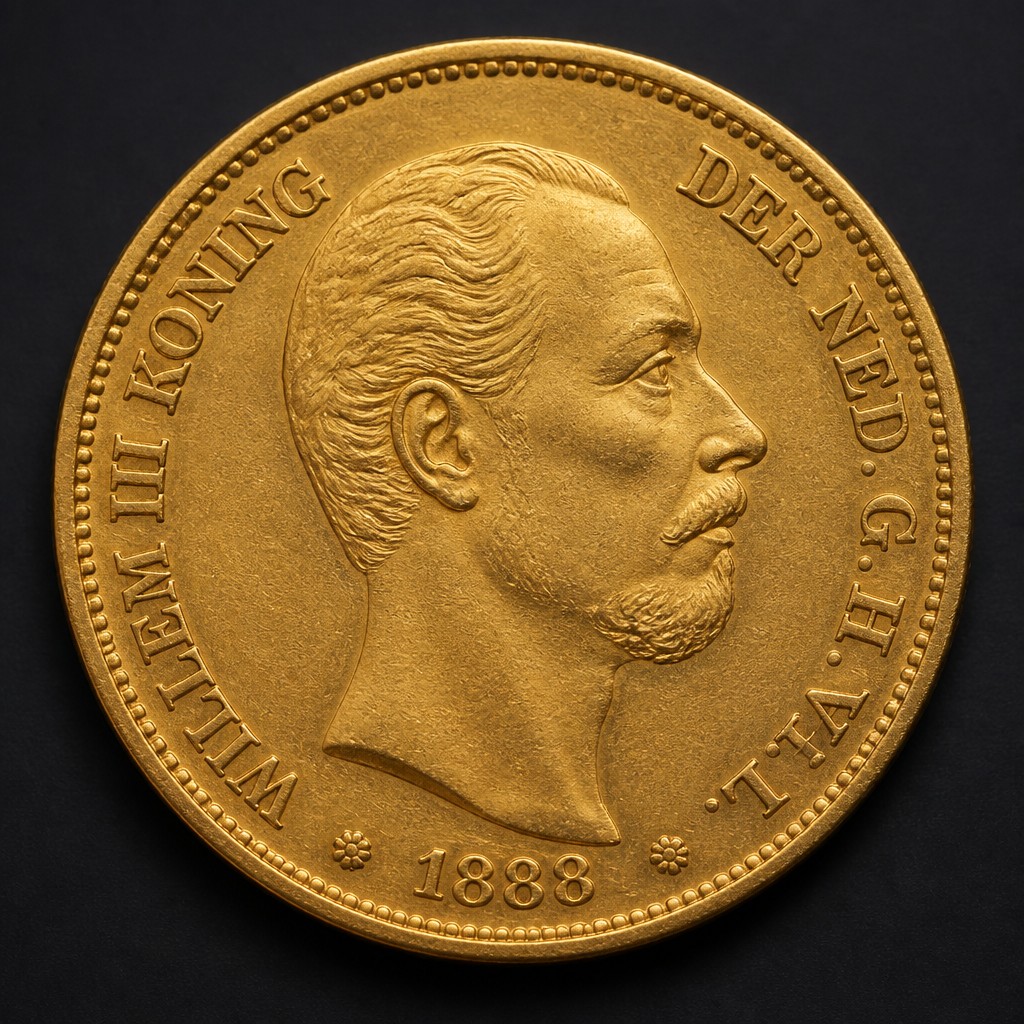
What It Is
The gold 5 gulden was a circulating and later bullion-style coin of the Kingdom of the Netherlands, struck under Willem I, Willem III, and, in a well-known 1912-dated restrike, under Wilhelmina. It is a small, dense gold coin often mistaken at first glance for a large gold token because of its diminutive size. Despite its tiny footprint, it carries real historical weight, having circulated as a working gold coin during a period when the Netherlands still based its currency directly on precious metal content.
Obverse Design
Most versions show a right- or left-facing bare or laureate portrait of the reigning monarch, with the ruler's name and titles abbreviated in Latin around the rim. The Wilhelmina-era 1912 piece instead shows the crowned Dutch coat of arms (lion holding sword and bundle of arrows) with "KONINGRIJK DER NEDERLANDEN" around the border.
Reverse Design
The reverse typically carries the denomination "5 GULDEN," the date, and a mint mark, often framed by a wreath or plain field. On royal-portrait issues the crowned arms may appear here instead, mirroring the obverse layout of the 1912 type.
Size, Weight & Metal
This is a small coin: about 17mm in diameter and roughly 3.36 grams, struck in .900 fine gold (net gold content close to 0.0973 troy ounces). The small size and yellow-gold color are the fastest first clues to identification.
Mint Marks and Where to Find Them
Look near the date or along the coin's edge/rim area for a small mint letter or privy mark used by the Royal Dutch Mint (Utrecht). These marks help pin down the specific striking period and can affect rarity.
Telling It Apart from Similar Coins
Because of its small diameter and weight, this coin is sometimes confused with other small European gold pieces such as gold ducats or gold 10 franc/mark coins. Check the language of the legend (Dutch/Latin), the specific "GULDEN" denomination wording, and the Dutch lion-and-arrows arms, which are distinctive to the Netherlands. A gold ducat, by comparison, generally shows an armored standing figure rather than a portrait or crowned arms, and carries different Latin wording referencing the Batavian provinces rather than the Kingdom of the Netherlands.
Judging Condition at a Glance
On the portrait types, wear first shows on the high points of the hair or laureate wreath and on the cheek. On arms-type coins, check the lion's mane, crown details, and the fine feathering of the arrows for softness. Full, sharp lettering around the rim indicates a higher grade.
Authenticity Red Flags
Genuine examples ring with a solid, resonant sound (though this alone is not conclusive) and show correct light-yellow gold color without pale silvery undertones that suggest a low-fineness fake. Be wary of examples that feel unusually light, have soft or mushy details throughout (indicative of cast counterfeits), or show file marks/seams along the edge.
Frequently asked questions
How can I quickly tell a gold 5 gulden from a similar-looking gold token?
Check the exact diameter (about 17mm) and the 'GULDEN' wording plus Dutch royal arms or portrait; generic tokens rarely match this precise wording, size, and weight combination.
Why are so many 5 gulden coins dated 1912?
The Dutch mint restruck this popular design using the 1912 date for years afterward to meet bullion demand, so the date alone does not guarantee an original 1912 striking.
What is the gold purity of this coin?
It is typically struck in .900 fine gold, meaning 90% gold and 10% copper alloy for durability.
Where is the mint mark located?
Look for a small letter or symbol near the date on the obverse or reverse, representing the Utrecht mint's mark for that striking period.
Does a worn portrait significantly reduce collector interest?
Since these coins are valued partly for bullion content, moderate wear affects numismatic grade more than intrinsic gold value, but sharp, well-struck examples are still more desirable to collectors.