
How to Identify the Netherlands 2½ Gulden
A Dutch silver crown-sized coin featuring the reigning monarch's portrait and the crowned Dutch coat of arms, identified by its "2½ G" denomination and lion-and-shield reverse.
Read the full Netherlands 2½ Gulden encyclopedia entry →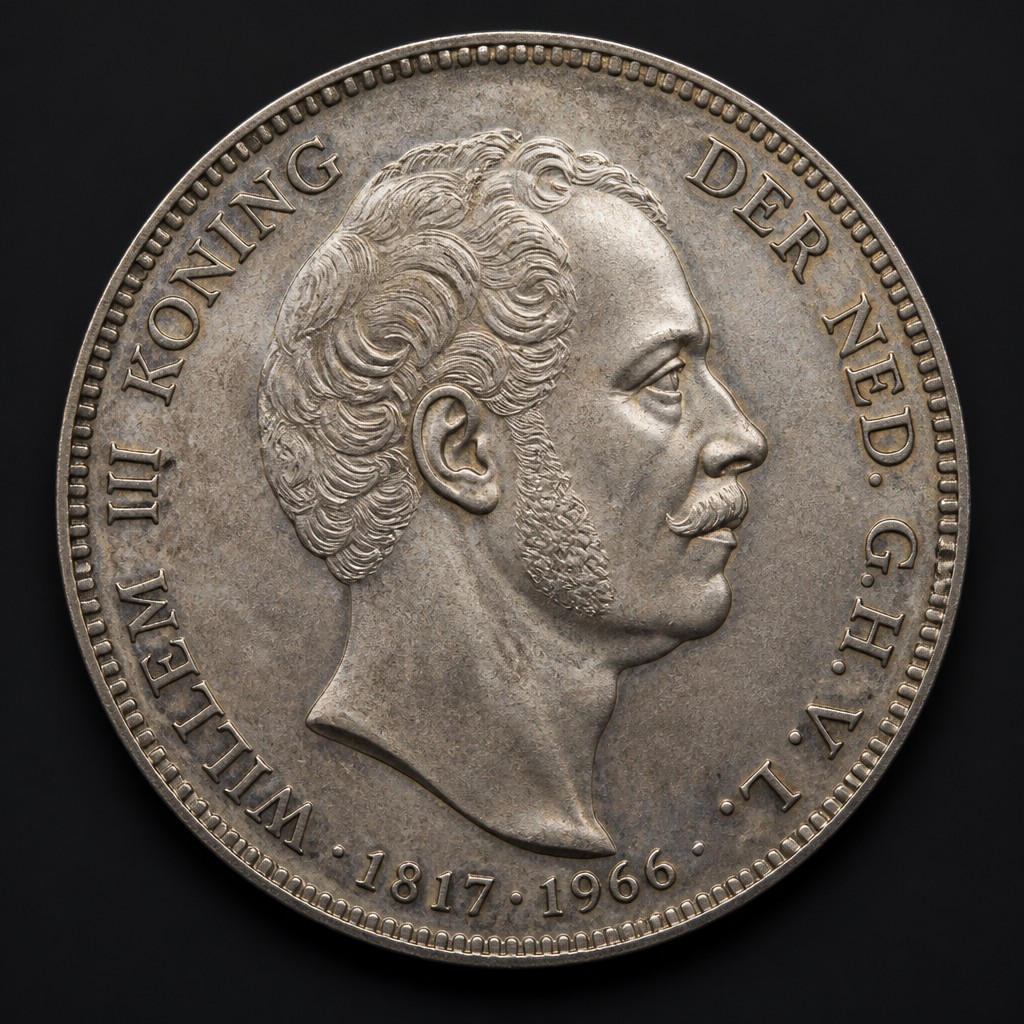
What It Is
The 2½ Gulden is a historic Dutch silver coin, roughly crown-sized, issued under successive Dutch monarchs from the mid-19th century through the mid-20th century. It represented one of the largest denominations in everyday Dutch coinage and was struck in fluctuating silver finenesses as the Netherlands adjusted its currency standards over time. Collectors encounter examples spanning several reigns, each with a distinct obverse portrait but a broadly consistent reverse theme.
Obverse Design and Inscriptions
The obverse carries a right- or left-facing portrait bust of the reigning Dutch monarch (such as Willem III, Wilhelmina, or Juliana, depending on the date), with the ruler's name and title abbreviated around the rim, for example "WILHELMINA KONINGIN DER NEDERLANDEN." The date usually appears at the base of the bust or split around it.
Reverse Design and Inscriptions
The reverse displays the crowned coat of arms of the Kingdom of the Netherlands, a shield bearing a rampant lion holding a sword and a bundle of arrows, supported by two lions and topped with the royal crown. The denomination "2½ G." or "2 1/2 GULDEN" appears below or beside the shield, and the national motto "GOD ZIJ MET ONS" (God be with us) often frames the design.
Size, Weight, Metal, and Edge
Sizes and silver content shifted across the coin's long production span; most examples are close to 38 mm in diameter, struck in silver ranging from .640 to .720 fineness depending on the era, with weights typically in the 25 gram range for the higher-fineness issues. The edge is reeded on most dates.
Mint Marks and Where to Find Them
Dutch coins of this era typically carry a small mint mark, often a stylized symbol (such as a fish, sword, or letter) placed near the date or at the base of the portrait bust, identifying the mint master or minting authority of the period rather than a specific branch city, since Dutch coinage was centrally struck at the Royal Dutch Mint in Utrecht.
Telling It Apart from Similar Coins
This coin can be confused with the smaller 1 gulden piece, which shares the same portrait-and-arms format but is noticeably smaller in diameter and lighter in weight, and with the 3 gulden pieces from earlier in the 19th century, which carry a different denomination numeral and sometimes a different reverse arrangement. Always check the printed denomination on the reverse to confirm the value.
Judging Condition at a Glance
Look at the high points of the monarch's hair or headwear and the crown atop the coat of arms, since these areas wear down first. A well-preserved coin shows separated, distinct curls or fine crown details, while a heavily circulated example shows a flat, smooth profile and a worn, indistinct shield.
Authenticity Red Flags
Genuine pieces have a crisp, even strike with sharply defined lion and shield details. Be cautious of coins with soft, mushy design elements, incorrect diameter or weight for the claimed date, or a portrait style that does not match the known bust style used during that monarch's reign, all of which suggest a modern replica or altered piece.
Frequently asked questions
Whose portrait appears on the Netherlands 2½ Gulden?
The reigning Dutch monarch of the coin's issue date, such as Willem III, Wilhelmina, or Juliana; the bust style and legend change between reigns.
How do I tell a 2½ Gulden apart from a 1 Gulden coin?
The 2½ Gulden is larger and heavier and clearly marked '2½ G.' or '2 1/2 GULDEN' on the reverse, while the 1 Gulden is smaller with a '1 G.' denomination.
Where is the mint mark located?
Look for a small symbol, often near the date or at the base of the portrait, marking the period's mint master rather than a separate branch mint.
What silver content should I expect?
Fineness varies by era, generally between .640 and .720 silver, so always weigh and measure the coin rather than assuming a single fixed standard.