
How to Identify the Nerva Denarius
A silver denarius from the short two-year reign of Emperor Nerva, identified by his older, gaunt portrait and reverse themes of concord and public welfare.
Read the full Nerva Denarius encyclopedia entry →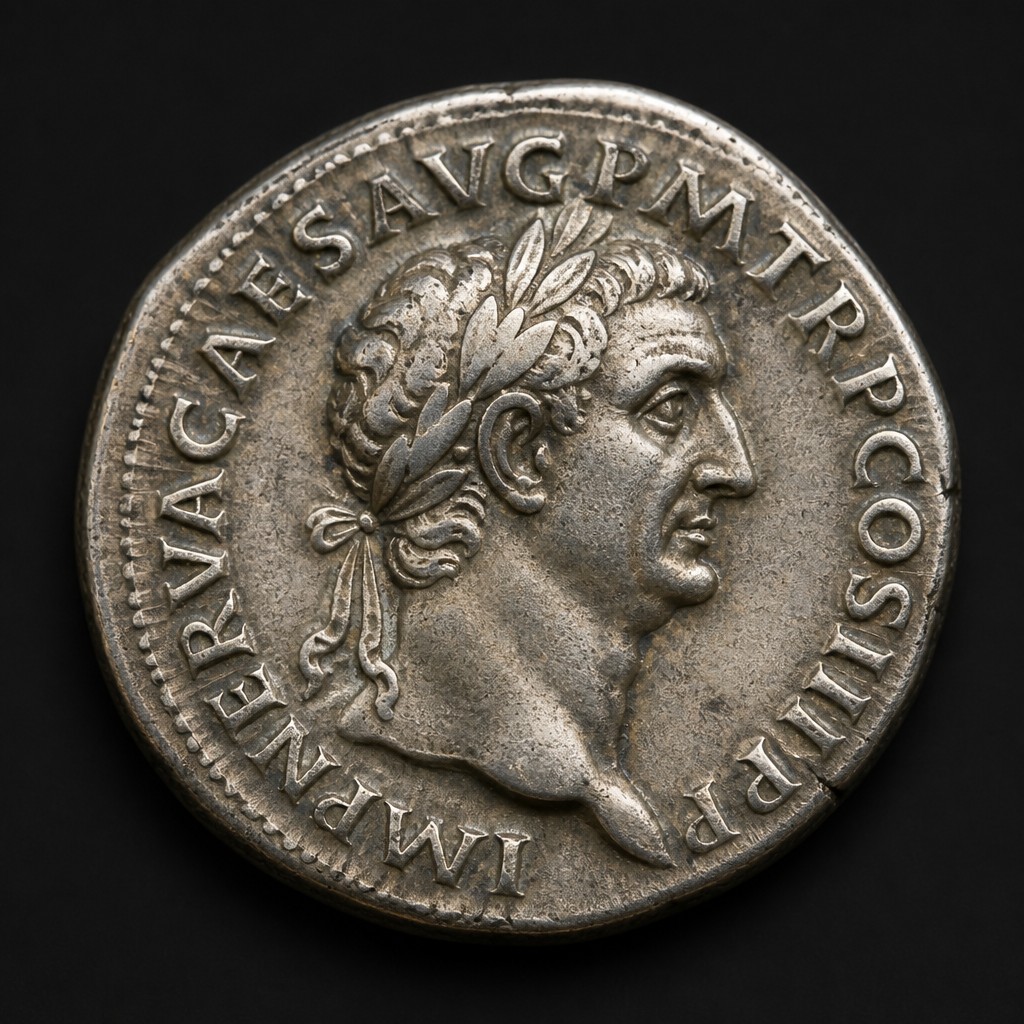
What the Coin Is
Nerva reigned briefly from AD 96 to 98, chosen by the Senate after Domitian's assassination to restore stability. Because his rule lasted less than two years, his denarius coinage is somewhat more limited in overall variety than that of the emperors before and after him, though genuine examples are still obtainable.
Obverse Design & Inscriptions
The obverse shows a laureate head of Nerva right, portraying him as an older man with a lean, somewhat gaunt face and pronounced features consistent with his advanced age at accession. The legend generally reads IMP NERVA CAES AVG P M TR P, followed by a consular numeral (COS).
Reverse Design & Inscriptions
Reverse types reflect his conciliatory, reform-minded reign: clasped right hands symbolizing CONCORDIA EXERCITVVM (harmony of the armies), standing figures of Aequitas holding scales, Libertas, and Fortuna, a seated Vesta paired with PONTIF MAX TR P COS II P P legends, and modius (grain-measure) types tied to his grain-distribution reforms for the urban poor.
Size, Weight, Metal & Edge
The coin is typically about 18mm across and weighs roughly 3.3-3.5 grams, in keeping with the late first-century silver standard of around 90 percent fineness. The edge is plain.
Mint Marks & Where to Find Them
Nerva's denarii were struck at the Rome mint; there is no separate mint-mark letter system to search for on coins of this era.
Telling It Apart from Similar Coins
Trajan, Nerva's adopted successor, continued several of Nerva's reverse themes and even struck restitution-style coins referencing him after his death, so the obverse name is the decisive test: look for NERVA rather than TRAIANVS or NERVAE TRAIANO. Compared to Domitian's heavier, younger-looking face, Nerva's portrait is noticeably leaner, older, and more sunken through the cheeks.
Judging Condition & Grade at a Glance
Check the fine details of the hair above the forehead and the definition of the facial features, since Nerva's older, more textured portrait shows wear differently than a younger emperor's smoother face. On the reverse, the clasped hands or standing figures should retain crisp outlines and finger/drapery detail in higher-grade examples.
Authenticity Red Flags
Because Nerva's reign was short, genuine surviving denarii are somewhat less common in the market than those of longer-reigning neighbors, which can tempt forgers to produce his coins in particular. Watch for silver-plated fourrées revealing a copper core at any nick, unusually light weight for the diameter, and cast copies with a telltale seam line or grainy surface texture rather than the sharp flow lines of a hammered strike.
Frequently asked questions
Why is Nerva's coinage sometimes said to be less common?
His reign lasted under two years, so the overall volume and variety of dies struck in his name is smaller than for longer-reigning emperors, though genuine coins are still available.
How do I avoid confusing Nerva's coin with Trajan's early issues?
Read the obverse legend for the name NERVA; Trajan's own coins, even ones referencing his adoptive father, will carry the name TRAIANVS or NERVAE TRAIANO instead.
What do the clasped hands on the reverse mean?
They represent CONCORDIA EXERCITVVM, or harmony among the armies, a message Nerva emphasized after the political instability following Domitian's assassination.
What silver purity should I expect?
Nerva's denarii were struck at roughly the same fineness as other late first-century Roman silver coinage, generally in the low-to-mid 90 percent range, though individual pieces vary with wear and old cleaning.
What is the biggest red flag for a fake?
A copper color showing through the silver surface at a scratch or high point is the clearest sign of a plated forgery rather than a solid silver original.