
How to Identify the Nero Sestertius
A guide to Nero's large orichalcum sestertius, focused on its size and golden-brass color, famous reverse scenes like the Ostia harbor, and the SC mark identifying senatorially authorized bronze coinage.
Read the full Nero Sestertius encyclopedia entry →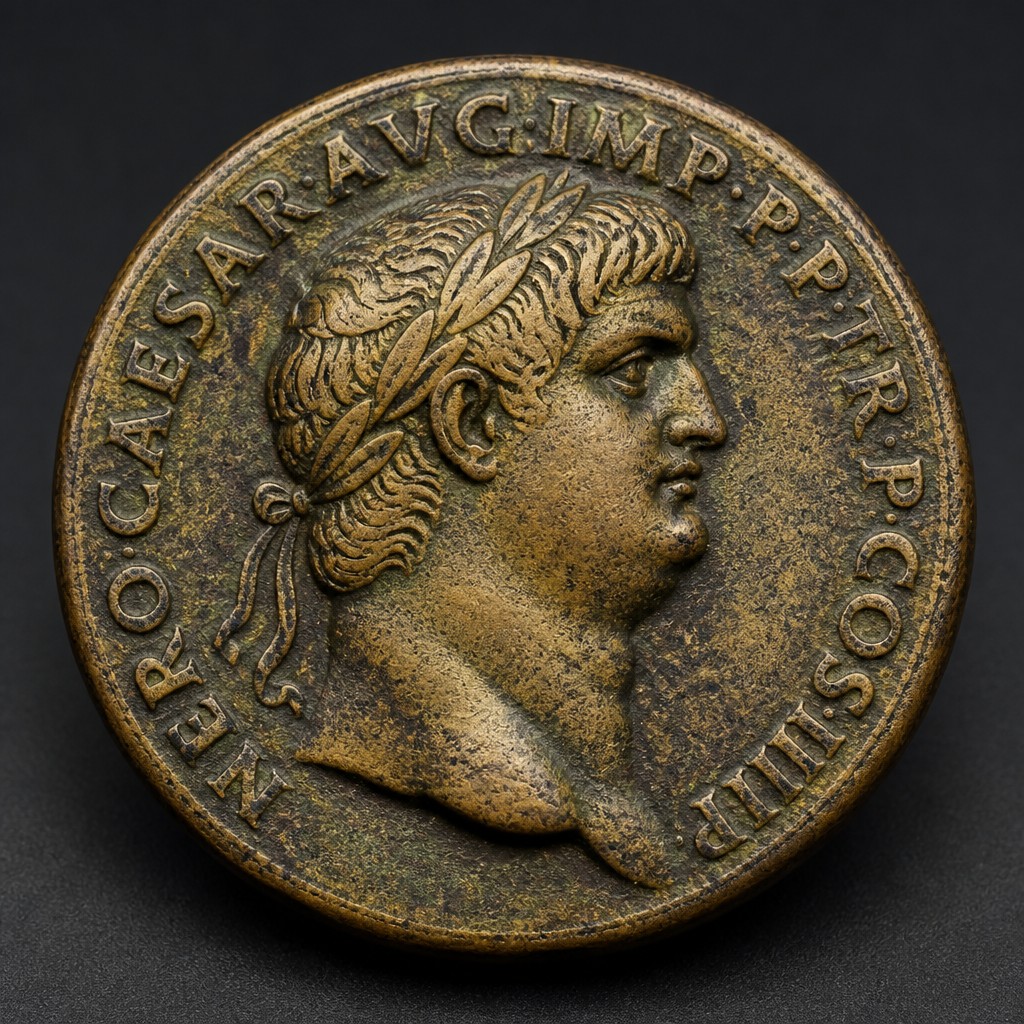
What This Coin Is
This large bronze, technically orichalcum (a brass-like copper-zinc alloy), sestertius was struck under Nero as part of the base-metal coinage system that circulated alongside silver denarii for everyday transactions.
Obverse Design
The obverse shows a laureate or radiate-crowned head of Nero facing right, with a portrait that becomes noticeably heavier and fuller-necked in later issues. The surrounding legend gives his name along with his accumulated imperial titles.
Reverse Design
Several celebrated types debuted under Nero, including a detailed harbor scene representing the Port of Ostia with ships and a reclining figure, the Temple of Janus shown with closed doors to signal peace, a seated Roma, and a standing Annona holding a modius and cornucopia. The letters SC (Senatus Consulto) appear in the field or exergue on most types.
Size, Weight, and Metal
This is a notably large Roman coin, measuring roughly 34-38mm across and weighing around 25-28 grams. Struck in orichalcum, it shows a warm golden-yellow color when fresh, aging to a darker brown or green patina over time.
Mint Marks and Where to Look
There is typically no separate mint abbreviation. The SC in the reverse field or exergue simply signals senatorial authorization of bronze coinage, standard practice under the early Empire rather than an indicator of a specific mint location.
Telling It Apart From Similar Coins
Distinguish this from the smaller dupondius, also orichalcum but roughly half the diameter and weight, and from the as, which is pure copper with a more reddish-brown color and smaller size. The harbor scene and Temple of Janus reverse types are distinctive enough to identify a Nero issue once recognized.
Grading at a Glance
Because of its large flan, strike centering and legend completeness are easy to assess at a glance. Look for even wear across the portrait's high points, such as the hair and cheek, and the reverse scene's architectural or figural details. A natural green, brown, or "chocolate" patina is desirable and expected, not a flaw.
Authenticity Red Flags
Cast fakes often show a grainy, pitted surface and a visible edge seam, unlike the crisp flow lines of a genuine struck coin. Be cautious of artificially applied "fake patina" that looks uniformly painted on rather than naturally variegated, and verify weight and diameter against genuine examples, since undersized or underweight pieces are common in reproductions.
Frequently asked questions
What metal is a Nero sestertius made from?
Orichalcum, a brass-like alloy of copper and zinc, which gives genuine, well-preserved examples a warm golden-yellow tone rather than the reddish color of pure copper.
What does the harbor scene on the reverse show?
It depicts the Port of Ostia, one of Nero's notable infrastructure achievements, shown with ships inside a harbor basin and a reclining figure representing the port or the Tiber.
Why is SC on so many Roman bronze coins?
SC stands for Senatus Consulto, by decree of the Senate, reflecting that the Senate retained nominal authority over base-metal coinage even as the emperor controlled gold and silver issues.
Is a green surface on the coin a sign of damage?
No, a stable green or brown patina is the natural result of two thousand years of oxidation on ancient bronze and is generally considered desirable rather than a defect, unlike active, powdery corrosion.