
How to Identify the Nepal Silver Mohar
A traditional Nepalese silver coin struck under the Shah and Rana rulers, identifiable by Devanagari script, royal symbols, and dates given in the Vikram Samvat calendar.
Read the full Nepal Silver Mohar encyclopedia entry →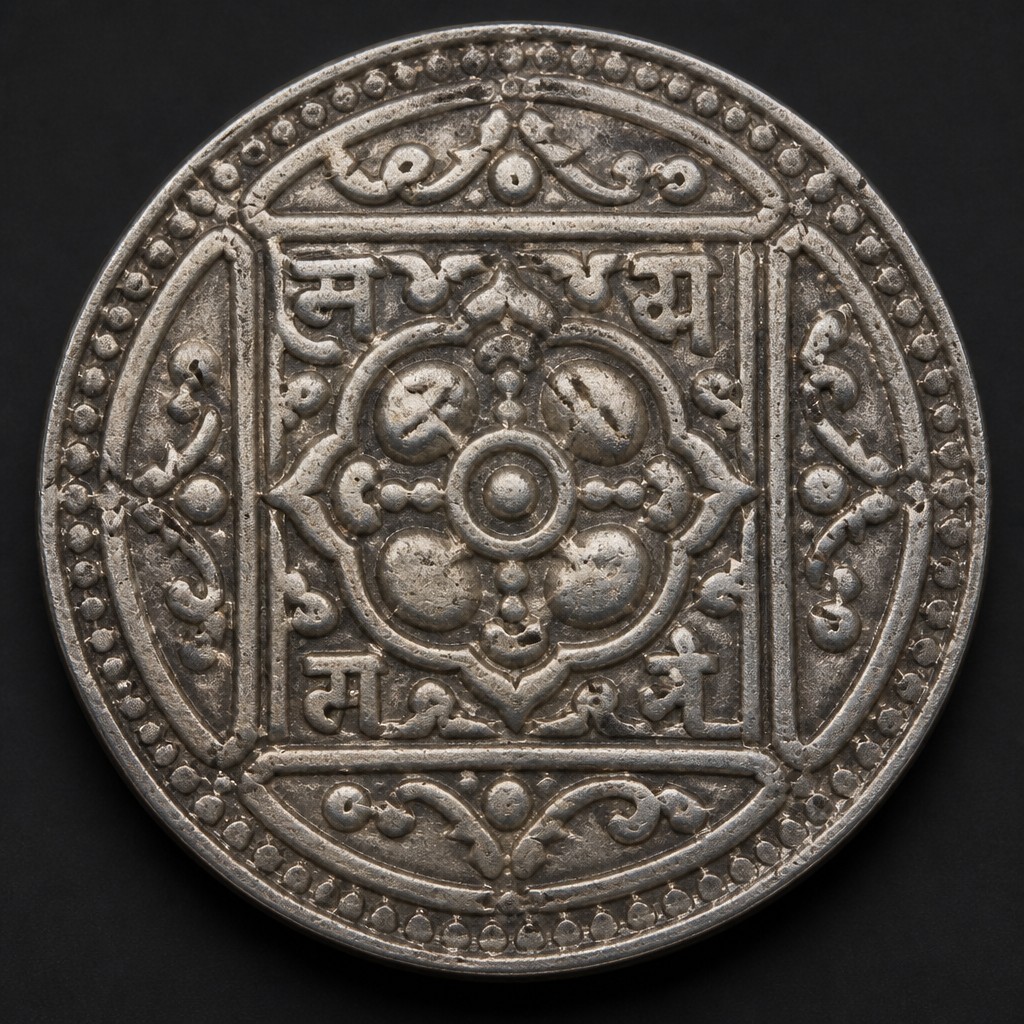
What It Is
The mohar was a standard denomination of silver coinage used in the Kingdom of Nepal for many generations, spanning the rule of various Shah kings and later the Rana-era administration. It circulated alongside smaller paisa coins as part of Nepal's traditional monetary system before modern decimal currency was introduced.
Obverse Design
Nepali mohars are inscribed almost entirely in Devanagari script rather than carrying a portrait. Typical obverse elements include the ruler's name and honorific titles, often repeated in a stylized way, along with royal or religious symbols such as a sun and moon, a trident (trishul), or other emblems associated with Nepalese royal authority.
Reverse Design
The reverse likewise carries Devanagari text, frequently including additional royal titles, sometimes a khukuri (traditional curved dagger) or other symbolic imagery, and the date. Because so much of the design is script-based, careful reading of the Devanagari characters is essential for correctly identifying the ruler and issue.
Size, Weight, and Metal, and Dating System
Mohars are silver, though purity and weight varied across different reigns and periods of striking. A key identification point is the calendar system: dates are given in the Vikram Samvat (Bikram Sambat) era, which runs ahead of the Gregorian calendar by roughly 56–57 years, so a date on the coin will look like a much later year than the actual Gregorian year of issue.
Mint Marks
Nepal's traditional coinage was produced by a single royal mint in the Kathmandu Valley for most of this period, so there is generally no separate mint-mark system to look for; identification instead relies on reading the ruler's name and title in the Devanagari legend.
Telling It Apart from Similar Coins
Because many mohars share a broadly similar script-heavy layout across different reigns, the ruler's name within the inscription is the most reliable way to distinguish one issue from another. Comparing the exact wording and arrangement of royal titles helps separate coins of different kings or periods that otherwise look superficially similar.
Judging Condition
On better-preserved coins, the Devanagari characters are crisp and fully readable with clearly defined strokes. Early mohars were often hand-struck and can show off-center strikes or weak areas even when otherwise lightly worn, which is a normal characteristic of the production method rather than circulation damage.
Authenticity Red Flags
Watch for garbled or malformed Devanagari lettering, inconsistent stroke weight suggesting a cast rather than struck coin, and metal color or weight that seems inconsistent with silver. Because many mohars were hand-struck with simple tools, some irregularity is expected, but characters that are simply illegible or nonsensical are a stronger sign of a modern imitation.
Frequently asked questions
Why does the date on my Nepal mohar look wrong?
Nepali coins use the Vikram Samvat calendar, which runs about 56–57 years ahead of the Gregorian calendar, so you need to convert the date rather than reading it as a direct Gregorian year.
How do I know which king issued my mohar?
The ruler's name appears in the Devanagari inscription on the coin; comparing the exact title wording to reference material for different reigns helps pinpoint the issuer.
Is it a problem that my coin looks off-center or unevenly struck?
Not necessarily. Many early mohars were hand-struck, so slight off-center strikes or weak spots can occur naturally and are not automatically a sign of damage or a fake.
Are there mint marks on Nepali mohars?
Generally no, since most of this coinage came from a single royal mint; identification relies mainly on the ruler's name and title in the inscription.