
How to Identify the Naxos Silenus Tetradrachm (Sicily)
A guide to the Sicilian city of Naxos's silver tetradrachm, prized for its finely engraved bearded Dionysos obverse and squatting Silenus reverse.
Read the full Naxos Silenus Tetradrachm (Sicily) encyclopedia entry →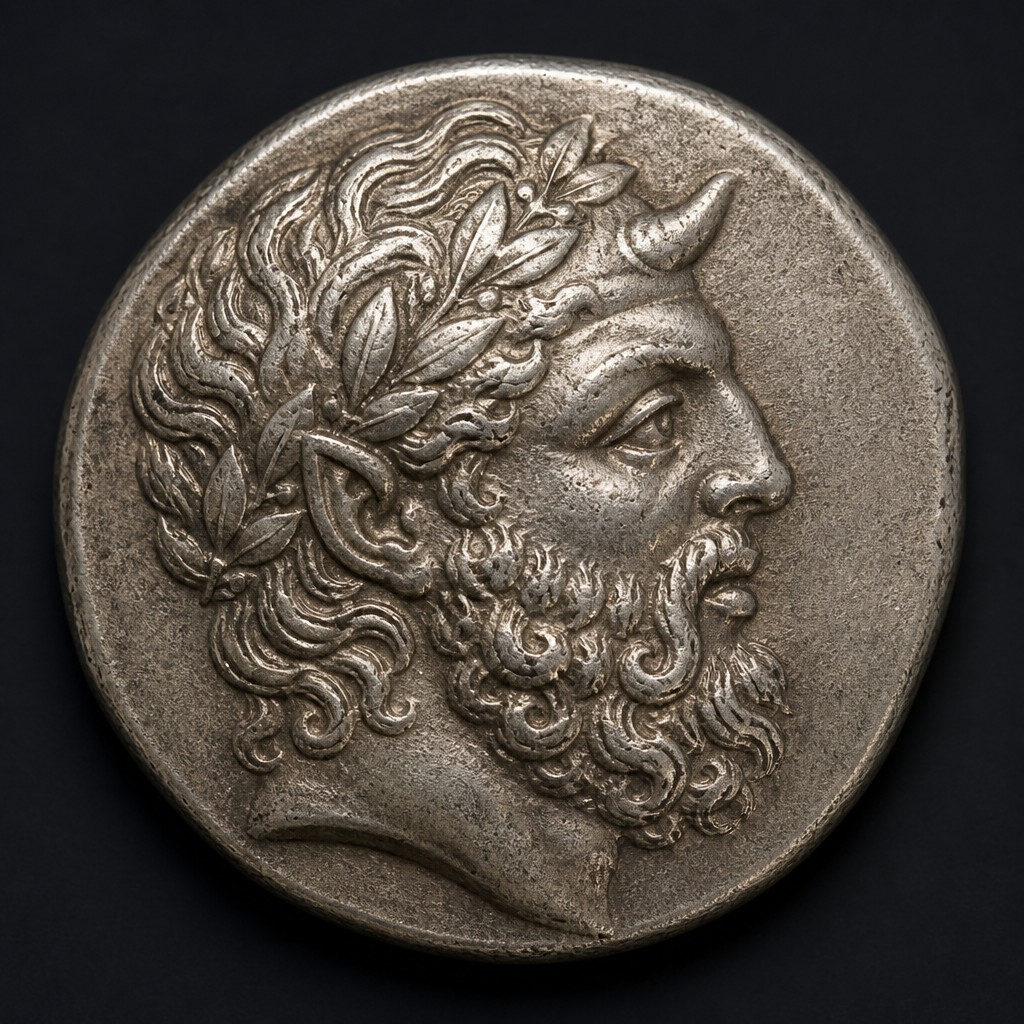
What It Is
Naxos, a Greek colony on the eastern coast of Sicily, struck one of the most artistically celebrated tetradrachm series of the classical period in the mid-to-late 5th century BC. The type honors Dionysos, god of wine, and his companion Silenus, reflecting the region's strong wine-producing tradition, and is regarded by numismatists as among the finest die-engraving achievements of Sicilian coinage.
Obverse
The obverse shows the bearded head of Dionysos facing right, wearing a wreath of ivy leaves and berries, with flowing, finely detailed hair and beard. The engraving on the best examples is notably naturalistic for the period, capturing individual locks of hair and a lifelike expression.
Reverse
The reverse shows Silenus, the pot-bellied, balding companion of Dionysos, seated or squatting on the ground and typically holding a kantharos (a two-handled drinking cup) in one hand. The inscription NAXION ("of the Naxians") appears around the design, and the composition is famous for fitting a full seated figure naturally within the round coin field.
Size, Weight, and Metal
This is a silver tetradrachm struck on the Attic weight standard, weighing approximately 17.2 grams, consistent with the major tetradrachm denomination used across much of the Greek and Sicilian world.
Identifying the Mint and Issue
The NAXION legend confirms the Sicilian mint of Naxos specifically (not to be confused with the Cycladic island of Naxos in the Aegean, which issued entirely different coin types). Because this series was produced by a small number of highly skilled engravers, subtle differences in the rendering of Dionysos's beard curls and Silenus's pose can help specialists attribute a coin to a specific die pair.
Telling It Apart From Similar Coins
Other Sicilian mints used Dionysiac imagery on occasion, but the specific pairing of a bearded ivy-wreathed Dionysos with a seated Silenus holding a kantharos, combined with the NAXION inscription, is unique to this city. It should not be confused with coinage from the Aegean island of Naxos, which never used this design.
Grading at a Glance
Because the series is prized for its fine artistic detail, condition is judged heavily on the sharpness of Dionysos's hair and beard curls and the completeness of Silenus's seated pose and cup on the reverse. Centering matters more than usual here, since an off-center strike can cut off part of Silenus's figure and significantly reduce the coin's visual appeal.
Authenticity Red Flags
Given the high artistic and market interest in this type, watch for a Dionysos portrait that looks stiff, flat, or lacking the naturalistic hair detail typical of genuine dies, and a Silenus figure that appears disproportionate or awkwardly posed. Cast surface texture, incorrect weight, and a blurred or misspelled NAXION legend are further signs of a modern reproduction.
Frequently asked questions
Why is this coin considered artistically important?
It is regarded as one of the finest examples of classical Greek die engraving, notable for the naturalistic detail in Dionysos's hair and the lifelike seated pose of Silenus.
Is this the same Naxos as the Greek island in the Aegean?
No, this coin was struck by the Sicilian city of Naxos, a separate colony from the better-known Cycladic island of the same name.
What is Silenus holding on the reverse?
He typically holds a kantharos, a two-handled drinking cup associated with wine and the cult of Dionysos.
What weight standard was this tetradrachm struck on?
The Attic standard, at approximately 17.2 grams of silver.