
How to Identify the Native American Dollar (Sacagawea Reverse Series)
A golden dollar coin retaining Sacagawea's obverse portrait but featuring a new reverse design each year since 2009 to honor Native American history and culture.
Read the full Native American Dollar (Sacagawea Reverse Series) encyclopedia entry →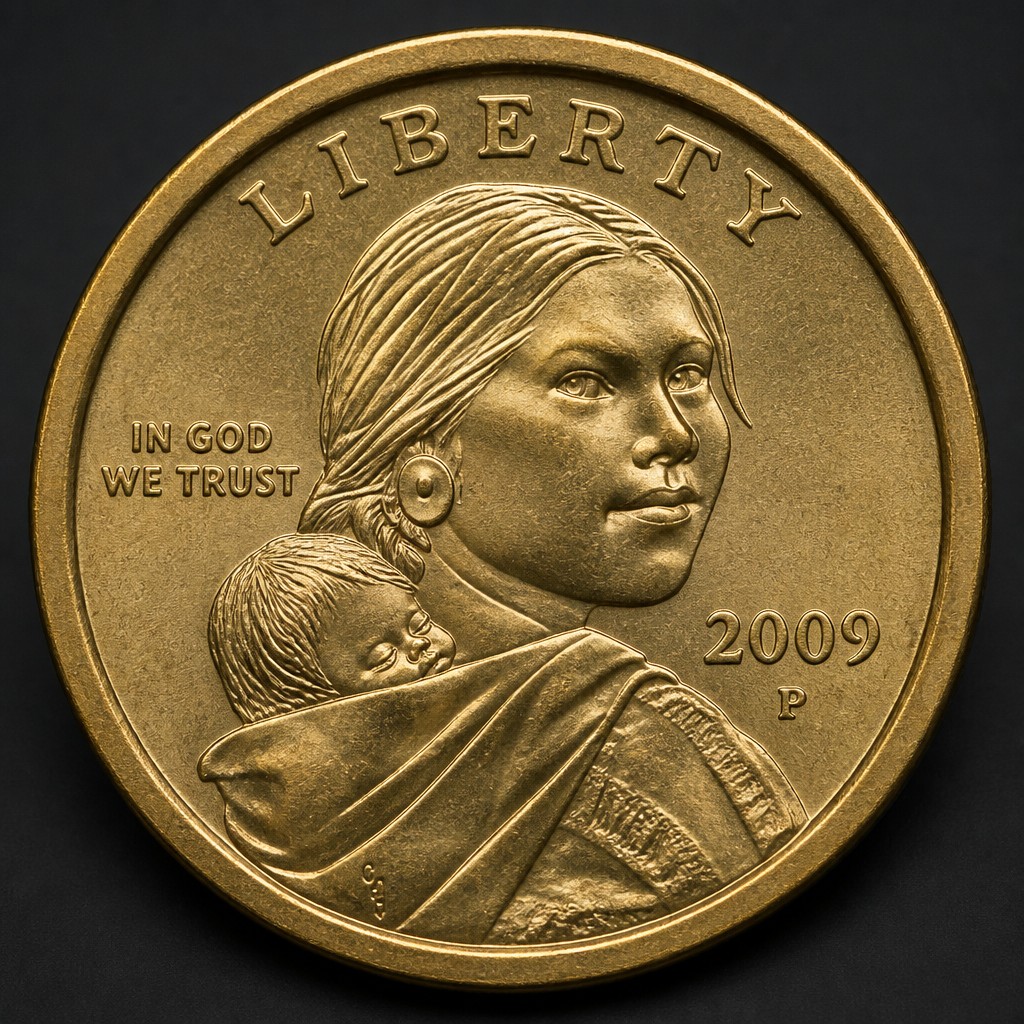
What It Is
Starting in 2009, the U.S. Mint began issuing a new reverse design annually on the Sacagawea dollar to highlight Native American contributions to American history, under the Native American $1 Coin Act. The obverse portrait of Sacagawea, used since the coin's 2000 debut, was kept unchanged, while the reverse changes every year to depict a different theme.
Obverse Design
The obverse, designed by Glenna Goodacre, shows Sacagawea facing forward-right, carrying her infant son Jean Baptiste on her back, with LIBERTY above and IN GOD WE TRUST to the side, along with the date and mint mark.
Reverse Design
Unlike the original 2000-2008 eagle-in-flight reverse, coins from 2009 onward feature a rotating series of designs, each honoring a different aspect of Native American history, such as agriculture, treaties, or cultural contributions, with a different artist and theme selected each year. UNITED STATES OF AMERICA and $1 appear on every version, along with a small inscription describing that year's theme.
Size, Weight, Metal, and Edge Lettering
The coin measures 26.5 mm in diameter, weighs 8.1 grams, and is struck in manganese-brass clad over a copper core, giving it a golden color. Beginning with the 2009 issues, the mint mark, date, and E PLURIBUS UNUM were moved to incused lettering on the edge, matching the format used on the Presidential dollar series.
Mint Marks
Look for a small "P," "D," or "S" as part of the edge lettering, alongside the date.
Telling It Apart From Similar Coins
The unchanged Sacagawea obverse ties every year of this series together, while the yearly-changing reverse design is the clearest way to identify which specific year a coin belongs to. Compared to the original 2000-2008 Sacagawea dollar, which always shows an eagle in flight on the reverse, any coin with a different reverse design after 2008 belongs to this Native American Dollar series.
Judging Condition at a Glance
Examine Sacagawea's facial features and the folds of the baby's wrap for wear, along with the fine details of whichever reverse design is present, since intricate scenes can show wear unevenly depending on the design's relief. Because part of the coin's information is on the edge, confirm that the mint mark and date remain legible there.
Authenticity Red Flags
Watch for reverse designs that don't match the correct year for that theme, edge lettering that looks poorly formed or inconsistently spaced, and coins that don't match the expected golden clad color and 8.1-gram weight. Because collectors sometimes seek specific yearly themes, verify that the reverse imagery, inscriptions, and date are consistent with genuine issues for that year before assuming a coin is correctly identified.
Frequently asked questions
What makes the Native American Dollar different from the original Sacagawea dollar?
It keeps the same Sacagawea obverse but replaces the eagle reverse with a new design each year starting in 2009, honoring different aspects of Native American history.
Where is the mint mark on these coins?
Incused into the coin's edge along with the date, a format adopted starting with the 2009 issues.
How can I tell which year a Native American Dollar is from?
Each year features a distinct reverse design and theme, along with the date on the edge, so the reverse artwork itself indicates the year.
What is the coin made of?
Manganese-brass clad over a copper core, giving it a golden color, the same composition used throughout the small dollar coin series.
Is the Sacagawea portrait the same on every year of this series?
Yes, the obverse portrait of Sacagawea and her son remains unchanged across all years; only the reverse design changes annually.