
How to Identify the Napoleon III 20 Francs
Practical checks for the French gold Napoleon: portrait type, wreathed value, size and weight, mint marks, and counterfeit cautions.
Read the full Napoleon III 20 Francs encyclopedia entry →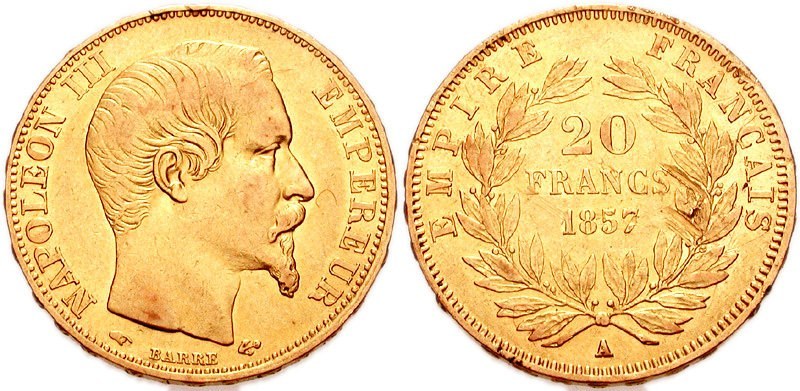
Start with size and metal. The 20 francs Napoleon is a small gold coin about 21 mm across, weighing roughly 6.45 grams of about .900 fine gold. It should feel dense for its size and show the warm color of high-purity gold. A coin that is much larger, lighter, or pale may be a different denomination or a plated fake.
Read the obverse portrait. Napoleon III faces right with a Latin-style legend naming him emperor. Note whether the head is bare (tete nue), as on the 1857 example, or wears a laurel couronne, which appears on later 1860s issues. The portrait style is the quickest way to place the coin within his reign.
Check the reverse. Early coins of this type show the denomination "20 FRANCS" inside a wreath with the date below; other issues carry the imperial coat of arms instead. Locate the date and, near the rim, the mint mark (a small letter) together with tiny privy or engraver's symbols such as an anchor, hand, or bee that indicate the mint and mintmaster. Paris (letter A) is the most common, with branch mints like Strasbourg (BB) also seen.
Distinguish look-alikes. Do not confuse it with the 10 francs (smaller, about 19 mm) or 40 francs (larger) gold coins, nor with 20 franc pieces of other rulers such as Napoleon I, Louis-Philippe, or the later Third Republic "Angel" and "Rooster" types, which show entirely different designs. Same-standard foreign 20 franc coins share the weight but carry other portraits and legends.
Authenticate with care. Because these coins trade on gold content, they are widely copied. Weigh and measure the piece, inspect the reeded edge for seams, and compare the portrait and lettering to reference images for sharpness. When buying or selling at meaningful value, rely on a reputable dealer or third-party grading rather than appearance alone.
Frequently asked questions
How do I tell a 20 francs from a 10 or 40 francs?
Check size and the stated value. The 20 francs is about 21 mm and reads "20 FRANCS." The 10 francs is smaller (about 19 mm) and the 40 francs is noticeably larger and heavier.
Where is the mint mark?
Look near the reverse rim for a small letter (A for Paris, BB for Strasbourg, and others), usually accompanied by tiny privy symbols that identify the mint and mintmaster.
How can I confirm it is bare-head Napoleon III and not another ruler?
The obverse legend names Napoleon III as emperor and shows a bare head facing right on early issues. Different names, wreathed heads, or non-portrait designs point to other types or rulers.
What quick tests help spot a fake?
Verify the coin weighs about 6.45 grams and measures about 21 mm, check the reeded edge for casting seams, and confirm sharp portrait detail. Have valuable pieces authenticated professionally.