
How to Identify the Najd Silver Coin
A collector's guide to reading a Najd trade coin by its Victoria Queen design, silver specs, strike quality, and imitation red flags.
Read the full Najd Silver Coin encyclopedia entry →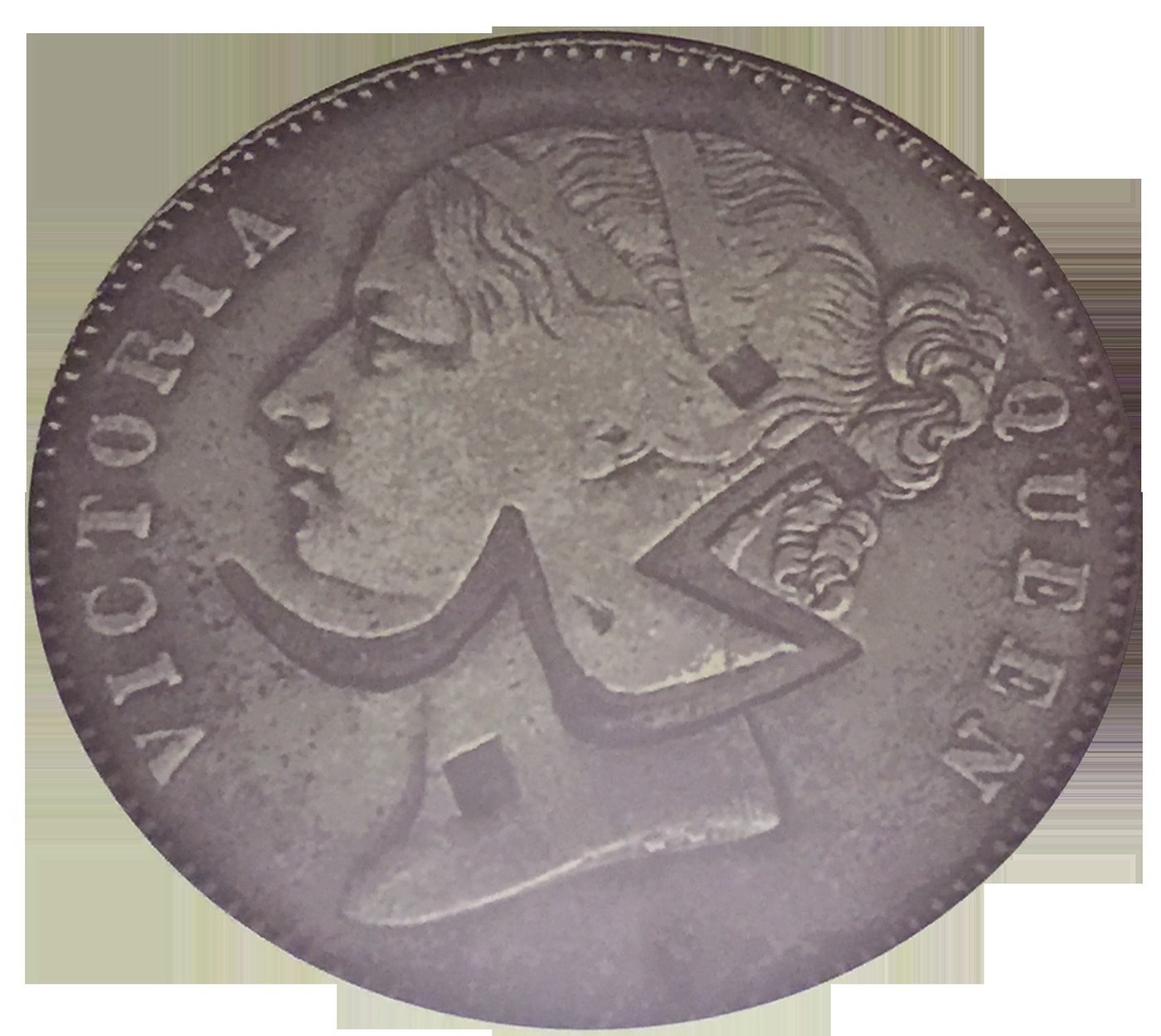
Begin with the visible face. The photographed coin shows a left-facing draped bust encircled by the Latin legend "VICTORIA QUEEN" and an 1862 date. That is the obverse of a British India Queen-type silver rupee, and it is what a "Najd silver coin" of this kind usually reproduces. If you were told to expect Arabic script, look again: the legend on this specimen is in Latin letters, so an Arabic inscription is not the diagnostic here.
Measure and weigh the piece. A standard rupee is silver, about 30-31 mm in diameter, roughly 11.5-11.7 grams, with a reeded edge. Confirm the coin is non-magnetic, since genuine silver does not respond to a magnet. Readings well off these figures suggest either a debased local imitation or a modern fake, so record the numbers before drawing conclusions.
Judge the strike and style, which is how you separate an imported official rupee from a Najdi imitation. Mint-struck British India rupees are sharp, symmetrical, and evenly centered, with crisp lettering. Arabian trade imitations tend to show softer portrait modeling, slightly uneven or clumsy letters, and a less regular flan. Neither is inherently more "correct" for this catalogue heading, but the distinction drives attribution and value.
Check the reverse if it is available. A genuine British India rupee reverse reads "ONE RUPEE / INDIA" with the date inside a lotus-and-floral wreath, and may carry a small Bombay mint dot or no mark for Calcutta. Imitations frequently garble or simplify this side. Watch for casting seams on the edge, a soapy or greasy surface, and mushy lettering, all signs of a cast copy; for any piece you intend to buy at a premium, seek expert or third-party authentication.
Frequently asked questions
How do I tell an imported rupee from a Najdi imitation?
Compare strike quality and specs. Official British India rupees are crisp, well centered, and hit standard weight and size, while Arabian imitations tend to look softer, with irregular lettering and sometimes off-standard weight or fineness.
The catalogue says Arabic script, but I see Latin letters. Which is right?
Trust the coin. The pictured face carries the Latin legend VICTORIA QUEEN. Catalogue notes can be mistaken, so identify the piece from what is actually on the metal.
What quick tests help spot a modern fake?
Weigh and measure it against rupee specs, confirm a reeded edge with no casting seam, and check that it is non-magnetic. Off weight, mushy detail, or seams point to a cast reproduction rather than a period coin.
Do I need the reverse to identify it?
Not to recognize the Victoria type, which the obverse alone confirms. But the reverse helps separate a genuine ONE RUPEE INDIA strike from an imitation and can reveal a mint mark, so examine it when available.