
How to Identify the Nabataean Silver Drachm (Aretas IV)
A silver coin of the Nabataean king Aretas IV, identified by the jugate portraits of the king and his queen on the front and an Aramaic legend on the back.
Read the full Nabataean Silver Drachm (Aretas IV) encyclopedia entry →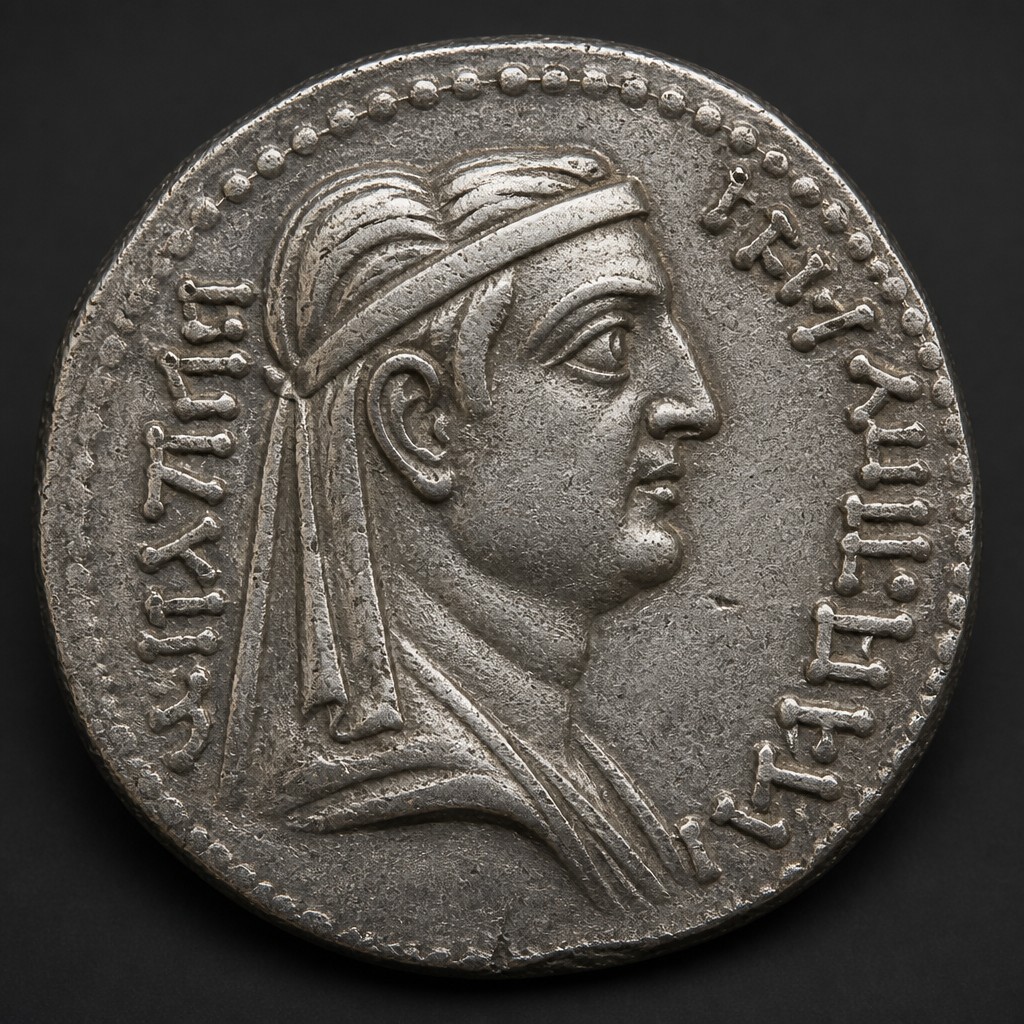
What It Is
Aretas IV Philopatris ruled the Nabataean Kingdom, centered on the city of Petra, from around 9 BC to 40 AD, the longest reign of any Nabataean king and a period of considerable prosperity reflected in an active silver coinage. The Nabataeans controlled valuable overland trade routes carrying incense and spices between Arabia and the Mediterranean world, and their coinage blended local Aramaic tradition with visual influences borrowed from neighboring Hellenistic and Roman coinages.
Obverse Design
The obverse most distinctively shows jugate busts, meaning the king and his queen (most famously Shaqilat) shown side by side facing the same direction, both facing right, a design choice that sets Aretas IV's coinage apart from many single-portrait ancient issues. A Nabataean Aramaic legend surrounds the busts.
Reverse Design
The reverse typically carries a Hellenistic-influenced motif such as crossed cornucopiae, along with a Nabataean Aramaic legend that names the king's title and often includes a regnal year, which is valuable for dating the piece precisely within his long reign.
Size, Weight, and Metal
Nabataean drachms of this period are small silver (sometimes debased toward billon in later issues of the reign) coins, roughly 15-17mm in diameter and about 3 to 3.5 grams in weight, reflecting a regional weight standard influenced by neighboring Hellenistic coinages.
Mint Marks and Where to Find Them
All Nabataean royal coinage of this era was struck at a single mint associated with the capital, Petra, so there is no separate mint mark system; attribution instead relies on the king's name and titles in the Aramaic legend.
Telling It Apart from Similar Coins
The jugate double portrait is a strong identifying feature of Aretas IV's issues, since many other Nabataean kings such as Obodas, Malichus, or Rabbel struck coins with a single royal portrait rather than a paired queen's bust. Reading the Aramaic legend for the king's name is the most reliable way to distinguish among Nabataean rulers whose coin styles can otherwise look broadly similar.
Judging Condition at a Glance
Because the regnal year in the Aramaic legend is important for precise dating, prioritize legibility of the inscription when assessing a coin, and note that the silver often appears somewhat dark or debased in quality, particularly on issues from later in Aretas IV's reign. A coin where both portraits and the full legend are clear is considered a strong example, since partial legends make it difficult to confirm the exact regnal year.
Authenticity Red Flags
Be cautious of coins where the Aramaic legend is rendered as meaningless, garbled pseudo-script rather than genuine letterforms, or where the metal color and texture look inconsistent with the typically debased, grayish silver alloy expected from this later Nabataean coinage.
Frequently asked questions
Why does the coin show two faces together?
Aretas IV struck coins with jugate portraits of himself and his queen, Shaqilat, shown side by side, a distinctive feature of his reign's coinage.
What language is the inscription on Nabataean coins?
The legends are written in Nabataean Aramaic script, which differs visually from the Greek or Latin legends found on many other ancient coinages.
Can I tell the exact year the coin was struck?
Often yes, because the reverse legend frequently includes a regnal year, which can help date the coin within Aretas IV's long reign if the inscription is legible.
Where were these coins minted?
All known Nabataean royal silver of this period came from a single mint associated with Petra, the Nabataean capital.