
How to Identify the Mughal Square Rupee Token
A collector's checklist for the square Mughal rupee token: spotting its square format, Persian script, AH 988 date and telltale signs of a reproduction.
Read the full Mughal Square Rupee Token encyclopedia entry →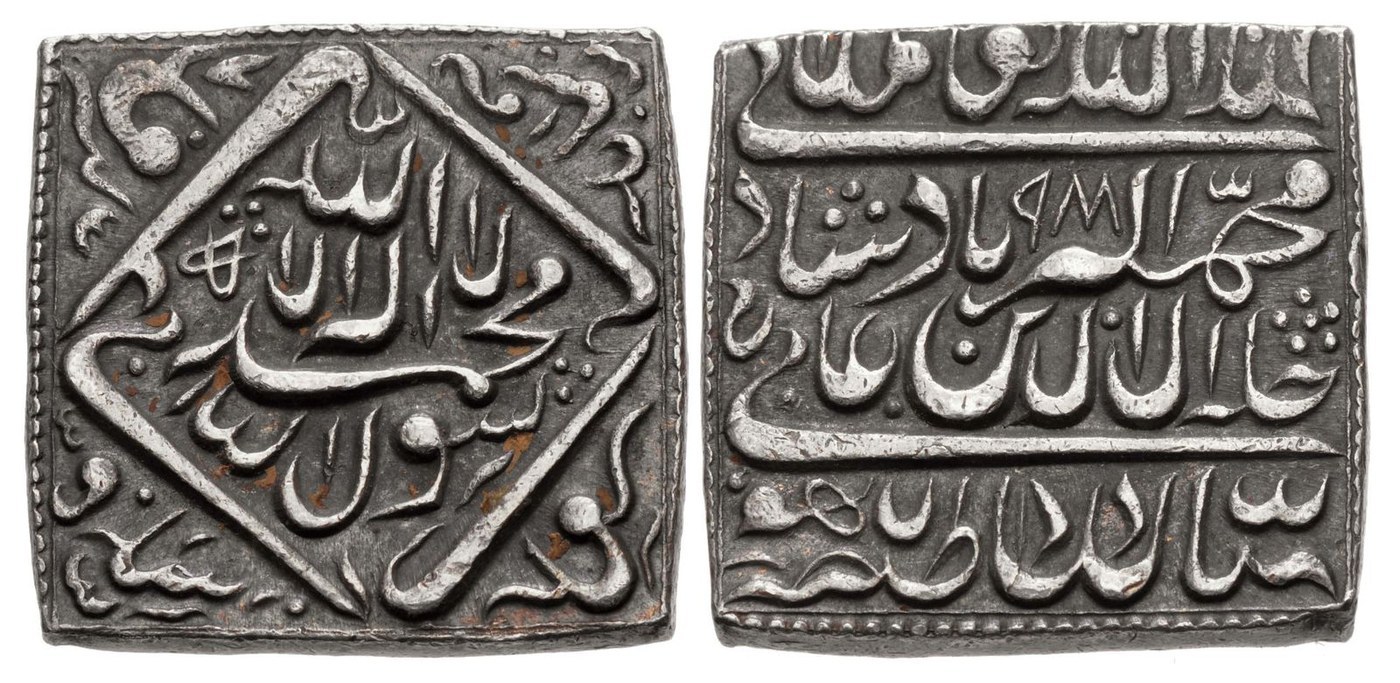
Begin with the shape, the fastest diagnostic. This is a square (four-cornered) piece, not a round coin, echoing the Mughal square rupee type of Akbar's era. A square silver-colored item covered in flowing script, with no portrait or emblem, is the immediate signature of this design.
Read the two faces. Expect Persian and Arabic calligraphy arranged within the square field on one side and additional Islamic inscriptions on the other, following the Kalima-and-caliphs layout of the original type. Look for the AH 988 date worked into the design. The coinage is aniconic, so any human or animal image would be out of place for this type. Note whether the script is crisp and well proportioned or soft and uneven.
Check size, weight and metal. Genuine Mughal rupees follow specific weight and fineness standards, whereas tokens and reproductions often deviate. Weigh and measure the piece, examine the edges and surfaces for casting texture, seams, bubbles or modern tooling, and judge whether the color and heft are consistent with a solid silver coin or with a base-metal or low-silver copy.
Separate token from original. Authentic Akbar square rupees are rare and heavily documented; the vast majority of square rupees encountered casually are later copies, souvenirs or jewelry pieces. Signs pointing to a reproduction include mushy or stylized calligraphy, incorrect proportions, a frozen catalog date with no mint variation, and mounting or loop marks from ornamental use.
Apply authentication caution. Because this design has been widely reproduced, do not assume any square rupee is genuine. Compare inscriptions and fabric against specialized references on Mughal and Islamic coinage, and for any piece presented as authentic seek evaluation by a specialist or third-party grading service before buying or selling. Treating an unverified example as a token is the safe default.
Frequently asked questions
What is the quickest way to recognize this token?
Its square format combined with all-script faces. A four-cornered silver-colored piece covered in Persian and Arabic calligraphy, with an AH 988 date and no portrait, points to a Mughal square rupee design, most often encountered as a later token or copy.
How do I tell a token from a genuine Akbar rupee?
Check weight, fineness, and the sharpness of the calligraphy against documented standards. Genuine square rupees are rare and precisely struck; reproductions often show casting texture, soft or stylized script, wrong proportions, or jewelry mounting marks.
Should the date vary between pieces?
Genuine coins vary by mint and regnal date, but a reproduction typically carries a single frozen date such as AH 988 copied from the original design. A fixed catalog date across many identical pieces is a hint that you are looking at a token.
How can I be sure before buying or selling?
Do not assume authenticity, since this design is widely copied. Compare against specialized Mughal and Islamic coin references, and for any piece presented as genuine obtain professional authentication or third-party grading first.