
How to Identify the Mughal Silver Rupee (Akbar)
A silver rupee introduced by Emperor Akbar's currency reforms, identified by Persian calligraphic inscriptions naming the ruler, mint, and sometimes the Ilahi era date.
Read the full Mughal Silver Rupee (Akbar) encyclopedia entry →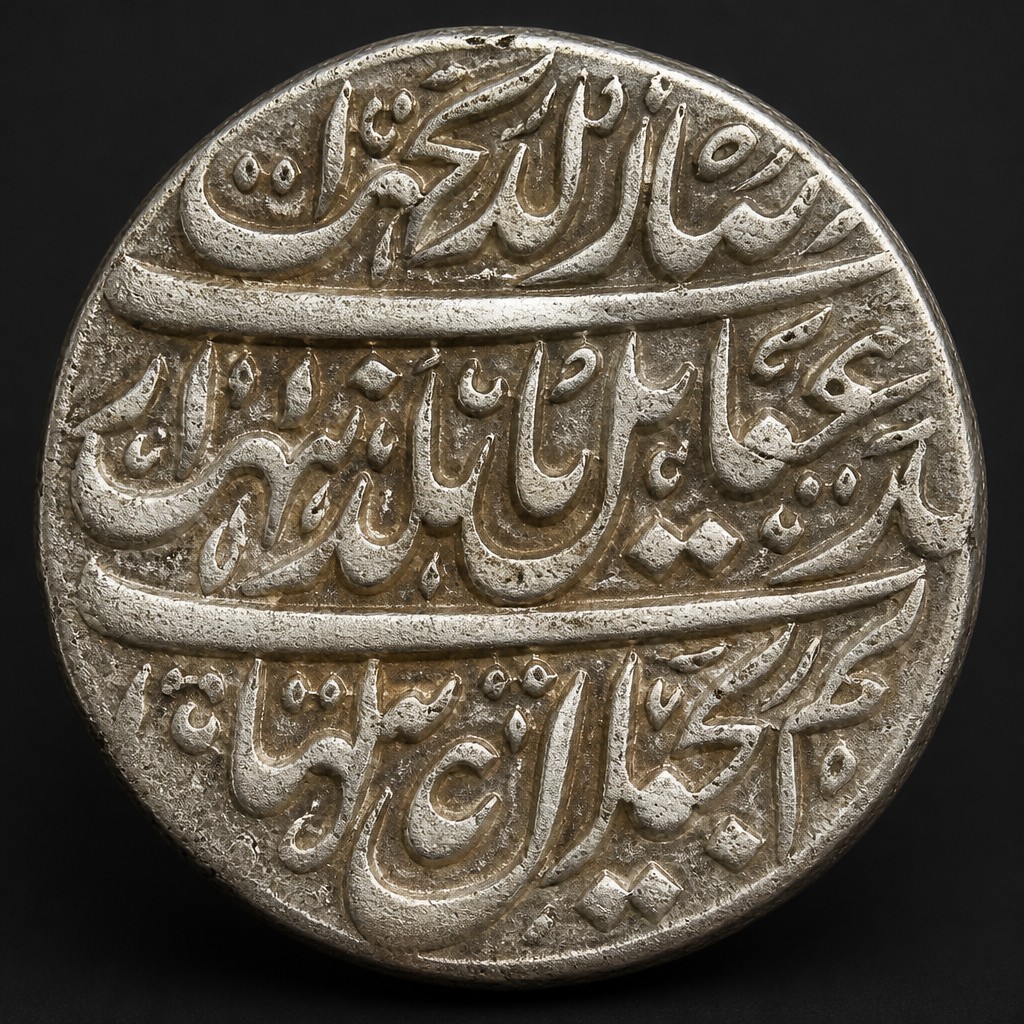
What the Coin Is
The silver rupee was standardized under Emperor Akbar, who reigned from 1556 to 1605, as part of sweeping monetary reforms that established the rupee as the Mughal Empire's core silver denomination, a format that would go on to influence Indian currency for centuries afterward. Akbar's rupees mark an early, foundational stage of this long-lived coin type.
Obverse Design & Inscription
Like most Mughal coinage, the obverse relies on Persian/Arabic calligraphy rather than imagery. It typically carries the kalima, the Islamic declaration of faith, and the names of the four rightly-guided caliphs, or alternatively Akbar's name and imperial titles, depending on the specific issue and period of his reign.
Reverse Design & Inscription
The reverse generally names the mint city and the regnal year, and on later issues from Akbar's reign, may include phrases associated with his religious and philosophical initiative known as Din-i Ilahi, along with dating according to the Ilahi era he introduced alongside the traditional Hijri calendar. Some Akbar-period rupees also carry brief additional epithets or ornamental framing around the text.
Size, Weight, Metal, Edge
The rupee is struck in silver, with weight standardized at approximately 11.5 grams under Akbar's reform, and a diameter typically around 22-24 mm, though the flan shape in this period is often somewhat irregular rather than a perfect circle. The edge is plain and unmilled, typical of hand-struck Mughal coinage.
Mint Marks & Where to Find Them
As with the gold mohur, the mint city is spelled out within the inscription rather than reduced to a small symbol; common mints active under Akbar include Agra, Lahore, Delhi, and several others across the growing empire. The specific regnal year, also part of the legend, helps narrow the coin's date within Akbar's roughly five-decade reign.
Telling It Apart from Similar Coins
Coins from Akbar's reign can be distinguished from those of his predecessors, such as Sher Shah Suri, who established the weight standard Akbar continued, and successors like Jahangir and Shah Jahan, by reading the ruler's name and specific regnal titles in the inscription. Because Akbar's later coinage sometimes departs from standard Islamic religious phrasing due to his Din-i Ilahi reforms, unusual devotional wording combined with an Ilahi-era date is a useful marker for later Akbar-period issues specifically.
Judging Condition & Authenticity
Look for clear, well-struck calligraphy on both sides and a reasonably complete, legible mint and date inscription; because hand-struck flans of this period are often irregular in shape, some off-center striking is normal and not itself a sign of a problem. Be wary of examples with implausible titles or phrasing that doesn't match documented Akbar-period coinage, mint names that don't correspond to real Mughal mints, or a surface and strike quality suggesting a modern cast reproduction rather than a genuine hand-struck silver coin.
Frequently asked questions
What made Akbar's rupee significant?
It formalized the silver rupee, building on Sher Shah Suri's earlier weight standard, into the Mughal Empire's core denomination, a format that persisted in Indian currency for centuries.
What is the "Ilahi era" sometimes seen on these coins?
It was a solar calendar era introduced under Akbar tied to his religious and administrative reforms, occasionally used for dating alongside the traditional Hijri lunar calendar.
How much should a genuine rupee weigh?
Akbar's standardized rupee weighs approximately 11.5 grams in silver, matching the weight standard Akbar continued from Sher Shah Suri.
How do I identify the mint city on the coin?
The mint name is written out within the Persian/Arabic inscription, usually on the reverse, rather than shown as a separate symbol.
How can I tell an Akbar rupee from one issued by his son Jahangir?
Compare the ruler's name and regnal titles in the inscription; each emperor's coinage names him specifically, and Jahangir's coinage sometimes adds distinct additional elements like portrait or zodiac imagery not used by Akbar.