How to Identify the Mughal Islamic Rupee
A collector's walkthrough for placing a hand-struck Mughal silver rupee: reading its calligraphy, weighing the flan, and telling it from later look-alikes.
Read the full Mughal Islamic Rupee encyclopedia entry →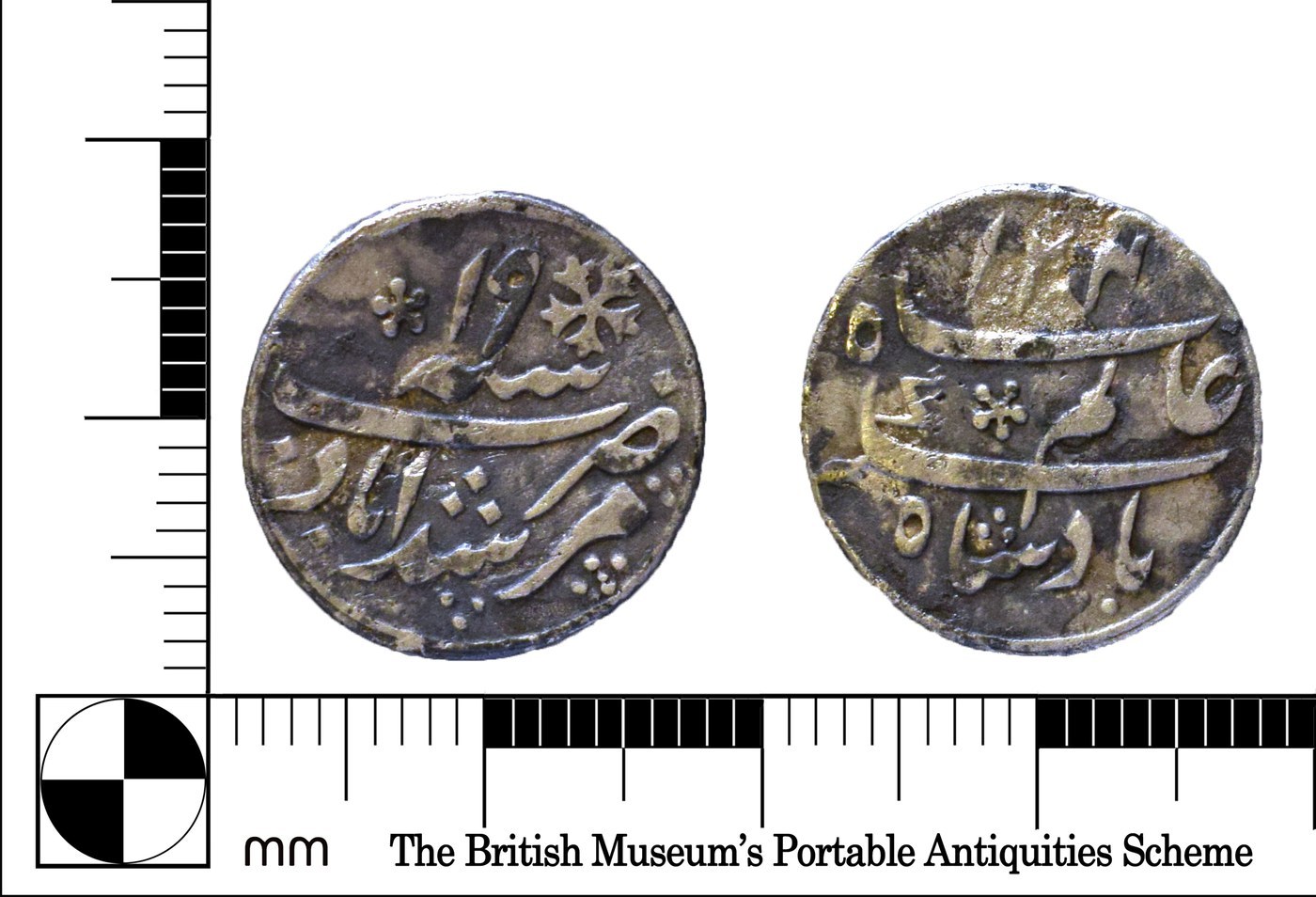
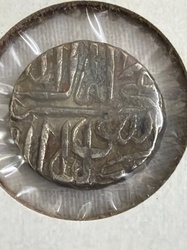
Start with the physical basics. A genuine Mughal rupee of this era is struck silver, not cast, and should feel like a broad, fairly thin disc weighing roughly 11 to 11.7 grams and measuring about 21 to 28 millimeters. It carries no portrait, animal, or building anywhere on either face. If you see any figural image, you are not looking at a standard Mughal imperial rupee. The metal should ring as high-grade silver, with honest wear rather than the porous, seamed surfaces of a cast copy.
Next, read the layout. Both sides are filled with Persian and Arabic script in horizontal lines. The obverse usually holds the emperor's name and a couplet plus the Hijri (AH) date; the reverse states the mint and regnal year, keyed by the words "zarb" (struck at) before the mint name and "sanah ... julus" for the year of reign. You do not need fluent Persian to make progress: locating the mint name and the julus year lets you attribute the coin, and an AH date in roughly the 1130s-1170s range confirms this 1719-1758 window.
Expect hand-struck irregularities. Dies were individually cut, so legends often run partly off the flan, letters double, and small cracks appear at the rim. These are normal and should not be mistaken for damage or for evidence of forgery. A coin where the full mint name, ruler, and date are all on the flan and sharply struck is the exception and is more desirable than a typical partially off-center example.
Be cautious about look-alikes. After the mid-eighteenth century, princely states, the Maratha powers, and the East India Company all struck rupees in the Mughal style and frequently in the Mughal emperor's name, sometimes continuing a ruler's name long after his death (posthumous issues). Attribution therefore depends on reading the mint and regnal formula carefully rather than assuming an old-looking rupee is a central imperial issue. Reference works organized by mint and ruler are invaluable here.
Finally, watch for authentication red flags. Cast forgeries show mold seams, trapped air bubbles, and mushy detail; underweight or overly thin pieces may be clipped, plated, or false. Genuine strikes show crisp, angular calligraphy and metal flow consistent with a hammer strike. When a coin's attribution or authenticity carries real financial weight, weigh and measure it and compare against trusted catalog plates or a specialist's opinion.
Frequently asked questions
How can I tell the mint and date without reading Persian?
Match the script against catalog plates organized by mint and ruler. Focus on the reverse, where the mint name follows the word "zarb" and the regnal year follows "julus"; the AH date sits on the obverse.
Are off-center or partly blank legends a sign of a fake?
No. Mughal rupees were struck by hand from individually cut dies, so weak edges, doubling, and off-flan legends are normal. Cast seams, bubbles, and soft mushy detail are the real warning signs.
How do I distinguish an imperial rupee from a princely-state or East India Company copy?
Read the mint and regnal formula rather than relying on style. Many later issuers struck in the Mughal emperor's name, sometimes posthumously, so accurate attribution depends on the mint name, ruler, and year together.
What weight and size should a genuine example be?
Expect a struck silver coin of about 11 to 11.7 grams and roughly 21 to 28 millimeters. Significantly light or thin pieces may be clipped, plated, or counterfeit.
Mughal Islamic Rupee identified by the community
Recent Mughal Islamic Rupee coins identified with Coin Identifier.