
How to Identify the Mughal Gold Mohur
A large gold coin of the Mughal Empire bearing Persian inscriptions rather than imagery, identified by its calligraphic legends naming the ruler, mint, and date.
Read the full Mughal Gold Mohur encyclopedia entry →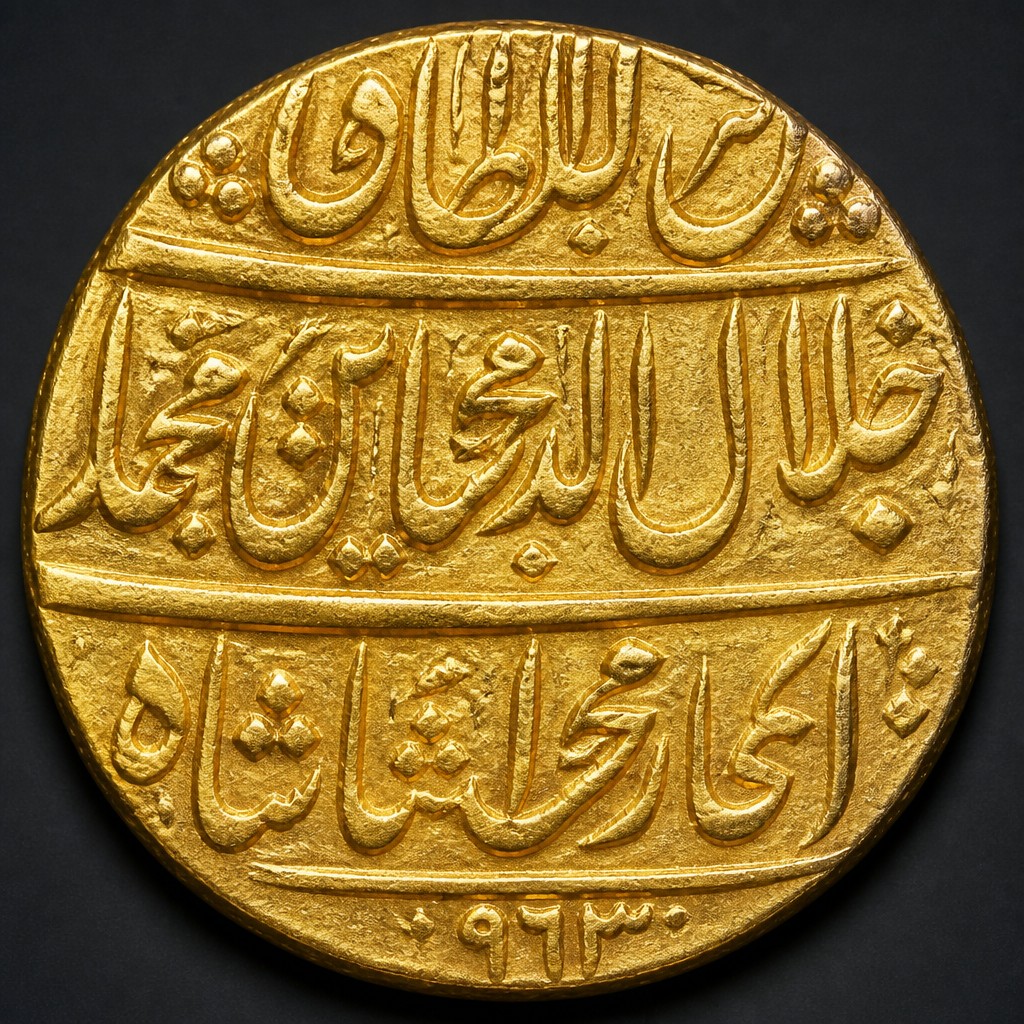
What the Coin Is
The gold mohur was the principal high-value gold coin of the Mughal Empire, which ruled much of the Indian subcontinent from the 16th to 19th centuries. Following Islamic numismatic tradition, most Mughal coinage relies on calligraphic inscriptions rather than pictorial imagery, making inscription reading the central identification skill for this series.
Obverse Design & Inscription
The obverse typically carries the Islamic declaration of faith, the kalima, along with the names of the first four caliphs, or alternatively the reigning emperor's name, titles, and regnal year, rendered in elegant Persian/Arabic calligraphy within a decorative border. Exact wording and layout changed under different emperors and mint reforms.
Reverse Design & Inscription
The reverse generally names the mint city where the coin was struck along with the regnal year, and sometimes the Hijri year, often within an ornamental frame or cartouche. A small number of Mughal issues break from the aniconic norm, most famously certain coins of Emperor Jahangir that feature zodiac signs or a portrait bust, making those types visually distinctive within the broader series.
Size, Weight, Metal, Edge
The standard mohur is struck in high-purity gold, with weight standardized under Akbar's reforms at roughly 11 grams, varying somewhat by period and specific type, and a diameter typically in the range of 20-22 mm, though larger multiple-mohur presentation pieces were also struck on occasion. The edge is plain and unmilled, consistent with hand-struck coinage of the period.
Mint Marks & Where to Find Them
The mint name is usually spelled out in full within the reverse inscription rather than abbreviated into a symbol, so identifying the mint means reading the city name in the Persian text, commonly cities such as Agra, Lahore, Delhi, or Surat depending on the period. The regnal year and/or Hijri date, also part of the inscription, help narrow down exactly when a given mohur was struck.
Telling It Apart from Similar Coins
Because the design relies on inscriptions rather than pictures, the fastest way to distinguish one Mughal ruler's mohur from another is reading the calligraphic name and titles; each emperor used distinct regnal titles and, on some issues, poetic couplets unique to his reign. Zodiac or portrait mohurs of Jahangir are unmistakable due to their imagery, which sets them apart from the calligraphy-only norm used by every other Mughal emperor.
Judging Condition & Authenticity
Look for crisp, fully legible calligraphy on both sides with well-defined letter strokes; because gold does not corrode, a genuine mohur's main condition factors are strike quality, centering, and handling wear rather than corrosion. Be cautious of pieces with blurred or garbled script, incorrect regnal titles for the claimed ruler, a mint name that doesn't match any documented Mughal mint, or a surface texture suggesting a cast copy rather than a hand-struck coin, as these are common traits of forgeries and later restrikes.
Frequently asked questions
Why don't Mughal coins usually show portraits?
Mainstream Mughal coinage followed Islamic numismatic convention favoring calligraphic inscriptions over figural imagery; the zodiac and portrait mohurs of Jahangir are a rare, well-known exception.
How do I find out which mint struck the coin?
Read the reverse inscription, which typically spells out the mint city's name in Persian/Arabic script along with the date.
What should a standard mohur weigh?
After Akbar's monetary reforms, the standard mohur weighed roughly 11 grams in gold, though exact weight can vary somewhat by period and specific issue.
How can I tell which emperor issued a given mohur?
The obverse or reverse inscription names the ruler and his regnal titles directly; comparing this wording to known imperial titulature identifies the issuing emperor.
What's a red flag for a fake mohur?
Blurred, garbled, or grammatically incorrect calligraphy, a mint name that doesn't match a real Mughal mint, or surface characteristics suggesting a cast rather than struck coin.