
How to Identify the Moroccan Rial (Alawi Dynasty Coinage)
Silver rial coinage struck under Morocco's Alawi sultans, identifiable by dense Arabic calligraphy, a mint city name, and the absence of any portrait.
Read the full Moroccan Rial (Alawi Dynasty Coinage) encyclopedia entry →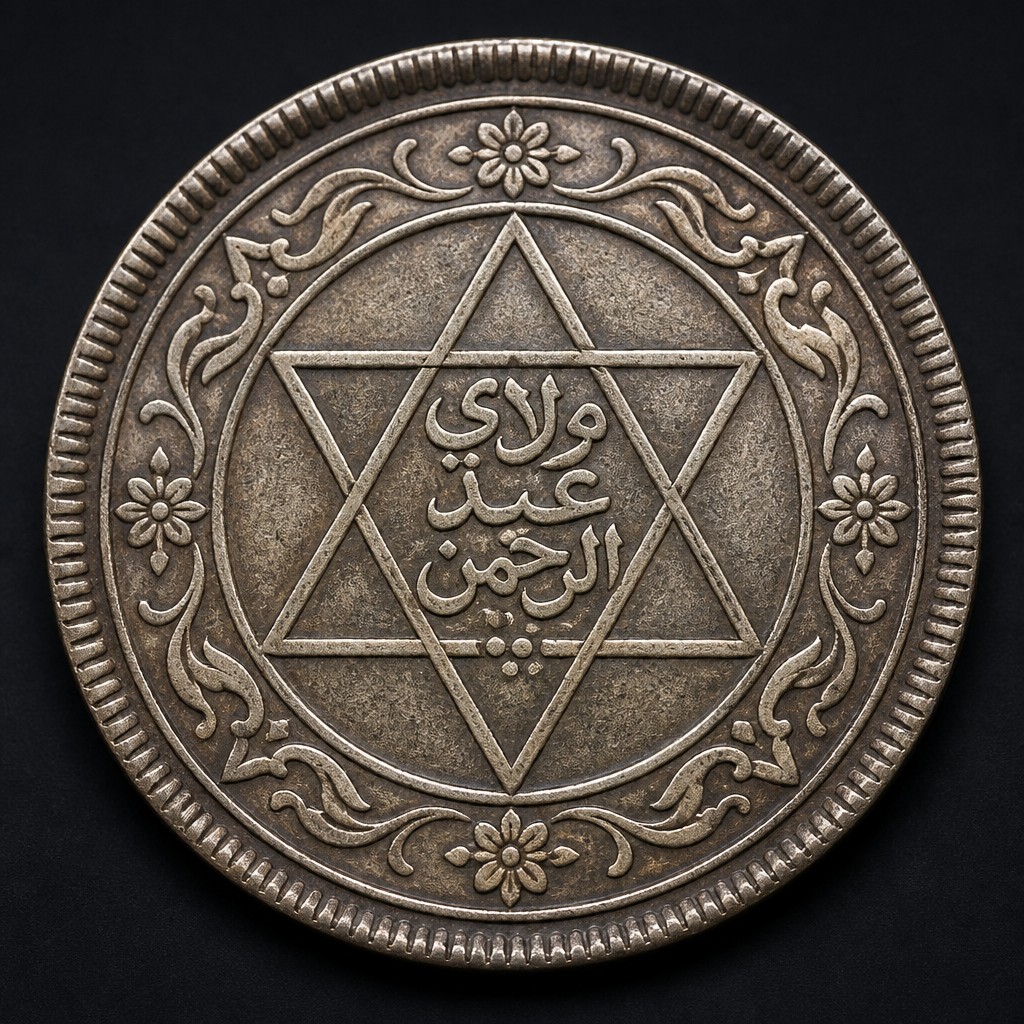
What It Is
The rial was a silver denomination struck by the Sharifian (Alawi dynasty) sultans of Morocco over an extended period, particularly in the 19th century, as Morocco maintained its own coinage traditions independent of neighboring Ottoman territories. These coins are sometimes referred to interchangeably with related terms like dirham depending on the exact period and denomination.
Obverse Design & Inscriptions
The obverse displays Arabic calligraphy, typically including a religious phrase and the name and title of the reigning Sultan, arranged within a circular or square-bordered field. There is no portrait, consistent with Islamic coinage tradition in the region.
Reverse Design & Inscriptions
The reverse generally names the mint city (commonly Fes, though other Moroccan mint cities were used at different times) along with the Hijri date. Many issues from this dynasty are undated or use only the mint city and a stylized decorative border, so not every coin will show a legible year.
Size, Weight, Metal & Edge
These are silver coins, with weight and diameter varying by denomination and period; some issues are struck on notably irregular, hand-cut or lightly irregular planchets reflecting the hand-operated minting methods used at various Moroccan mints during the 19th century. Edges are typically plain, without the machine-milled reeding seen on contemporary European coinage.
Mint Marks & Where to Find Them
Rather than an abbreviated symbol, the mint city is spelled out in full within the Arabic inscription, most commonly Fes. Careful reading of the legend, rather than searching for a small separate mark, is the way to determine where a specific coin was struck.
Telling It Apart From Similar Coins
Because several North African and Middle Eastern states produced silver coinage with similar Arabic calligraphic styles, the safest way to confirm a Moroccan Alawi rial is to identify the Sultan's name and the Moroccan mint city (such as Fes) within the legend, since these will not match the sultan names or mint cities used by Ottoman, Tunisian, or other regional issuers.
Judging Condition at a Glance
Because the design relies entirely on calligraphy, condition is best judged by how clearly the Arabic strokes remain defined. Coins struck on slightly irregular planchets may show natural weak spots from an incomplete strike even when otherwise lightly worn, so distinguish between a weak strike (present even on a new coin) and actual circulation wear (which rounds and softens the letter edges over time).
Authenticity Red Flags
Given the long popularity of Moroccan Islamic coinage among collectors, watch for coins with unnaturally smooth or perfectly round planchets that do not match the somewhat irregular, hand-produced look typical of genuine period strikes, silver color that appears too white or too yellow for the claimed fineness, poorly formed or inconsistent Arabic lettering, and any sign of a modern, mechanically perfect edge that would be out of place on a coin claimed to predate machine milling in that particular mint.
Frequently asked questions
Does the Moroccan rial show a portrait of the Sultan?
No. Like other Islamic coinage of the period, it uses only Arabic calligraphy naming the Sultan and mint, with no human image on either side.
Why do some of these coins look irregularly shaped?
Many were struck by hand on Moroccan mints using less mechanized methods than contemporary European mints, which often produced slightly irregular, non-perfectly-round planchets even on genuine coins.
How do I find out where the coin was minted?
The mint city, most commonly Fes, is spelled out within the Arabic inscription on the reverse rather than shown as a small separate mint-mark symbol, so you need to read the legend directly.
Is a weakly struck area always a sign of wear?
Not necessarily; because these coins were often hand-struck, a weak or flat area can result from an incomplete strike at the mint even on an otherwise lightly circulated coin, so compare letter sharpness across the whole coin before judging overall wear.