
How to Identify the Mithradates VI Pontos Tetradrachm
A dated silver tetradrachm of King Mithradates VI Eupator of Pontos, showing his idealized portrait and a grazing stag beneath the dynasty's star-and-crescent emblem.
Read the full Mithradates VI Pontos Tetradrachm encyclopedia entry →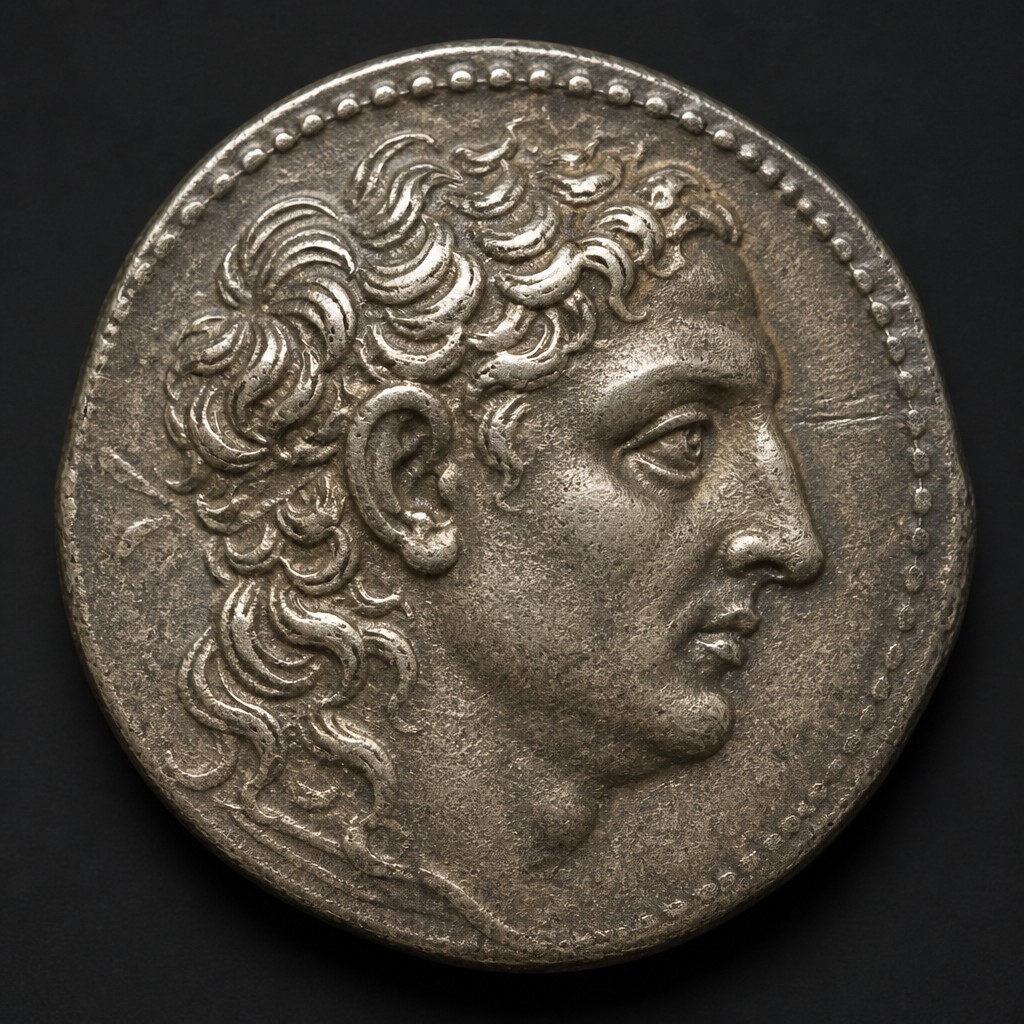
What the Coin Is
Mithradates VI Eupator was king of Pontos on the southern shore of the Black Sea and one of Rome's most persistent rivals in the first century BC, ruling for decades and expanding his territory across much of Asia Minor before his eventual defeat. His silver tetradrachms, struck mainly from the 90s through the 60s BC, are notable for combining royal portraiture with a precise internal dating system.
Obverse Design
The obverse shows a diademed portrait of Mithradates VI facing right, with long, flowing hair typical of Hellenistic royal portraiture. Although struck over decades during which the king aged considerably, the portrait remains consistently idealized and youthful across most issues, following the convention of many Hellenistic rulers rather than showing a strictly realistic likeness.
Reverse Design
The reverse depicts a stag grazing to the left, its head lowered to the ground, set beneath a star and crescent moon, the traditional dynastic emblem of the kings of Pontos. Later issues sometimes add a wreath border around the entire design. The royal legend BASILEOS MITHRADATOU EUPATOROS (of King Mithradates Eupator) surrounds the scene, and a monogram along with a dated inscription appears in the field.
Size, Weight, and Metal
This is a silver tetradrachm struck on a slightly reduced weight standard compared to the classic Attic tetradrachm, generally weighing close to 16.5 grams. The flan is broad and the strike is usually well-centered, since royal Pontic mints maintained a fairly high production standard during this period.
Mint Marks and Where to Find Them (Reading the Date)
One of the most distinctive features of this coinage is a two-part date inscribed in Greek letters in the reverse field, giving both a month and a regnal year counted from the start of the Pontic era. Alongside the date, a mint monogram appears, allowing specialists to pin down both the year and the specific city where an individual coin was struck, a level of precision unusual for Hellenistic royal coinage.
Telling It Apart from Similar Coins
The combination of Mithradates's portrait, the grazing stag, and the star-and-crescent emblem is unique to his coinage and not shared with earlier Pontic kings, whose portraits and reverse types differ in detail. Because his tetradrachms were struck over a long reign, subtle differences in portrait style and the specific date inscribed can help place an individual coin within the broader chronology of his reign.
Judging Condition at a Glance
On the obverse, check the flow of the king's hair and the fine features of the diadem, which are the first details to wear down. On the reverse, the stag's legs and the small date lettering in the field are especially vulnerable to wear or a weak strike, so a coin with a fully legible date is considered a notably strong example for research and attribution purposes.
Authenticity Red Flags
Because Mithradates VI is a historically famous figure, his coinage attracts modern reproductions, some of which render the portrait with subtly incorrect proportions or an overly sharp, mechanical line quality inconsistent with genuine Hellenistic die engraving. Also check that the date and monogram in the field are consistent with known issues; a date that doesn't correspond to any recognized combination, or lettering that looks crudely re-cut, are both signs that a coin deserves closer scrutiny.
Frequently asked questions
Why does the king's portrait look so young across decades of coinage?
Hellenistic royal portraiture generally favored an idealized, youthful image over a strictly realistic likeness, so Mithradates's portrait remained largely consistent even as his actual reign stretched on for many years.
What do the star and crescent represent?
The star and crescent moon were the traditional dynastic emblem of the kings of Pontos, appearing above the grazing stag on the reverse of this coinage.
What is the small lettering in the reverse field?
It records a date, combining a month and a regnal year counted from the start of the Pontic era, along with a mint monogram identifying the city of production.
How much should a genuine tetradrachm weigh?
Genuine examples generally weigh close to 16.5 grams, on a slightly reduced standard compared to the classic Attic tetradrachm.