
How to Identify the Miliarensis of Constantius II
A collector's guide to recognizing a Constantius II silver miliarensis by metal, portrait, legend, reverse type, and mint mark.
Read the full Miliarensis of Constantius II encyclopedia entry →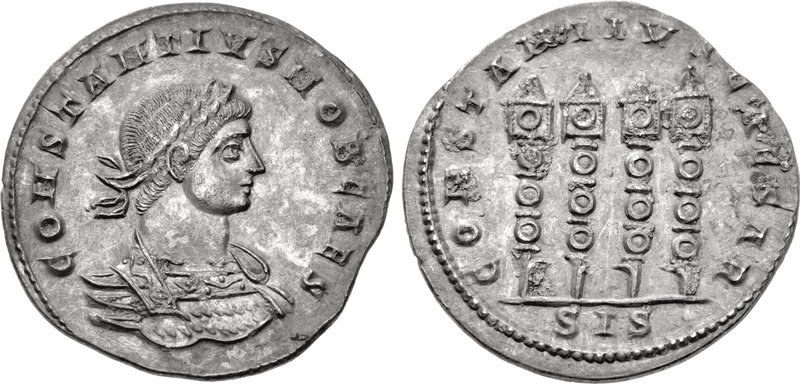
Begin with metal and module. A miliarensis is silver, and it should look and feel like a broad, thin silver coin rather than a small bronze or a heavy gold piece. It is larger than the little siliqua and smaller than a solidus, generally in the low-to-mid gram range. A genuine example shows bright or attractively toned silver surfaces; heavily green or brown corrosion suggests a base-metal coin rather than a silver miliarensis.
Read the obverse portrait and legend carefully. Constantius II is shown right-facing wearing a pearl diadem, the beaded headband that marks Constantinian-era emperors, not a laurel wreath or radiate crown. The surrounding Latin should resolve to a form of D N CONSTANTIVS P F AVG. The name CONSTANTIVS is the single most important diagnostic, because his brothers and successors used almost identical bust styles; confirming the spelling separates this coin from issues of Constans, Constantine II, Julian, or Valentinian.
Examine the reverse type and the exergue mint mark. Miliarensis reverses commonly show a standing emperor holding a standard and globe, or a Victory with wreath and palm or a trophy, framed by a legend naming the type. Below the design, in the exergue, a short mint mark identifies the striking city (for example, letters pointing to Constantinople, Antioch, Nicomedia, Thessalonica, or Sirmium). Recording this mark helps pin down the specific issue and supports attribution.
Watch for look-alikes and authentication pitfalls. The siliqua shares the same portrait and reverse repertoire but is smaller and lighter, so weigh and measure the coin before concluding it is a miliarensis. Ancient silver is also widely faked, including cast copies and modern struck forgeries, so check for casting seams, unnatural surfaces, wrong weight, and tooling. For a coin of this value, seek an established dealer, a known provenance, and, where possible, expert opinion before purchase.
Frequently asked questions
How do I tell a miliarensis from a siliqua?
Both are silver and share similar portraits and reverses, but the miliarensis is the larger, heavier denomination. Weigh and measure the coin: a noticeably smaller, lighter silver piece is usually a siliqua rather than a miliarensis.
What legend confirms it is Constantius II?
Look for the obverse legend reading a form of D N CONSTANTIVS P F AVG. The name CONSTANTIVS is decisive, since related emperors used nearly identical bust designs with only the name changed.
Where do I find the mint mark?
The mint mark is usually in the exergue, the small space beneath the reverse design. Short letter combinations there point to the striking city, such as Constantinople, Antioch, or Thessalonica, and help attribute the coin.
How can I avoid buying a fake?
Check that the weight and diameter match a silver miliarensis, inspect for casting seams and tooled surfaces, and be wary of unnaturally smooth or porous fields. Given the value, buy from reputable dealers with clear provenance and seek expert authentication.