
How to Identify the Miliarense of Leo I
A collector's guide to confirming Leo I's silver miliarensis by its diademed portrait, spear-and-shield reverse, size, metal, and mint marks.
Read the full Miliarense of Leo I encyclopedia entry →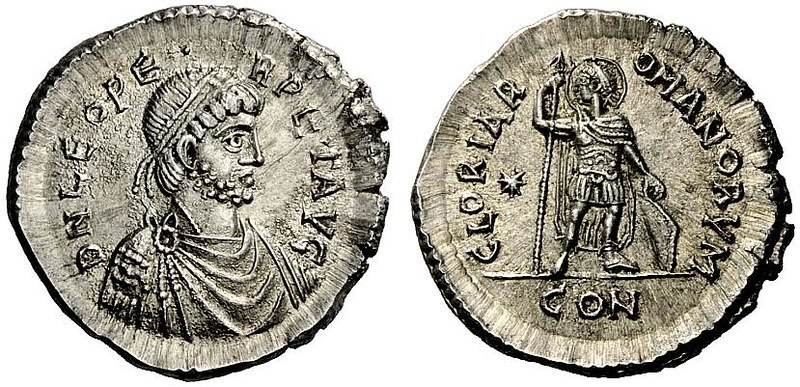
Begin with the obverse legend. A genuine miliarensis of Leo I carries his name in Latin, in forms such as D N LEO PERPET AVG, wrapped around a profile bust wearing a pearl diadem and usually draped and cuirassed. Reading the name is the single most reliable step: many fifth-century silver coins share a similar look, so the legend is what pins the coin to Leo I rather than to Marcian, Zeno, or another contemporary.
Next read the reverse. Expect a standing figure with a spear and shield and a legend on the theme of Roman glory (commonly GLORIA ROMANORVM). Note the pose and attributes carefully, since related late-Roman reverses show a seated figure, a cross, or a Victory instead. The exergue below the design should carry a mint mark; Constantinople is by far the most common origin, and the mark helps place the coin to a specific mint.
Check size, weight, and fabric. A miliarensis is a broad, relatively thin silver coin, roughly 20-24 mm across and about 4 to 5.5 grams depending on the standard. Weigh and measure any candidate: a piece that is thick and dumpy, sharply underweight, or bright yellow is suspect. Late-Roman silver normally tones to grey or darker and may show fine flan cracks at the edge from striking.
Separate it from look-alikes. The smaller, lighter siliqua of the same era can resemble a miliarensis but is typically under 3 grams and smaller in diameter; a gold solidus of Leo I shares the portrait style but is unmistakably gold and heavier for its size. Confirm the coin is silver, of miliarensis size, and carries the standing spear-and-shield reverse before settling on this attribution.
Finally, apply authentication caution. Scarce late-Roman silver is a frequent target for casts and modern forgeries, so watch for soft, mushy detail, seams on the edge, a granular cast surface, or lettering that does not match verified dies. Porosity and old cleaning are common even on genuine coins and affect value. For anything of significant value, seek a specialist opinion or third-party certification rather than relying on eye appeal alone.
Frequently asked questions
What is the fastest way to confirm it is Leo I?
Read the obverse legend for his name (forms of D N LEO PERPET AVG) around a diademed profile bust. The name in the inscription is the surest way to distinguish Leo I from other fifth-century emperors with similar portraits.
What size and weight should it be?
A miliarensis is a broad, thin silver coin of roughly 20-24 mm and about 4 to 5.5 grams, depending on the standard. Coins far outside that range, or that are thick and yellow, do not fit the type.
How do I tell a miliarensis from a siliqua?
Both are late-Roman silver, but the siliqua is smaller and lighter, usually under about 3 grams. The miliarensis is the larger, heavier silver piece on a broad flan, which is why its imagery reads clearly.
How can I spot a fake?
Look for soft or blurry detail, edge seams, a grainy cast texture, and lettering that does not match known dies. Genuine silver tones naturally; a suspiciously bright or perfectly smooth surface warrants a specialist check or certification.