
How to Identify the Mexican Un Peso Silver (Cap and Rays)
A classic Mexican silver peso featuring the Phrygian liberty cap and radiating rays inside a triangle, a national symbol used across Mexico's silver coinage for decades.
Read the full Mexican Un Peso Silver (Cap and Rays) encyclopedia entry →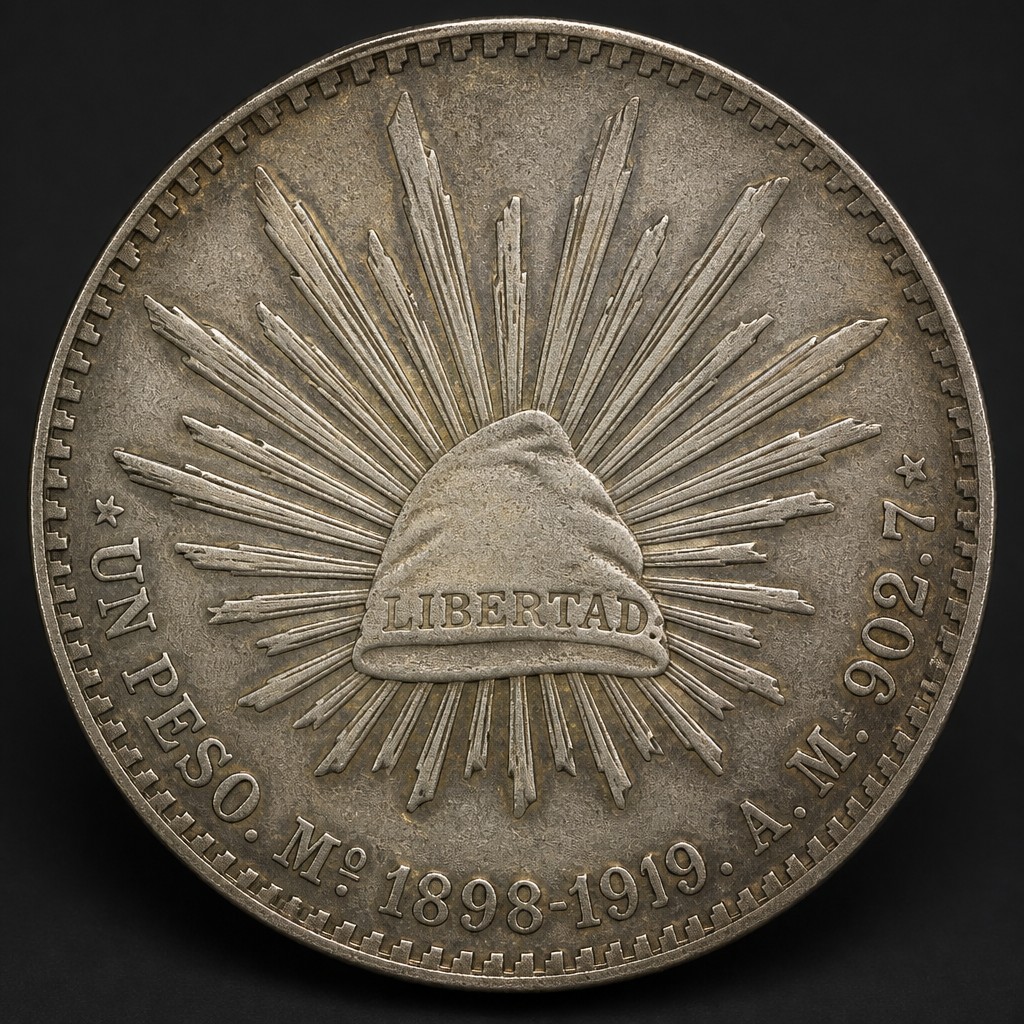
What It Is
This peso belongs to a long-running series of Mexican silver coinage that used the "cap and rays" liberty symbol, produced from the 1870s into the early twentieth century. The design was used across several denominations, with the one peso being the most widely recognized and collected example.
Obverse Design
The obverse shows Mexico's national emblem: an eagle standing on a nopal cactus holding a serpent, encircled by a legend naming the Mexican republic. Below the eagle, a small mint mark and assayer's initials appear, along with the date.
Reverse Design
The reverse centers on a Phrygian liberty cap radiating rays outward, set within a triangle, itself framed by a wreath. Around the border, a motto referencing liberty and the constitution is inscribed, along with a statement of the coin's weight and fineness in small lettering along the rim.
Size, Weight, and Metal
The coin is silver, weighing approximately 27.07 grams with a diameter near 37 millimeters. Fineness varied over the life of the series, generally in the range of .903 to .800 fine depending on the exact year, and this information is often stated directly on the coin's rim text.
Mint Marks
Mint marks appear on the obverse below the eagle, with letters such as Mo (Mexico City), Zs (Zacatecas), Go (Guanajuato), and Cn (Culiacán) among the more commonly encountered options, paired with one or two assayer initials that changed periodically at each mint.
Telling It Apart from Similar Coins
The cap-and-rays reverse is unique to this era of Mexican coinage and is not shared with later portrait-based pesos (such as those featuring Morelos), making the reverse design itself the fastest way to confirm the type. Denomination is confirmed by checking the numeral or wording on the coin rather than relying on size alone, since fractional denominations share the same design theme.
Judging Condition
Well-preserved coins show sharp detail on the eagle's feathers and a fully defined cap with distinct ray lines. Wear typically first appears on the eagle's breast and the highest points of the cap. Because this series had a long production run across many mints, condition and strike quality can vary noticeably between mints and years.
Authenticity Red Flags
Given the coin's long history and widespread circulation, verify the correct weight and diameter, and check that the rim text (weight and fineness statement) is legible and consistent with genuine examples. Watch for blurred or missing assayer initials, uneven lettering, or a surface that looks artificially aged, all of which can indicate a later reproduction rather than a genuine period strike.
Frequently asked questions
What does the cap and rays symbol represent?
It is a Phrygian liberty cap, a widely used symbol of freedom, shown radiating rays to represent enlightenment or liberty, a common motif on Mexican coinage of this era.
How do I find the mint that produced my coin?
Look below the eagle on the obverse for a small mint-mark letter, such as Mo, Zs, Go, or Cn, paired with assayer initials.
Why does the silver fineness vary between coins in this series?
The official silver fineness standard changed more than once during the coin's long production run, so different years can legitimately have different fineness levels, often stated directly on the coin's rim.
How is this different from the later Morelos peso?
This series uses the cap-and-rays symbol on the reverse, while the later Morelos peso instead shows a portrait bust, making the two easy to distinguish at a glance.