
How to Identify the Mexican Emperor Maximilian Peso
A guide to identifying the silver peso struck under Mexico's short-lived Emperor Maximilian I, featuring his portrait bust and the crowned imperial eagle reverse.
Read the full Mexican Emperor Maximilian Peso encyclopedia entry →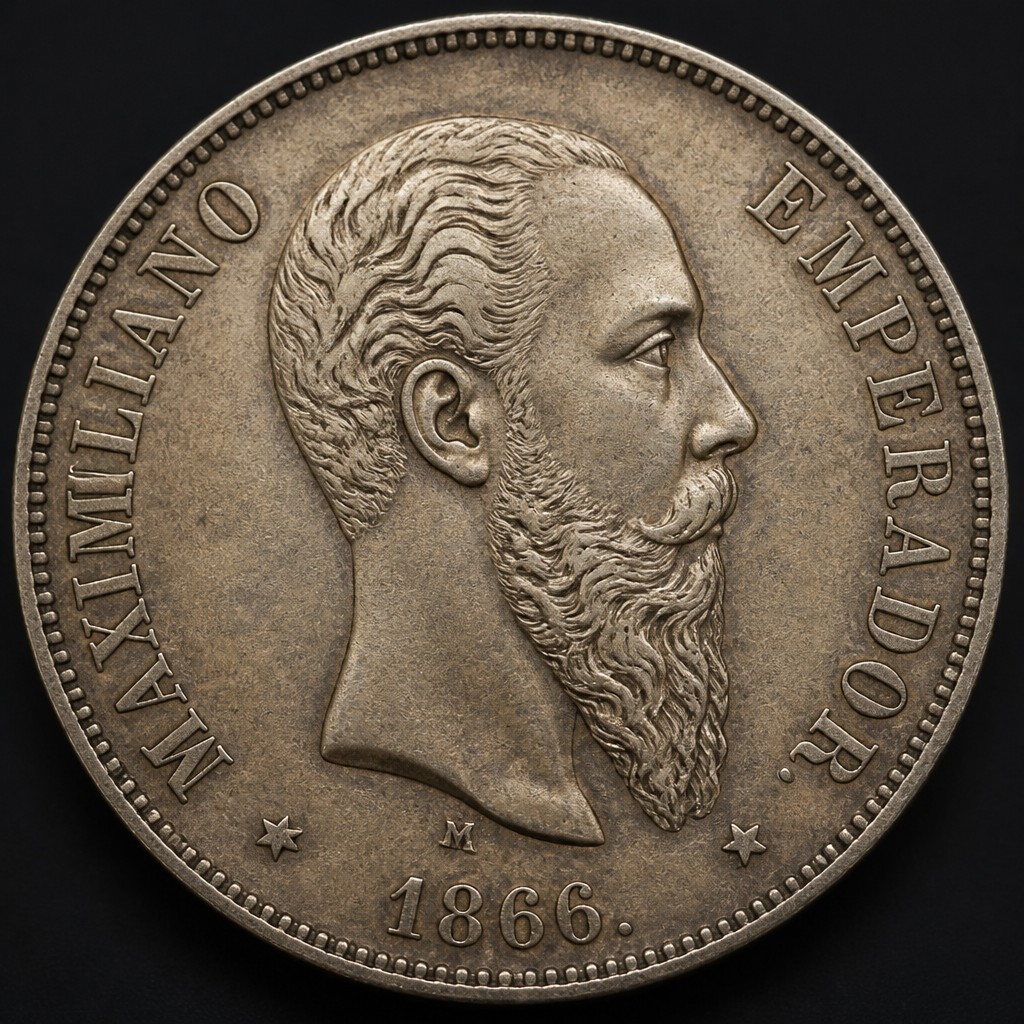
What It Is
This silver peso was struck during the brief Second Mexican Empire under Maximilian I, an Austrian archduke installed as emperor of Mexico with French support in the mid-1860s. Because his reign lasted only a few years before he was overthrown and executed, coins bearing his portrait were struck for a short window and represent a distinct, historically notable chapter in Mexican coinage.
Obverse Design
The obverse shows a bust portrait of Maximilian in profile, with the legend "MAXIMILIANO EMPERADOR" and the date around the rim.
Reverse Design
The reverse displays the Mexican eagle, shown perched and often topped with an imperial crown reflecting the empire's status, with the legend "IMPERIO MEXICANO" and the denomination.
Size, Weight, Metal, and Edge
This is a crown-size silver coin, roughly 37 mm in diameter and about 27 grams, struck in approximately .903 fine silver, consistent with Mexican peso coinage of the surrounding decades. The edge is typically lettered or reeded depending on the specific issue.
Mint Marks
Look for the "Mo" mintmark (Mexico City) along with assayer initials near the base of the design, standard practice for Mexican coinage of this general period.
Telling It Apart From Similar Coins
This coin is easily distinguished from earlier and later Mexican Republic pesos by its imperial portrait and the word "EMPERADOR" in the legend, both features unique to the Maximilian era; Republic-era pesos instead show a standing or seated Liberty figure or an eagle without an imperial crown.
Judging Condition
Wear first appears on Maximilian's cheek, hair, and the high points of his collar or uniform, as well as on the eagle's crown and wingtips on the reverse. A coin with sharp facial detail and legible lettering is in notably better condition than one with a smoothed portrait.
Authenticity Red Flags
Given the historical significance and collector demand for coins from this short imperial period, watch for incorrect weight or diameter, a soft or mushy strike suggesting a cast copy, and a portrait or lettering that looks re-cut or inconsistent with genuine reference examples. A coin that does not ring clearly when gently spun, or that responds to a magnet, is not genuine silver.
Frequently asked questions
Who was Maximilian and why is he on a Mexican coin?
Maximilian I was an Austrian archduke installed as emperor of Mexico with French backing in the 1860s; his portrait appears on coinage struck during his brief reign before he was overthrown.
How do I tell this apart from a Mexican Republic peso?
Look for the word "EMPERADOR" in the obverse legend and the imperial crown atop the eagle on the reverse, both unique to the Maximilian issue.
What is the silver content of this coin?
It is approximately .903 fine silver, weighing about 27 grams, in line with other Mexican peso coinage of the surrounding decades.
Where is the mint mark located?
Near the base of the design, typically showing "Mo" for Mexico City along with assayer initials.