
How to Identify the Mexican 8 Reales Cap and Rays
A large silver coin of the Mexican Republic featuring a radiant liberty cap on the obverse and an eagle perched on a cactus with a snake on the reverse.
Read the full Mexican 8 Reales Cap and Rays encyclopedia entry →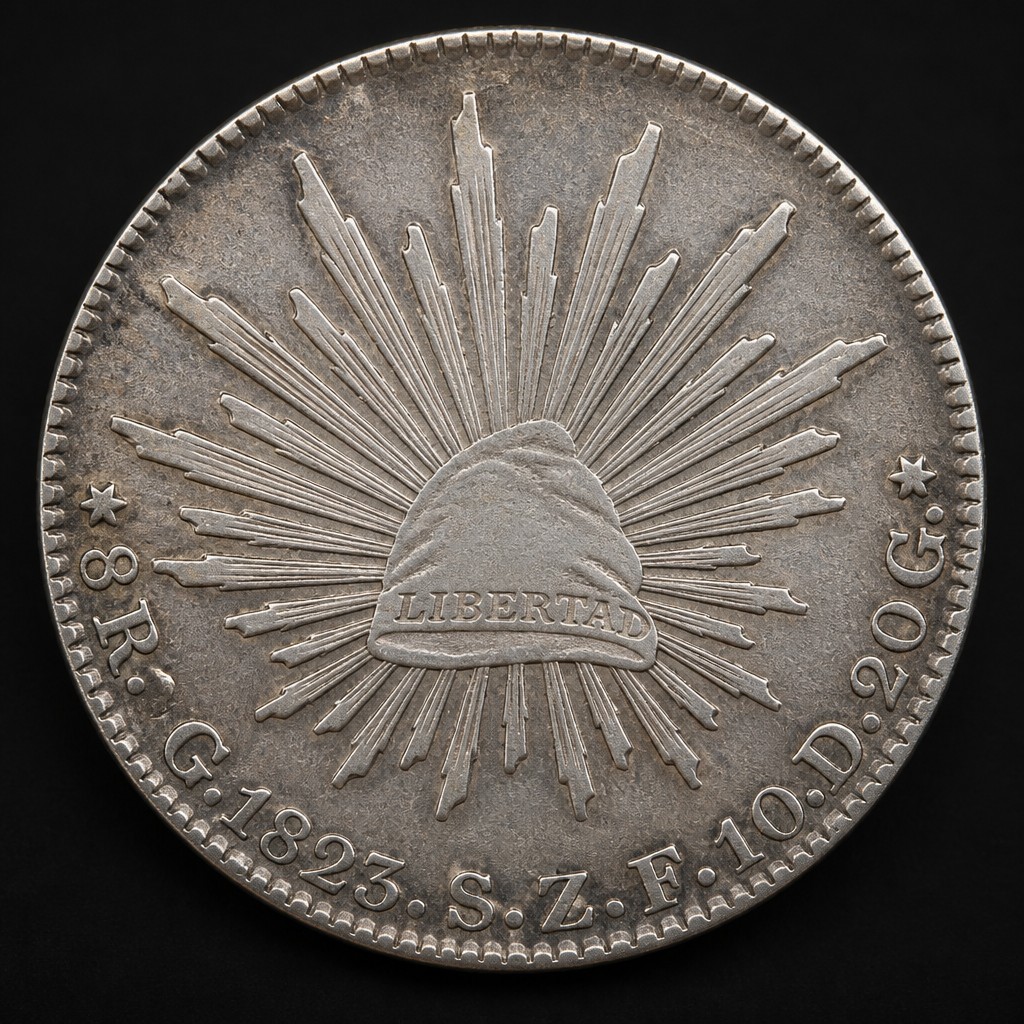
What the Coin Is
Following Mexican independence, the new Republic adopted a distinctive design for its silver 8 reales coinage, replacing the earlier colonial portrait types. Known informally as the "Cap and Rays" type, it was struck at multiple regional mints from the 1820s through the late 19th century, before decimal peso coinage gradually took over.
Obverse Design & Inscriptions
The obverse shows a Phrygian liberty cap radiating light rays, set within a triangle and framed by a wreath, symbolizing liberty and enlightenment. Around the border, the legend reads REPUBLICA MEXICANA, with the mint city abbreviation, denomination (8 R.), assayer initials, and date arranged around or below the design depending on the specific mint.
Reverse Design & Inscriptions
The reverse depicts the Mexican eagle, shown in a naturalistic style, perched on a nopal cactus growing from a rock and holding a snake in its beak, an image drawn from Mexican national symbolism. A legend encircles the design, often continuing mint and denomination details.
Size, Weight, Metal & Edge
This coin measures approximately 39mm in diameter, weighs about 27.07 grams, and is struck in silver of roughly .903 fineness, matching the long-standing Spanish colonial 8 reales standard. Edge treatment varies somewhat by mint and period, with lettered or decoratively engraved edges used to deter clipping.
Mint Marks & Where to Find Them
Mint identification appears on the obverse as a two-letter city abbreviation alongside the assayer's initials, such as Mo for Mexico City, Zs for Zacatecas, Go for Guanajuato, Do for Durango, and Ca for Chihuahua, among others.
Telling It Apart From Similar Coins
The Cap and Rays design is easy to distinguish from earlier Spanish colonial portrait 8 reales, which show a king's bust, and from later Mexican decimal coinage, which uses a redesigned, more stylized eagle and peso denominations instead of reales. The radiant cap and triangle motif is unique to this Republic-era type.
Judging Condition at a Glance
Examine the cap's rays and the eagle's feather and leg details for wear, since these raised elements smooth out first with circulation. A well-preserved coin shows clear separation between individual rays and sharp cactus pad and snake details on the reverse.
Authenticity Red Flags
These coins circulated widely and were sometimes counterfeited historically, including contemporary counterfeits made for circulation. Check that the weight and diameter match expected standards, and look for correctly formed mint and assayer initials appropriate to a known combination for that mint and era. Cast fakes often show a grainy texture, indistinct lettering, or a dull, lifeless surface compared to a genuinely struck coin.
Frequently asked questions
What does the 'Cap and Rays' design represent?
It shows a Phrygian liberty cap radiating light rays within a triangle, a Republic-era symbol of liberty and enlightenment replacing the earlier royal portrait design.
Where do I find the mint mark on this coin?
On the obverse, as a two-letter city abbreviation next to the assayer's initials, such as Mo for Mexico City or Zs for Zacatecas.
What is on the reverse of this coin?
An eagle perched on a cactus growing from a rock, holding a snake in its beak, a design drawn from Mexican national symbolism.
How does this differ from Spanish colonial 8 reales?
Spanish colonial coins show a king's portrait bust, while this Republic-era type replaces it with the cap and rays design and Mexican eagle.