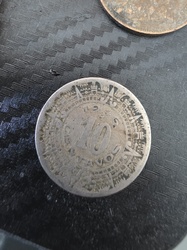
How to Identify the Mexican 10 Pesos Gold 'Hidalgo'
A Mexican gold coin honoring independence leader Miguel Hidalgo, recognized by his left-facing portrait and the eagle-and-serpent emblem on the reverse.
Read the full Mexican 10 Pesos Gold 'Hidalgo' encyclopedia entry →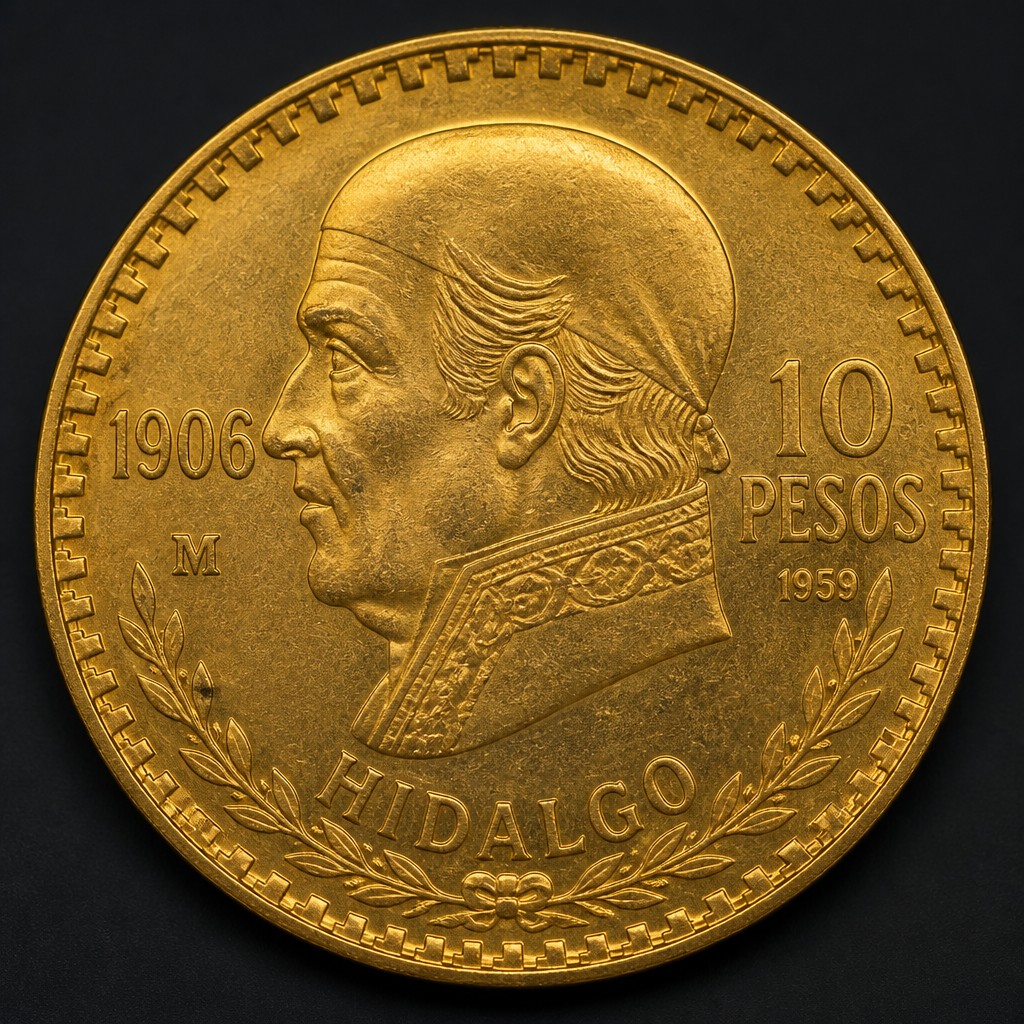
What It Is
This coin honors Miguel Hidalgo y Costilla, the priest widely regarded as the father of Mexican independence. It was struck in gold in the early twentieth century, later revived for further issues, and remains a well-known Mexican gold type among collectors and those holding gold for its metal content.
Obverse Design
The obverse shows a left-facing portrait bust of Hidalgo, with "ESTADOS UNIDOS MEXICANOS" (United Mexican States) arcing above and the date below the portrait.
Reverse Design
The reverse carries Mexico's national emblem: an eagle perched on a nopal cactus, grasping a serpent in its beak and talon. The denomination "10 PESOS" appears below the emblem, along with a small mint mark.
Size, Weight, and Metal
The coin is struck in .900 fine gold, weighs 8.33 grams, and measures about 22.5 millimeters in diameter, with a reeded edge. Its gold content works out to roughly a quarter of a troy ounce.
Mint Marks
A small "Mo" mint mark, denoting the Mexico City mint, appears on the reverse near the denomination. Because this coin was minted in more than one production era, the mint mark helps confirm it came from the official Mexico City facility.
Telling It Apart from Similar Coins
This piece is easily confused with other Mexican gold portrait coins of similar size, such as those featuring different national heroes. The Hidalgo portrait itself, along with the "10 PESOS" denomination, is the clearest way to confirm the coin's identity; always check the named portrait rather than assuming denomination from size alone, since Mexico issued a range of gold coins across different values with similar styling.
Judging Condition
On sharply struck examples, Hidalgo's facial features and hair are crisply defined, and the eagle's feather detail on the reverse is fully visible. Because this coin is often held for its bullion value, many examples show only light handling wear rather than heavy circulation wear; genuinely worn pieces will show smoothing across the portrait's highest points, particularly the cheek and hair.
Authenticity Red Flags
Because gold coins are common counterfeit targets, verify the coin's exact weight and diameter against official specifications, check that the edge reeding is even and continuous, and examine the strike for sharp, well-defined lettering rather than soft or mushy detail. A coin that is noticeably lighter, thinner, or a slightly different diameter than the standard specification should be treated with caution and evaluated further.
Historical Background
Hidalgo's image on Mexican gold coinage reflects his lasting status as a national symbol of independence, and this particular denomination became a familiar sight in gold markets throughout the twentieth century. Because the design was struck across separate production periods rather than continuously, collectors often pay close attention to how a given example's strike quality and surface characteristics line up with the general run of coins from its stated year.
Frequently asked questions
Who is the man pictured on this coin?
It is Miguel Hidalgo y Costilla, the priest recognized as a founding figure of Mexican independence.
What is this coin's gold content?
It is struck in .900 fine gold at a weight of 8.33 grams, equal to roughly a quarter troy ounce of gold.
Why do some Hidalgo 10 Pesos coins show older dates but look newly struck?
Mexico restruck this design in later years, and some issues kept an earlier date design element, so a crisp, lightly worn coin does not necessarily mean it was struck in the year it displays.
What does the mint mark 'Mo' mean?
It identifies the Mexico City mint as the coin's place of production.
Mexican 10 Pesos Gold 'Hidalgo' identified by the community
Recent Mexican 10 Pesos Gold 'Hidalgo' coins identified with Coin Identifier.