
How to Identify the Messana Hare and Biga Tetradrachm
A Sicilian silver tetradrachm from Messana showing a mule-drawn biga crowned by Nike on the obverse and a bounding hare on the reverse.
Read the full Messana Hare and Biga Tetradrachm encyclopedia entry →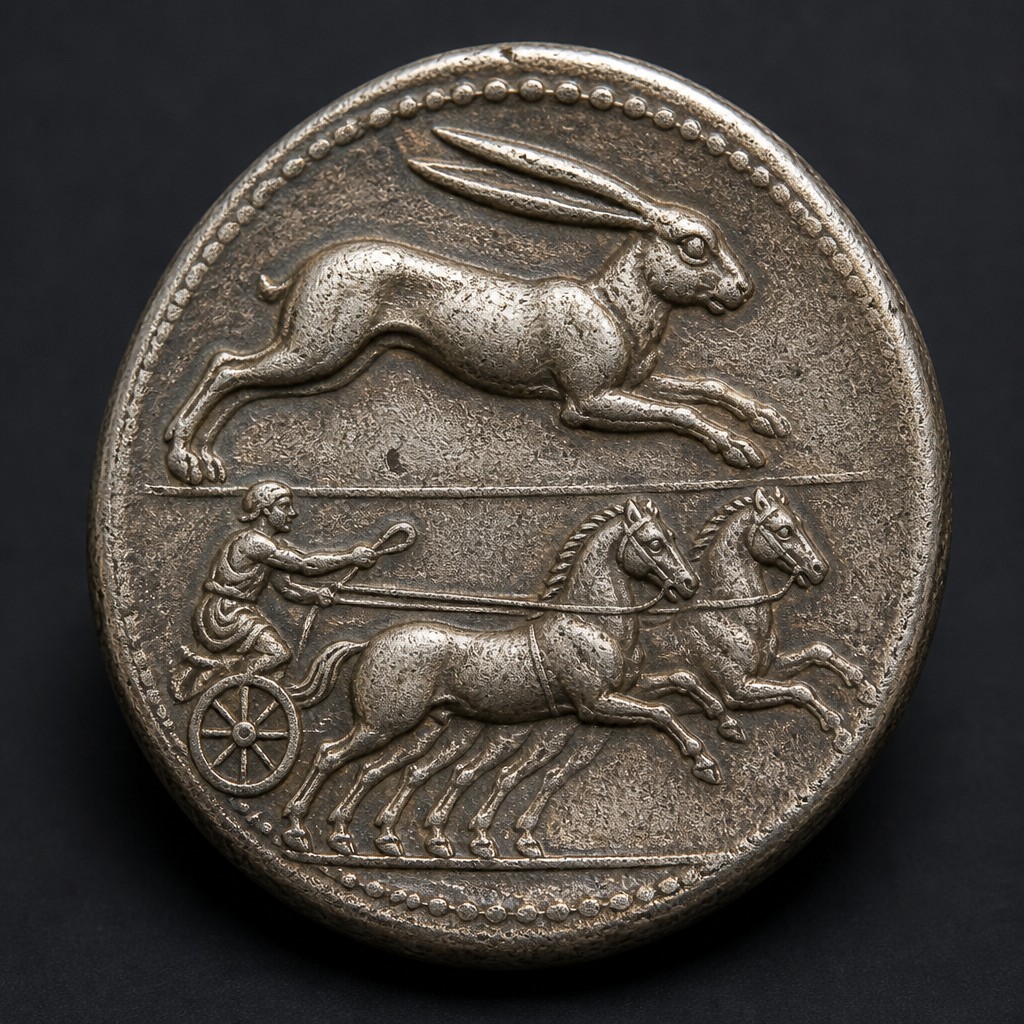
What This Coin Is
This is a silver tetradrachm struck by the Greek city of Messana (modern Messina) at the northeastern tip of Sicily, primarily during the fifth century BC. Messana's coinage is distinctive for using a mule cart rather than the horse-drawn chariots favored by most other Sicilian mints, a choice tied to the city's renown for winning mule-cart races at Greek athletic games.
Obverse Design
The obverse shows a biga, a two-mule cart, driven by a charioteer, with Nike flying above to crown the mules with a wreath. This mule-cart imagery celebrated Messana's actual victories in mule-cart races at Panhellenic games, making it a source of local civic pride reflected directly in the coin type.
Reverse Design
The reverse depicts a hare in a bounding or leaping pose, a lively and naturalistic animal study that is among the most admired reverse designs in Sicilian numismatic art. Below the hare, dolphins sometimes appear in the exergue, referencing the city's position on the strait between Sicily and the Italian mainland. The ethnic ΜΕΣΣΑΝΙΟΝ (of the Messanians) is inscribed nearby.
Size, Weight, and Metal
Struck in silver on the Attic-Sicilian weight standard, these tetradrachms typically weigh close to 17 grams and measure roughly 24 to 27 millimeters in diameter, with the standard plain, hand-struck edge.
Mint Marks and Where to Find Them
Check the exergue on both sides: the obverse exergue may include a small mule-cart-related detail, while the reverse exergue often shows dolphins beneath the hare. The ethnic ΜΕΣΣΑΝΙΟΝ in the reverse field is the clearest confirming inscription.
Telling It Apart From Similar Coins
The mule-drawn biga is immediately distinguishable from the horse-drawn quadrigas used at most other Sicilian mints, since mules have visibly different proportions and are shown pulling only a two-mule cart rather than a four-horse team. The bounding hare reverse is likewise unique to Messana among Sicilian animal types, easily separating this coin from Leontini's lion, Gela's man-headed bull, or Segesta's hound.
Judging Condition at a Glance
On the obverse, check the mules' legs, the cart, and Nike's wings for sharpness, since these thin elements wear quickly. On the reverse, the hare's long ears, legs, and overall outline are the focal wear points; a coin where the hare's ears and legs remain crisply defined is in notably better condition than a heavily worn example where the animal's outline has softened.
Authenticity Red Flags
Because the leaping hare is an especially admired and recognizable design, it has been reproduced in decorative and forged forms. Warning signs include a blurred or overly rounded rendering of the hare's fine leg and ear details, a grainy surface or casting seam, incorrect or garbled lettering in the ethnic, and a weight or diameter that falls outside the normal range for genuine examples. Comparing the mule-cart proportions and hare pose against well-documented genuine specimens is a useful check, since these fine anatomical details are difficult to replicate convincingly through casting.
Frequently asked questions
Why does this coin show mules instead of horses?
The mule-drawn biga commemorates Messana's real victories in mule-cart races at Greek athletic games, making it a point of civic pride reflected directly in the coin design rather than a generic chariot scene.
What is distinctive about the reverse design?
It shows a bounding hare in a naturalistic leaping pose, one of the most admired animal studies in Sicilian coin engraving, and a design unique to Messana among Sicilian tetradrachms.
Why do dolphins sometimes appear on this coin?
They likely reference Messana's location on the narrow strait separating Sicily from the Italian mainland, a natural and symbolic detail tied to the city's maritime setting.
What weight should I expect from a genuine example?
Genuine tetradrachms typically weigh close to 17 grams, in keeping with the Attic-Sicilian standard used broadly across classical Sicilian coinage.